The fire god keeps Ha Nhi's family warm
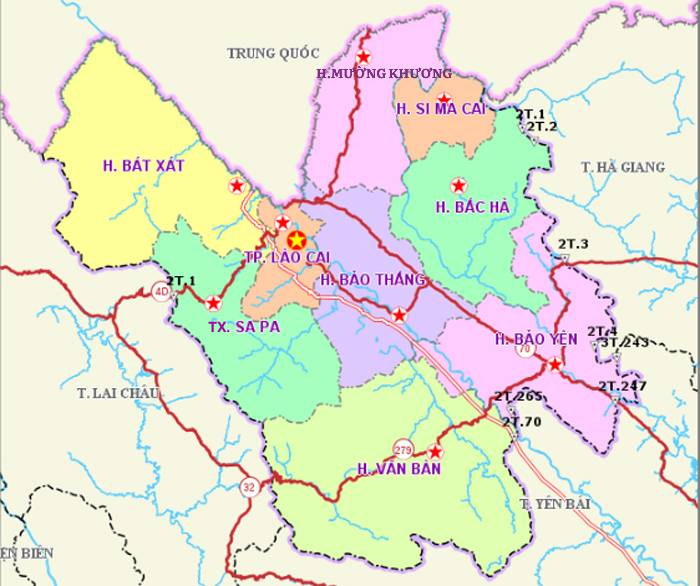
In the cultural customs of the Ha Nhi people in Bat Xat highland, the word “phu chu ma” in Ha Nhi translates to “Fire God”, with the symbol of a small stone fixed by the Ha Nhi people next to the kitchen. family fire. This is considered as the presence of a god in keeping warm and bringing good luck to the Ha Nhi's family.From Lunar New Year to March of the lunar calendar every year, Ha Nhi people often pay attention to “phu chu ma” because on this occasion, there are many holidays and New Year such as Lunar New Year, forest worship, worshiping of spirits, algae Tombs, Ma O Tet, weddings ... so the family's kitchen is regularly heated. According to the concept of Ha Nhi people, on the occasion of New Year, holidays, New Year days, if the fire stove operates regularly, it will bring warmth and good luck for the family throughout the year.
 |
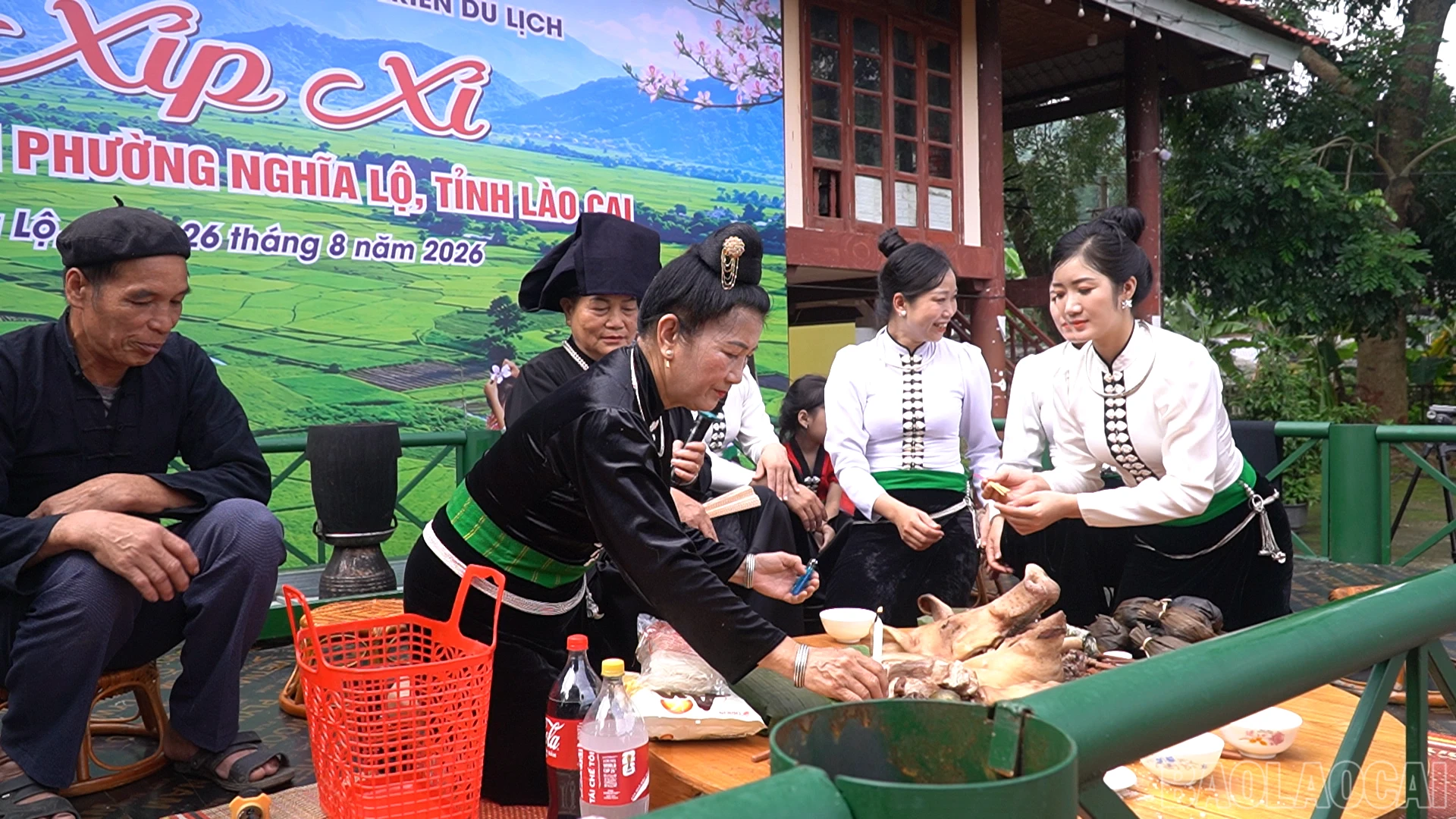
| Mr. Phu Se Thó invited “phu chu ma” to eat after the ceremony at the family. |
In the last days of the second lunar month, the family of Mr. Phu Se Thó, Mo Phu Chai village, Y Ty commune is busier than usual, because they have to prepare for the burial ceremony. On a beautiful day, early in the morning, women in the house prepare vegetables, beans and cook them into dishes; men kill pigs and chickens to make offerings to the gods and ancestors. After the worshiping ceremony, one must not forget is that he must invite “phu chu ma” to eat. The offerings were slightly placed by him and his wife, next to the small stone by the fire.
Mr. Tho said: "Phu chu ma" is the deity of governance, keeping warm in the family and bringing good luck, especially in the kitchen. The "phu chu ma" of the Ha Nhi people is similar to the earth god of the Kinh people, but the special feature is the stone symbol. In every Ha Nhi family, there must be "phu chu ma".
According to the customs of the Ha Nhi people, when the new home comes, the landlord must go to find a stone in the deep forest, or dig deep into the ground to make sure the stone is clean and beautiful (according to the view of each person). Anyone who touches them will bring them home. After bringing back, the stone is cleaned, washed and fixed to the right of the fire and ceremonies for protection, keep warm, bring good luck to the family.
From the old concept of Ha Nhi people, the youngest son in the house is the one who inherits everything from his father and mother, including the worship of the fairy family or the worship of "phu chu ma". And the stone of fire will be passed on from generation to generation.
To better understand the culture of “phu chu ma” in the lives of the Ha Nhi people, we turned to Mr. Ly Se Cho (80 years old), one of the elderly people in Lao Chai 1 village, Y Ty commune. Mr. Cho said: "Phu chu ma" is a long-standing culture of Ha Nhi people, no one remembers where it originated, but every Ha Nhi family has "phu chu ma". Even a Ha Nhi family, if moved, could leave many things behind, but still have to bring their “phu chu ma” away.
 |
| The stone symbolizes the fire god "phu chu ma". |
Pointing at the stone lying on the family's fire, Cho said: "As I was the youngest son in the house, I was handed over this" phu chu ma ", so it was a fifth life. My son is now the 6th generation and his youngest nephew has begun to move to the 7th generation.
From the stories in Ha Nhi villages, Y Ty commune, we learned that "phu chu ma" is one of the four gods worshiped by the Ha Nhi people, namely heaven, earth, water and fire. "Phu chu ma" is a culture passed down by the Ha Nhi people in the Bat Xat highland as a symbol to keep warm and bring good luck to the family, so that life always moves forward with new hopes. This is also a beautiful culture in the lives of Ha Nhi people currently being preserved and promoted, contributing to preserving the national cultural identity associated with tourism development, improving the lives of people in the region. Y Ty Cao, which is considered as an appointment land with many mysterious cultural customs is waiting to be discovered./.