Spiritual tourism attracts visitors at the beginning of the year.
From the moment of the Lunar New Year's Eve of the Year of the Horse 2026, the atmosphere at spiritual tourism destinations in Lao Cai province has become bustling. Crowds of people flocked to temples and pagodas, carrying wishes for a peaceful and lucky new year. In just the first two days of the Lunar New Year, tens of thousands of tourists from within and outside the province visited and worshipped, demonstrating the strong appeal of spiritual tourism in the area. 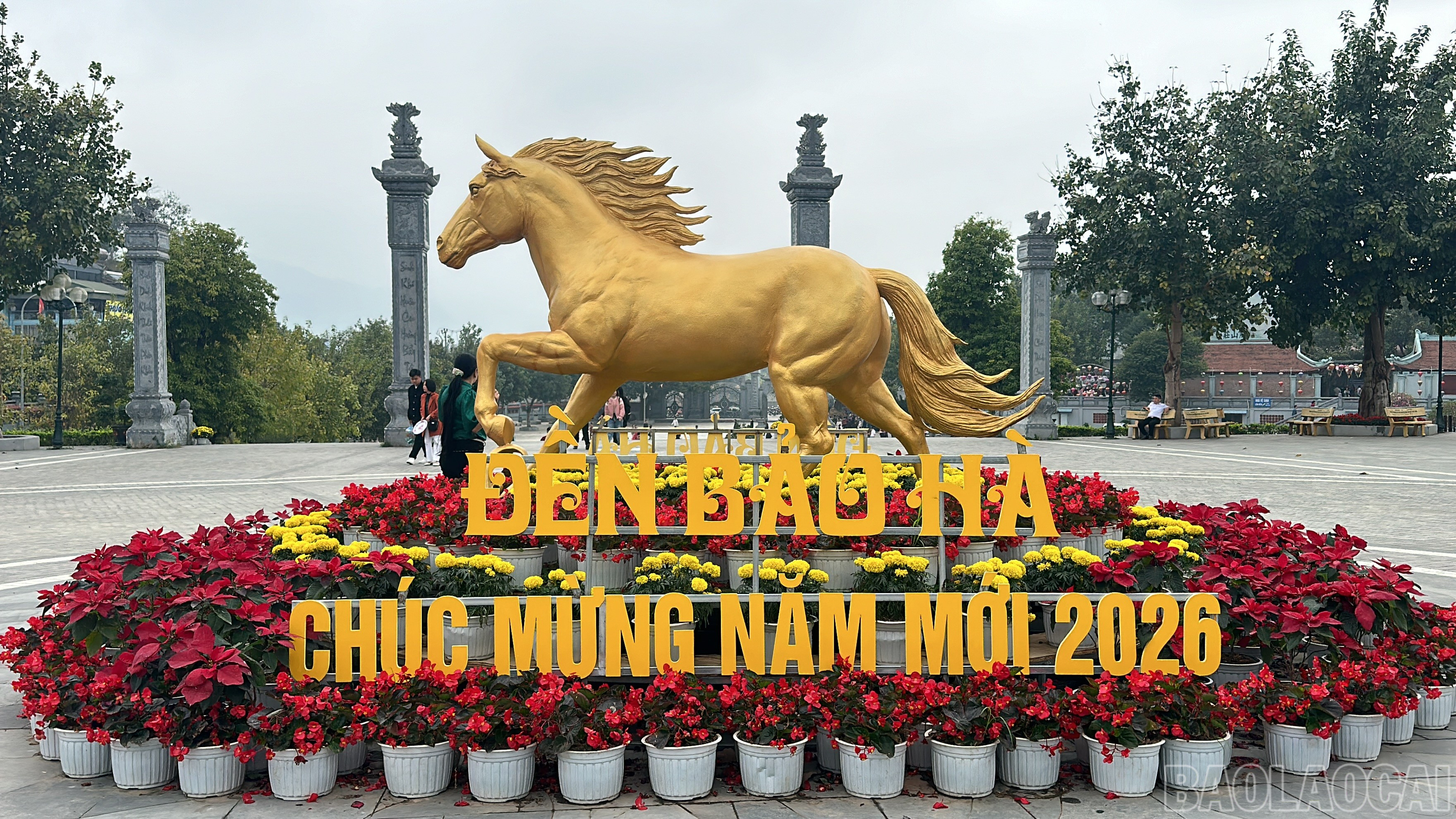
The horse mascot at Bao Ha Temple.
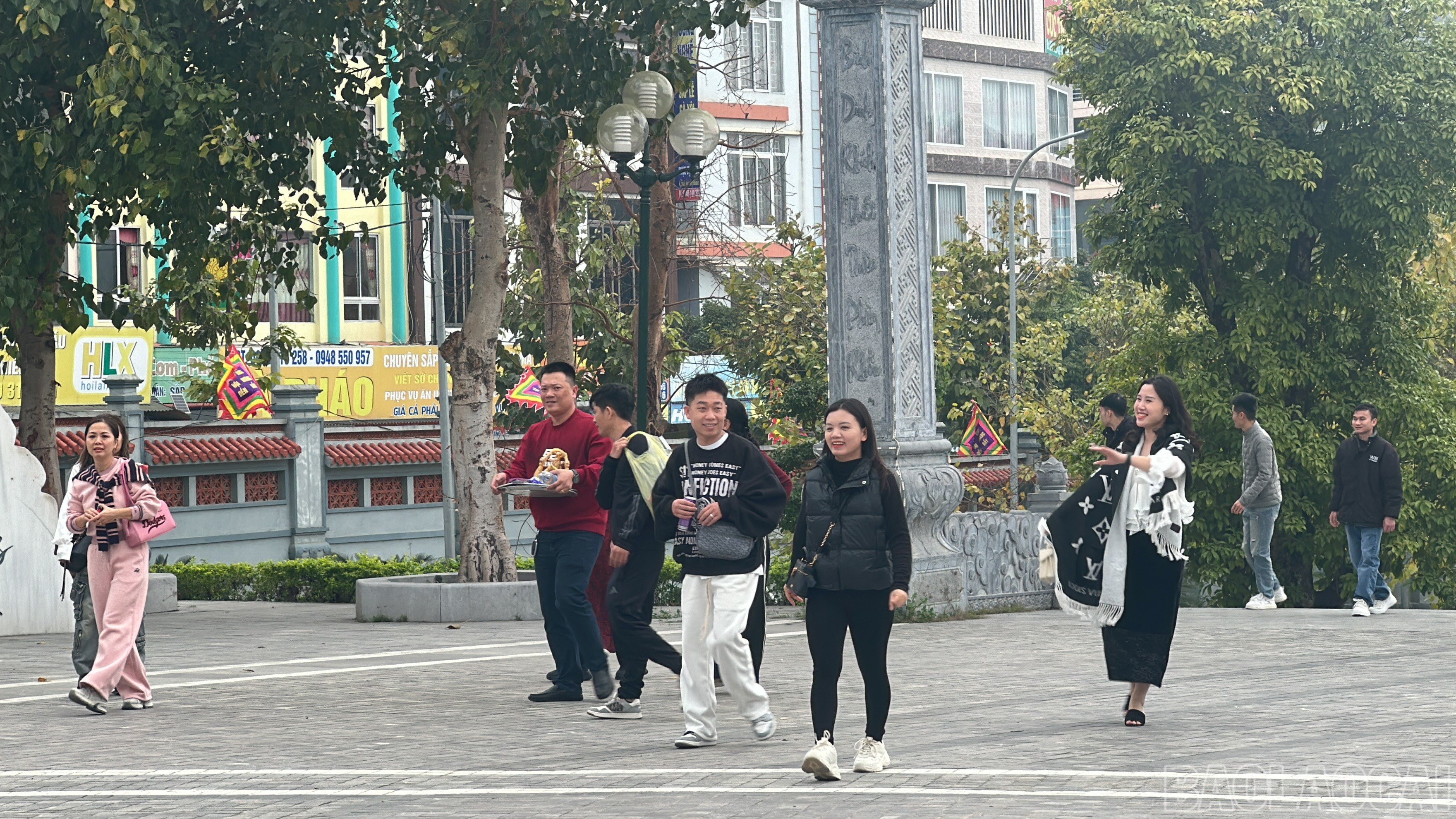
Tourists visit and worship at Bao Ha Temple.
At the Bao Ha Temple, a national historical and cultural site situated by the Red River, nestled against a mountain and facing a spacious courtyard, visitors can enjoy the open air and offer incense while admiring the scenery. In the early days of the new year, crowds of people stream through the ceremonial gate, respectfully approaching the main altars within the temple grounds. Flags, lanterns, and candles adorn the area, and the greenery and landscaping are meticulously maintained, creating a solemn yet vibrant atmosphere of spring.
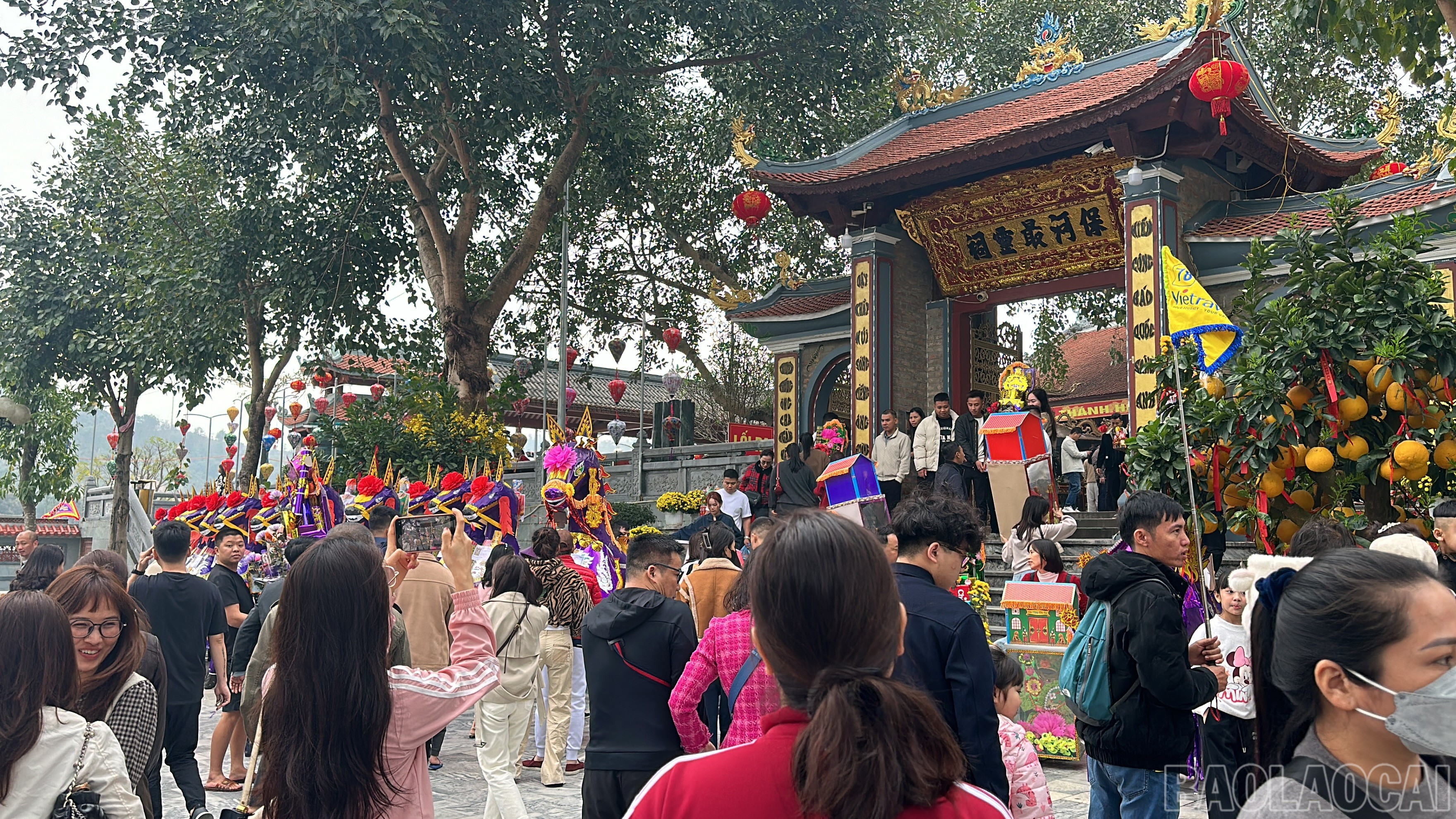
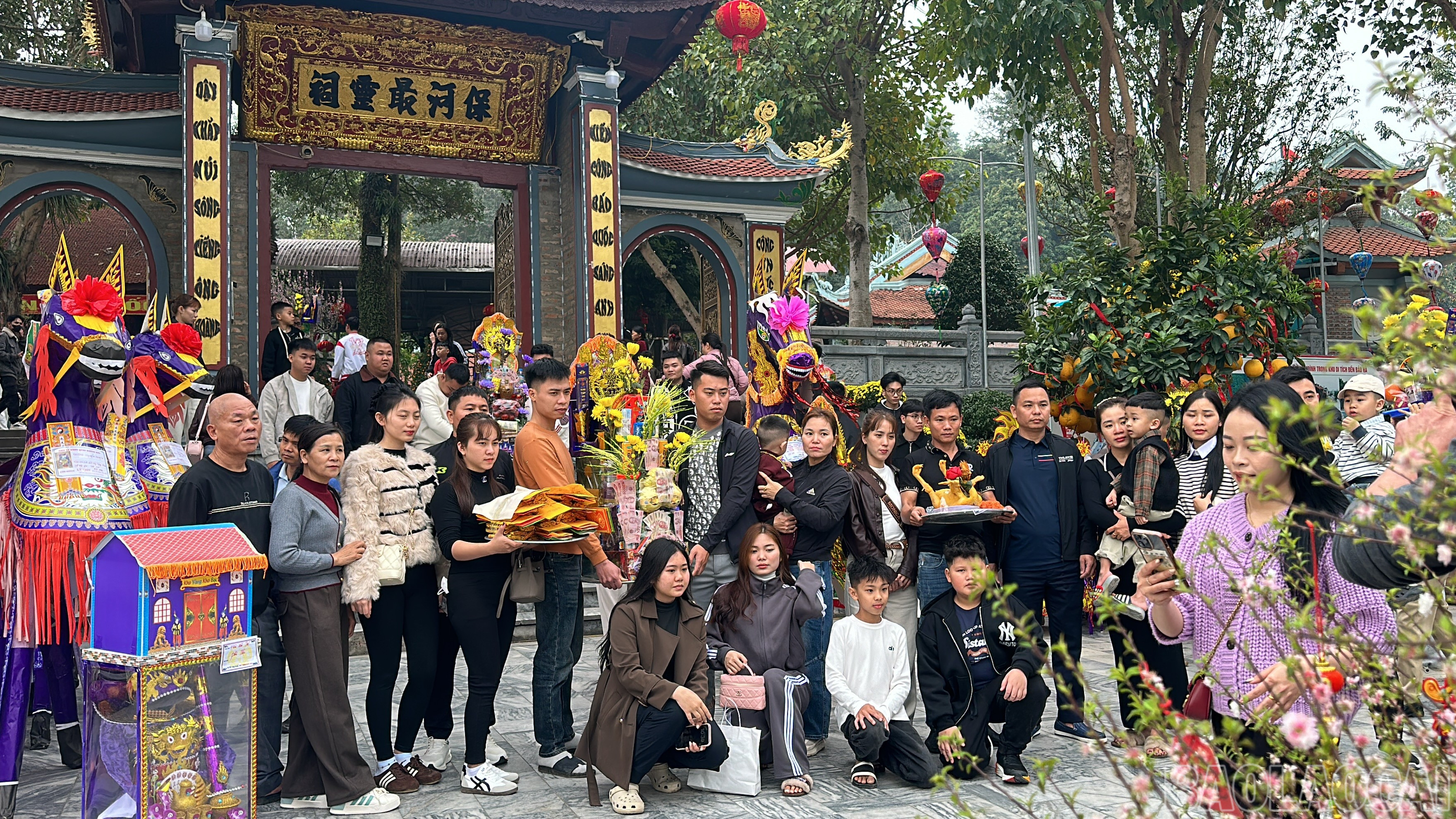
During the first two days of the new year, Bao Ha Temple welcomed over 10,000 visitors.
According to statistics from the Bao Ha Commune Relics and Tourism Development Management Board, from New Year's Eve to the end of the second day of Tet (Lunar New Year), Bao Ha Temple welcomed more than 10,000 tourists. Visitors came here not only to offer incense and worship but also to admire the scenery and take souvenir photos in the favorable weather at the beginning of the year.
Present at Bao Ha Temple from early morning on the second day of Tet (Lunar New Year), Mr. Quoc Huu Phuc from Cam Duong ward, Lao Cai province, said that almost every year his family sets off to the temple to worship at the beginning of the year. The family comes to the temple to admire the scenery and pray for a peaceful and happy new year.
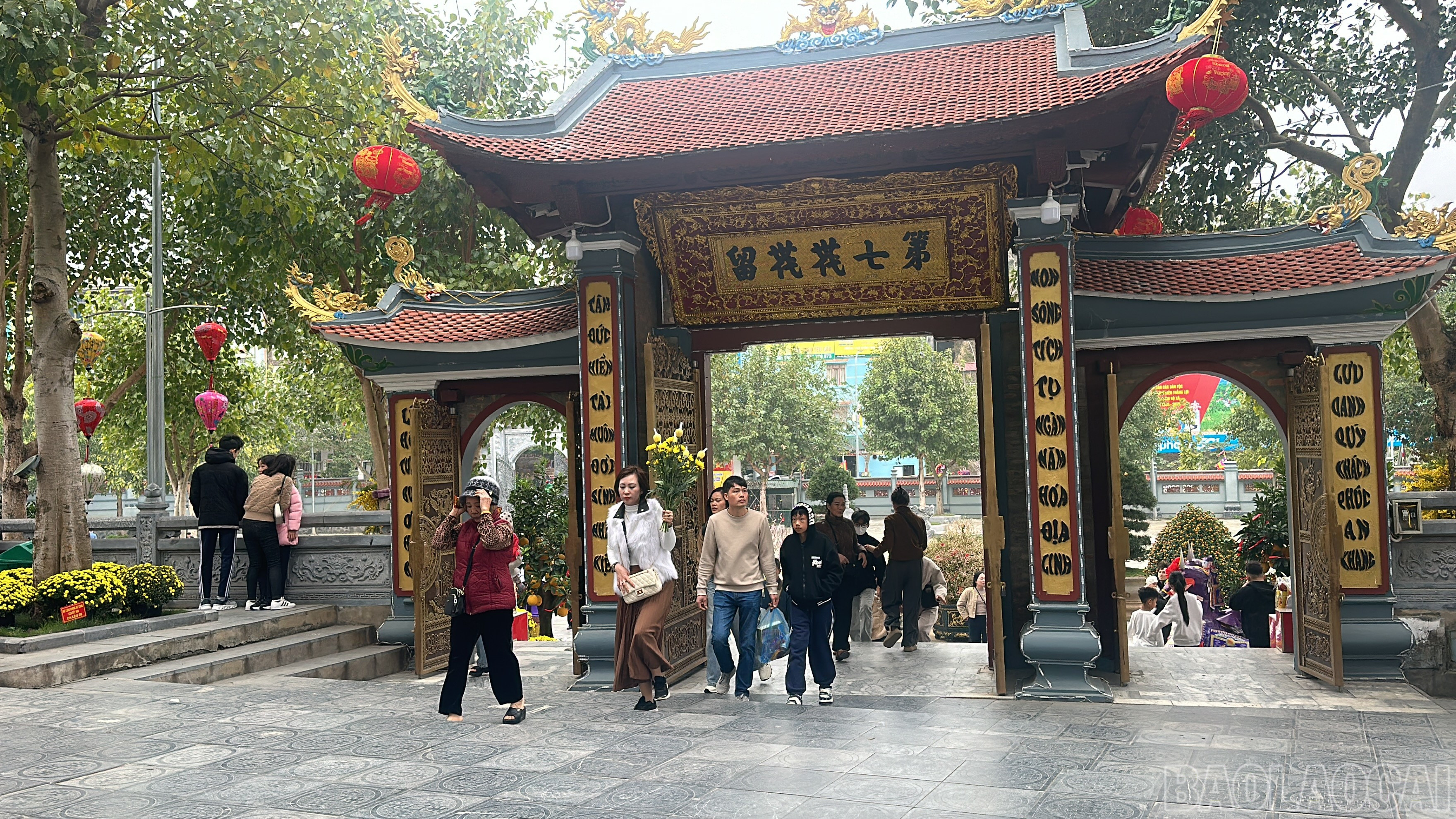
On the second day of the Lunar New Year, the number of visitors to Bao Ha Temple increased steadily.
Not only locals, but many tourists from other localities also choose Lao Cai as a spiritual spring destination. Ms. Le Thi Bich Thuy, a tourist from Phu Tho, said she came to the temple to pray for good fortune for her family, hoping for her parents' work to go smoothly and for her own studies to improve in the new year. The solemn yet vibrant atmosphere of the early spring made her trip even more meaningful.
Mr. Vu Ngoc Quang, Deputy Head of the Management Board of Relics and Tourism Development in Bao Ha commune, Lao Cai province, said: The Management Board has developed a plan to ensure security and order, assigned personnel to guide tourists, reminded people to strictly adhere to civilized behavior at the place of worship, and arranged areas for parking and environmental sanitation to serve the people and tourists.
Along with Bao Ha Temple, the Mau Temple relic site in Lao Cai ward also recorded a high increase in visitors during the first days of the year. In just the first two days of the new year, the relic site welcomed over 2,500 visitors, an increase of about 15% compared to the same period in 2025. Lines of people queued to offer incense, creating a solemn and orderly atmosphere.
Mr. Nguyen Hoang Long, Deputy Head of the Relic Management Board of Lao Cai Ward, Lao Cai Province, said: "To meet the spiritual needs of the people, preparations have been meticulously carried out since before the Lunar New Year. The relics in the ward have been decorated and their landscapes have been improved. In the coming time, the Management Board will advise the Ward People's Committee to continue investing in and repairing some dilapidated items, expanding the scale of the relic sites, and better serving the cultural and spiritual tourism needs of the people."
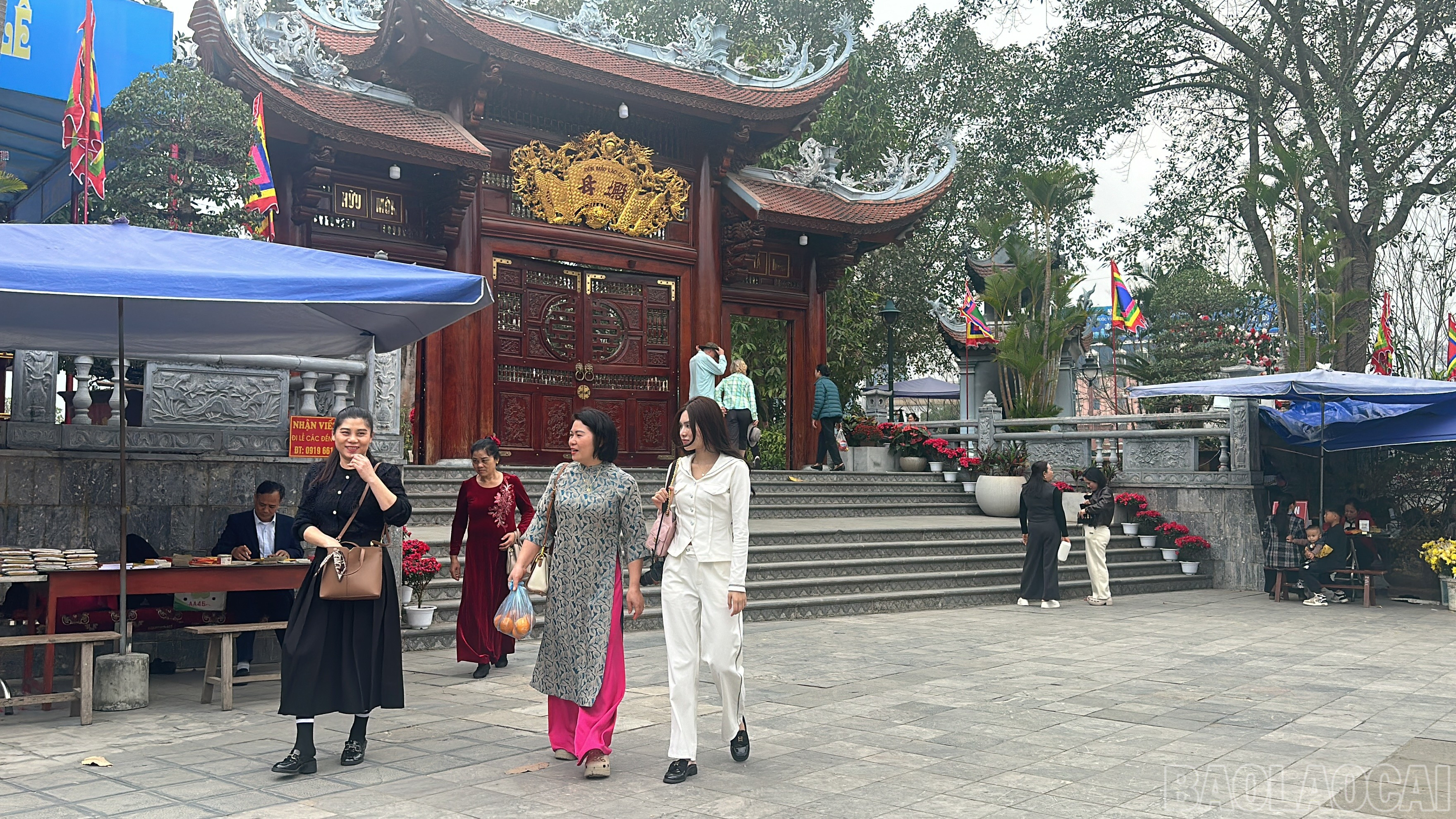
The Mau Temple in Lao Cai ward is a popular spring destination for many tourists.
In fact, the early days of the year show that spiritual tourism in Lao Cai continues to be a highlight attracting many tourists from near and far. Currently, the province has many spiritual tourism destinations associated with history, culture, and folk beliefs, chosen by people and tourists for spring excursions and worship, such as: Bao Ha Temple, Mau Temple, Thuong Temple, Dong Cuong Temple, Quan Temple, Cam Temple, Tuan Quan Temple, Dai Cai Temple… Each relic has its own historical and cultural value, but all are typical spiritual destinations, contributing to enriching the cultural tourism landscape of the locality.
In the early days of spring, the number of people visiting temples and pagodas to offer incense and sightsee increased significantly. The atmosphere was lively, and although crowded, order and solemnity were generally maintained. The management boards of the historical sites proactively organized, welcomed, and guided visitors, contributing to building an image of civilized and safe tourism.
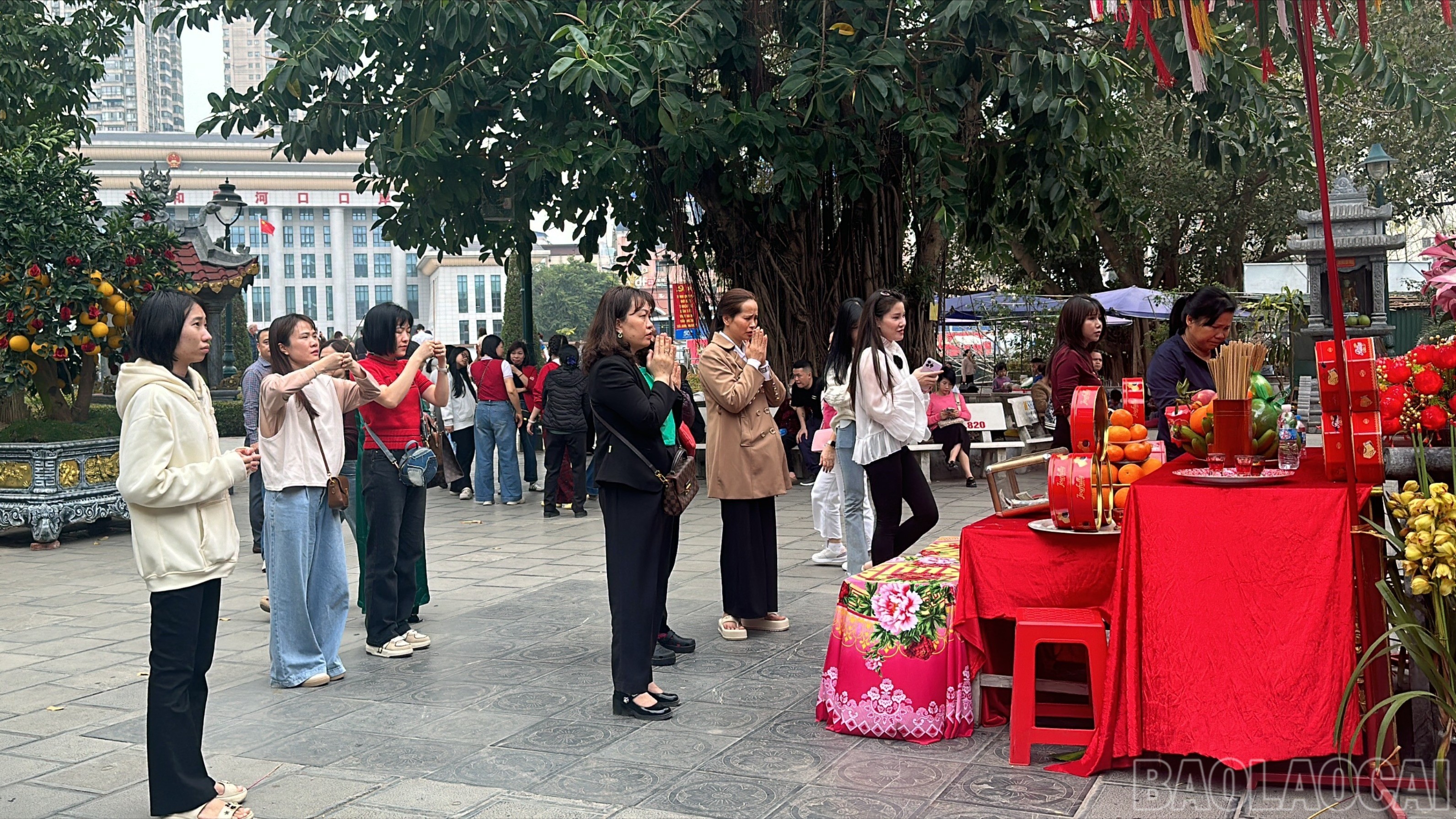
People carry many wishes with them in the first days of the new year.
While fulfilling the religious needs of the people, the system of spiritual tourism destinations also contributes to promoting the image of Lao Cai, creating a ripple effect for tourism activities right from the beginning of the new year. The vibrancy at temples and pagodas marks the start of the spring festival season in the province, promising to continue attracting many tourists in the coming time, contributing to the overall development of the local tourism industry.
https://baolaocai.vn/du-lich-tam-linh-hap-dan-du-khach-dau-nam-post894015.html