Switching from "growing medicinal herbs" to "medicinal economy"
Lao Cai has a diverse natural and climatic environment that is conducive to the development of medicinal plants. Lao Cai owns approximately 850 medicinal plant species, of which 78 are potentially exploitable and 78 are rare and valuable medicinal plants under conservation. Lao Cai has identified medicinal herbs as a key and spearhead plant to focus on developing in recent years.By the end of 2021, the province will have more than 3,500 hectares of main medicinal plants, 140 of which have been assessed by the Ministry of Health to meet GACP-WHO standards in the production of medicinal herbs. The shift from "growing medicinal herbs" to "medicinal economy" is an unavoidable trend in the context of the agricultural industry's tendency to shift from agricultural production to agricultural economy.
According to Associate Professor, Dr. Tran Van On, Lecturer at Hanoi University of Pharmacy, who is researching the Strategy for the Development of the Pharmaceutical Industry in Lao Cai Province, Lao Cai needs to reorient from growing medicinal plants to the herbal economy. (From medicinal herb cultivation to medicinal herb economics) Tourism is one of the major opportunities that can be capitalized on when developing the pharmaceutical economy in Lao Cai.

Growing medicinal plants brings dual benefits, both economic development and tourism development.
According to World Health Organization (WHO) statistics, approximately 80% of the population in developing countries receives health care through traditional medicine or traditional herbal medicine. Using products of natural origin has become a global trend as economic growth, income, and people's living standards have improved. Despite its development potential, Vietnam's domestic source of medicinal herbs only meets about 30% of the processing demand; the rest must be imported from China, Taiwan, and Singapore (mainly grown medicinal herbs). Meanwhile, Vietnam exports primarily natural and organic medicinal materials (which are thought to have high economic and medicinal value), which is an advantage in bringing Vietnamese medicinal products to the market. South to finicky markets such as Japan and Europe, etc.
Furthermore, domestic demand for medicinal herbs and herbal products has steadily increased in recent years and is expected to rise further in the coming years. Consumers are increasingly interested in natural health care products in the context of the Covid-19 pandemic. Furthermore, the benefits of medicinal herbs, such as safety, benignity, effectiveness, and competitive pricing, are key factors driving the growing popularity of herbal products among consumers. Furthermore, not only drugs, but the trend of cosmetics using natural ingredients to replace synthetic materials has accounted for 90% of total cosmetics produced.
Agriculture combined with tourism is becoming more popular, particularly tourist models of medicinal baths, foot baths, saunas, and medicinal products as gifts such as artichokes and herbal teas. After the Covid-19 pandemic is mostly under control, the number of tourists to Lao Cai is expected to skyrocket (over 5 million visitors per year), if the value obtained for each visitor who buys or uses a product/service made from herbs is very high (estimated value is over 500 billion VND).
Mr. To Manh Tien, Deputy Director of the Department of Agriculture and Rural Development, stated that as the agricultural sector begins to transition from agricultural production to agricultural economy, particularly with the implementation of Resolution 10 of the Provincial Party Committee on the Strategy for the Development of Commodity Agriculture in Lao Cai Province to 2030, with a vision to 2050, the transition from "growing medicinal herbs" to "medicinal economy" is very necessary.
According to Mr. To Manh Tien, the factors of competitive advantage, comparative advantage, market orientation, value addition, efficiency improvement, cooperation, and linkage must be clearly defined and accurately evaluated. Connection, circular economy, branding, human development, and sustainable development are all terms that are used in this context.

Upland localities are gradually shifting from growing medicinal herbs to a medicinal economy.
In addition, the province's selection and classification of medicinal plants for health care and disease treatment, for which it has a competitive advantage or a large market, follows major trends. Focus on developing value chains and building brands for products with Lao Cai strengths, such as cinnamon, which is both medicinal, seasoning, and flavoring; artichoke produces liver protective products; and pagoda in the direction of creating specific high-quality products, such as pain relievers, cold and flu remedies, and aromatherapy baths. Focus on developing known species for community-based medicinal herbs, such as bath medicines and herbal foods... Under the OCOP program, the province will continue to research and exploit indigenous knowledge. The remaining species, such as duong quy, xuyen khung, cat canh, dang sam, bach chi, bach truat, van moc hương, dang sam, y di, are finding it difficult to compete with China and other localities in the country. Market demand must be firmly established through clear and long-term binding contracts with enterprises.
Prioritize infrastructure investment (irrigation system, in-field road system, etc.) to meet the needs of medicinal herb development. Create a site clearance support mechanism and a land fund to attract investment projects to build factories and deep processing facilities for medicinal herbs. Choose a few strategic partners to be the driving force in promoting the growth of the local pharmaceutical industry. Creating favorable conditions for businesses to invest in the construction of factories for the preservation and deep processing of medicinal herbs in Bat Xat, Bac Ha, Sa Pa, and Lao Cai…

Exchange techniques of harvesting medicinal herbs with farmers.
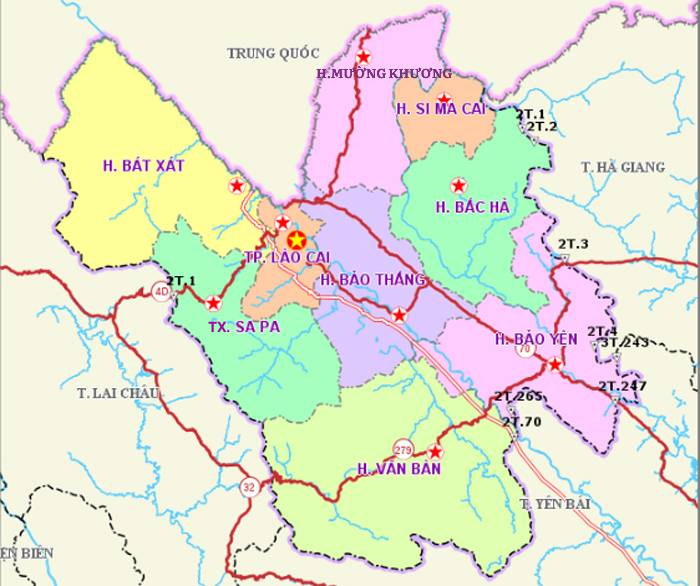
With the advantage of culture and landscape, tourism activities in the province develop strongly, it is necessary to associate "medicinal economy" activities with tourism, through building cultural - medicinal axes, creating Sightseeing area to experience medicinal herbs and health care. Specifically, the western axis: Lao Cai city - Sa Pa (Ta Phin, Ngu Chi Son) - Bat Xat (Pa Cheo, Y Ty, Trinh Tuong), with main medicinal herbs such as artichokes, red Dao bathing medicine, Giao Co Lam, Chua Du, Vu Diep Ginseng, Unique Flowers, Xuyen Khung, Tao Meo. Northeast axis: Lao Cai City - Bac Ha - Si Ma Cai - Muong Khuong with main medicinal herbs such as duong quy, xuyen khung, cat canh, dan sam, bach chi, bach truat, van moc huong, dang sam, tam that. Eastern axis: Bao Yen (Bao Ha, Vinh Yen, Nghia Do) - Bac Ha (Ban Lien, Thai Giang Pho, Bac Ha town) with cinnamon as the main medicinal ingredient…