Nghia Do - the vitality of clean streams and green fields
From a peaceful countryside nestled in the mountains and forests of the Northwest, Nghia Do commune (Bao Yen district, Lao Cai province) is gradually transforming itself into a bright spot for community tourism.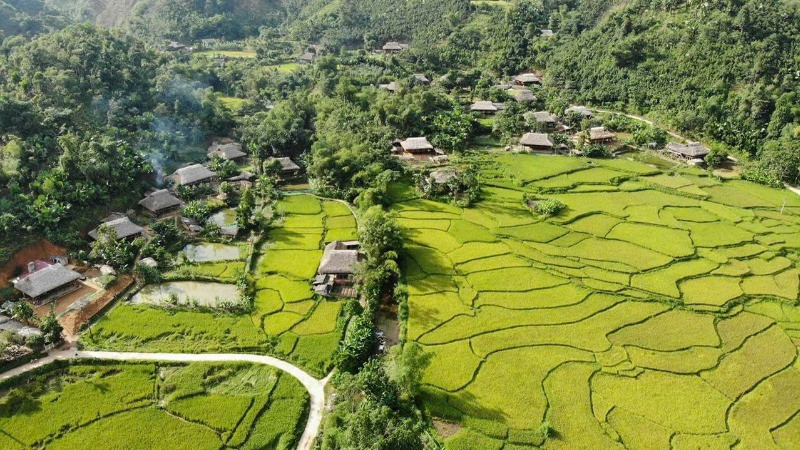
The poetic scenery of Nghia Do. (Photo: VU QUANG)
In 2024, natural disasters struck, causing heavy losses in human lives and property. However, after a short time, this place was once again filled with new life. Stilt houses were rebuilt, flowers bloomed along the roads, and the laughter of tourists echoed throughout the village, showing the resilient and persistent spirit of the Tay people in Nghia Do in facing many challenges and hardships.
The storm at the end of 2024 caused severe damage to Nghia Do commune: Nearly 400 houses were affected, with many houses collapsed completely, thus many households were forced to evacuate urgently and the casualties brought profound sorrow. For this traditionally rich region, which had just begun to thrive with community-based tourism, it was an enormous loss, disrupting many development plans.
Overcoming challenges to bring renewed vitality to the village
In our memory, we came to Nghia Do in late autumn 2024 when the mountain mist was still hazy and the village had not yet recovered from the fierce flood. The rain and floods carried mud and soil to the villages, swept away many stilt houses, buried the fields, and submerged the entire region in grief. Yet, amidst the desolation, not a single complaint or lament was heard. The people of Nghia Do, generations deep in their bond with the land and forest, suppressed their sorrow. They rebuilt foundations, erected walls, and re-roofed homes, brick by brick...
The rough hands, after the storm season, continue to weave baskets, plant flowers, repair houses, reinforce dirt roads, and welcome tourists back. At the same time, families that suffered heavy losses still keep some traditional items such as panpipes, weaving frames, sticky rice steamers, etc. to always remind them of their family traditions.
In times of hardship, the will of the people becomes even stronger. The village seems to be revived in the green of the palm forests, in the flower beds along the road, in the smiles full of confidence of the people on the journey to restore tourism - to restore the very breath of their homeland.
Ms. Luong Thi Quyen, one of the pioneering homestay owners in Ban Hon village, was heartbroken just days before, seeing her home and ancestral belongings shattered in the mud. Yet, in the following days, she picked herself up, working with her children and grandchildren to rebuild the house frame. Neighbors contributed their labor, local organizations offered support, and everyone helped out in any way they could. Even with the new house not yet fully equipped, she was determined to maintain their traditional lifestyle, laying out rush mats and preparing meals on the floor.
“Tourism is not just about beautiful houses, but most importantly, human emotions, which is the soul of the village. If we can still preserve that, we still have the opportunity to start over,” Ms. Quyen shared, with her eyes filled with determination and pride for the land she has been attached to.
Since the natural disaster, Nghia Do has simultaneously restored and improved its tourism. More than 30 homestays have been renovated, and many ancient stilt houses have been restored according to the traditional architecture of the Tay people. The landscape has been improved, including roads planted with more flowers. The streams have been cleaned, creating a green-clean-beautiful, close-knit, and attractive space for tourists.
The homestays are now more robust, though they still preserve the traditional stilt house design. Families have begun collecting more ancient artifacts, reviving folk games, and crafting souvenirs from brocade and bamboo. Living spaces are meticulously arranged so that visitors can not only rest but also fully experience the cultural life of the Tay people.
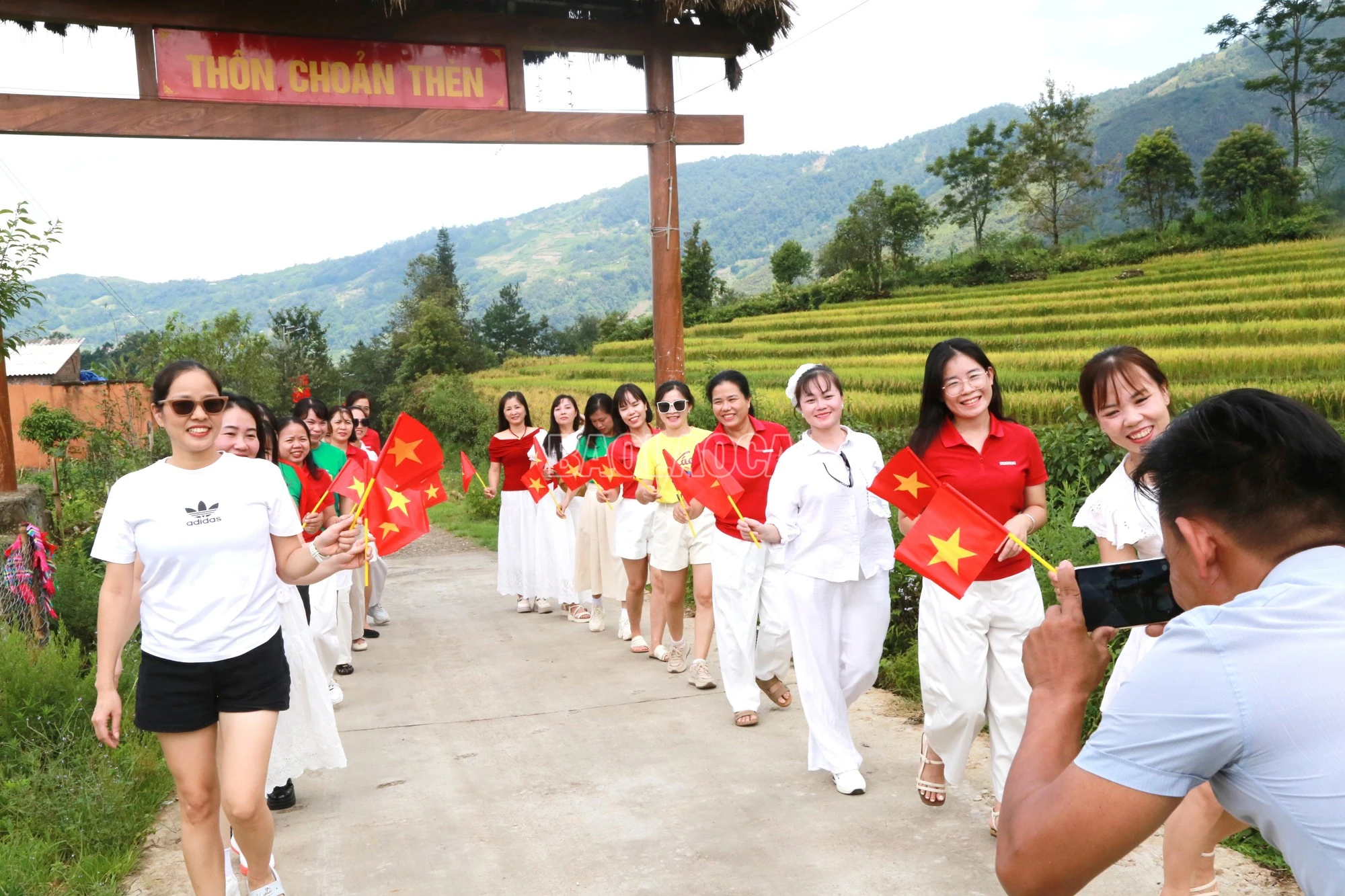
The village road, which was once just a simple concrete road, is now lined with flowers, creating a picturesque landscape. The stream that was once filled by landslides was cleared and cleaned by the villagers together. Bamboo trash bins are placed along the path, with a friendly reminder in two languages: “Keep the village clean - happy heart, beautiful scenery”.
Notably, the people now do not passively wait for tourists to come, but actively learn how to promote their village's image. Many training sessions on tourism promotion are held right at the village cultural house. Most households know how to take photos, record videos with their phones, use many digital platforms, etc. to introduce their homestays on social networks. Thanks to that, less than a year after the natural disaster, Nghia Do has not only recovered, but also improved impressively.
The number of tourists to the commune in the first 6 months of 2025 increased sharply, nearly 30 times higher than that in 2020. International visitors also began to return, coming to Nghia Do as a place to "touch" the original, authentic nature. Few people could have expected that from the scene of devastation after the flood, Nghia Do could so strongly rise again. That did not come from miracles, but from the hands, minds and hearts of the people here - people who turned loss into motivation and found opportunities in difficulties.
The hope of continuing "long strides"
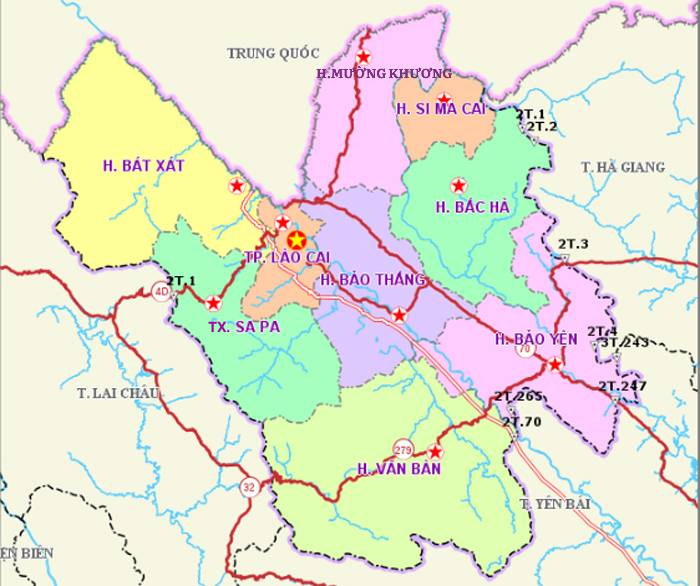
Nghia Do has now become a name proudly mentioned on the tourism map of Bao Yen district, Lao Cai province as a typical model of community tourism associated with cultural preservation. That initial success is the result of a journey of proactive efforts and creativity from the local people themselves. What the locality has been doing does not stop at "doing tourism" but has been upgraded to "living with tourism".
Homestays are both the accommodation for tourists and the space to fully experience the culture of the Tay people. The way the house is decorated, the food, the greetings, the music, and the sound of weaving in the small kitchen, etc. create a sense of intimacy and sophistication, so that every visitor leaves with a deep memory.
What's truly valuable is their spirit of not chasing quantity but preserving identity and reputation. The conservation of nearly 1,100 ancient stilt houses reflects a long-term vision, refusing to trade their unique identity for modern structures. Each preserved stilt house acts as a 'living museum,' allowing visitors not just to see, but to feel and understand the spirit and way of thinking of an ethnic group living in harmony with nature.
On an early summer afternoon, a gentle mist draped over Nghia Do, as the last rays of sunlight slanted across the freshly rebuilt stilt houses. Inside Ms. Luong Thi Quyen's cozy homestay in Ban Hon village, the cheerful laughter of tourists, fresh from their cross-village trek, echoed by the fire. The evening meal was laid out: stream fish grilled with mac khen leaves, steamed indigenous piglet pork with lemongrass, boiled wild vegetables with cham cheo dipping sauce, five-colored sticky rice, and a fragrant bowl of corn wine. Ms. Quyen gently explained the meaning of each dish to her guests, sharing stories of rice grains and diligent hands.
The atmosphere of the meal is attractive because of the delicious taste of the food and full of warmth, as if after so much loss and pain, the people still sincerely open their hearts with what they have: Humanity, culture, sincerity and deep aspirations. On the wall, a small screen plays a slideshow of village photos, clips filmed and edited by the children in the family with smartphones, posted on social networks to promote tourism in their homeland. The young generation of Tay people now knows how to livestream the harvest and festival season in a simple but emotional way. Among the laughter, the wrinkles of the Tay grandmother and the sparkling eyes of the children, all seem like a brighter, more stable tomorrow is looming.
However, to continue to take steady steps, Nghia Do needs to continue to develop with smart and sophisticated solutions. Nghia Do has been flexible in digital transformation of tourism, but for people to truly master technology and turn their unique culture into "valuable digital content", it needs solutions that are close, easy to understand, highly communal and closely linked to identity; build a library of copyrighted local content (photos, videos, ethnic music...) for tourism households to use consistently; synchronize the booking and introduction system instead of each household having a separated webpage, etc.
According to community tourism experts, the locality needs to expand tourism models associated with real-life experiences, such as “a day as a Tay person” with activities such as weaving, cooking, fishing, and going to the forest to collect medicinal herbs. These small but unique tours will both generate income and help tourists form a deep connection with the local culture.
https://nhandan.vn/nghia-do-suc-song-mien-suoi-sach-dong-xanh-post882140.html