Cooperative societies are working alongside the province towards the goal of sustainable development.
In the process of developing new rural areas, the collective economy, with cooperatives as its core, not only serves as a place to link members together in production, but also becomes a source of employment for local laborers.
From production and processing to consumption, and spanning across agriculture, handicrafts, tourism, and services, cooperatives have created stable jobs for thousands of workers, contributing to increased income for the people and the socio-economic development of the province.
Motivation from mechanisms and policies
Over the years, Lao Cai province has implemented many policies of the Party and State to promote the development of the collective and cooperative economic sector. In particular, it has initially implemented effectively the Prime Minister's decisions on the Program to support the development of the collective and cooperative economy for the period 2021-2025; the Strategy for the development of the collective and cooperative economy for the period 2021-2030; and the Project to support cooperatives managed by women, creating jobs for female workers by 2030.
In addition, the province is implementing programs and policies to support the development of the collective economy, focusing on digital transformation, supporting cooperatives managed by women, and supporting pilot cooperatives participating in the project to select, refine, and replicate effective new-style cooperative models in the 2023-2025 period. This will create momentum for cooperatives to improve their management capacity, increase competitiveness in the market, expand production scale, create jobs, and improve the income and living standards of tens of thousands of members.
Currently, the province has 1,482 cooperatives with a total charter capital of 3,411 billion VND, attracting 42,112 members. Of these, 838 cooperatives operate in agriculture; 309 in industry and construction; 317 in trade, services, and other sectors; and 18 in finance, banking, and insurance. With their increasing numbers and diverse range of industries and sectors, the production activities of these cooperatives attract a large workforce.
Job support
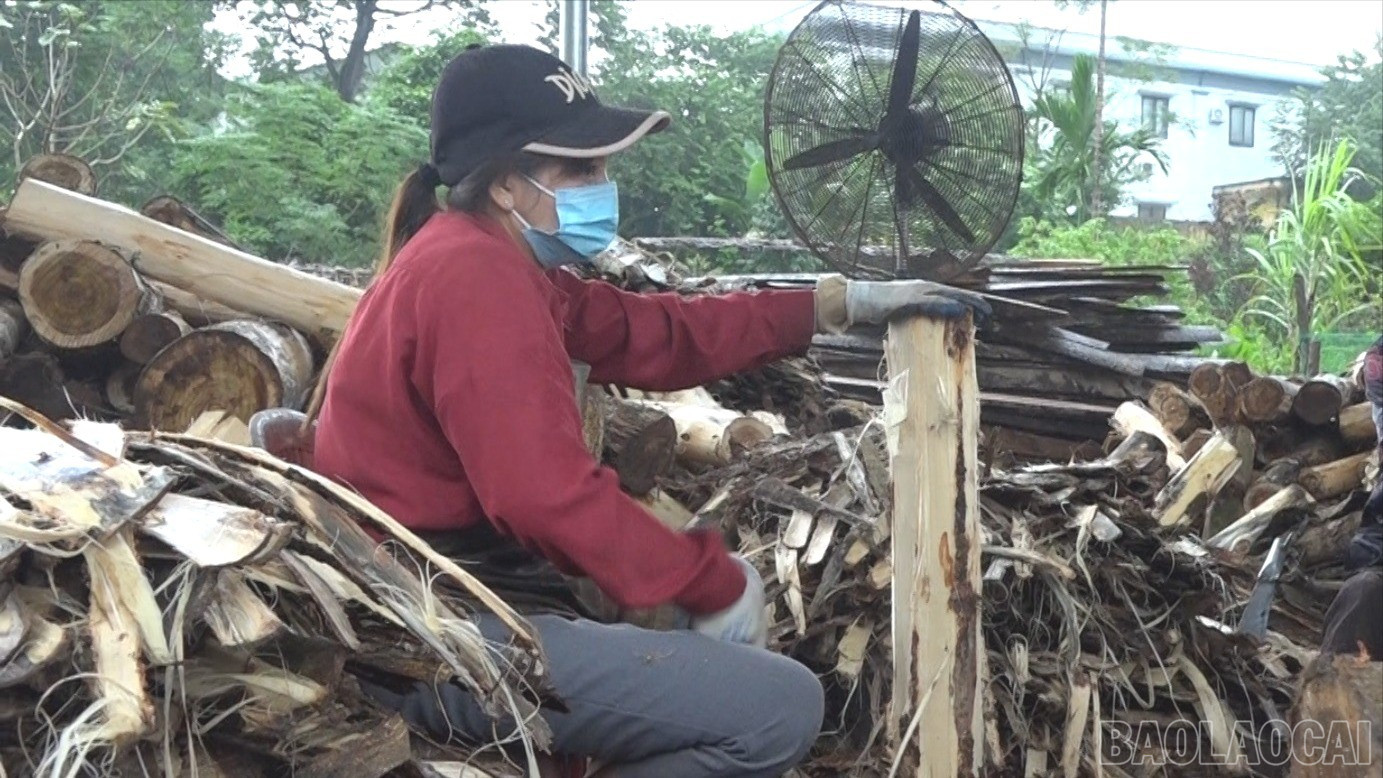
Tan Nguyen General Services Cooperative - a labor support system for rural workers.
The Tan Nguyen General Services Cooperative currently has 3 workshops for purchasing and processing timber from planted forests in Bao Ai commune. Thanks to its proximity to raw material sources and FSC-certified timber, the cooperative's processed products are sold smoothly. Each month, it supplies the market with 120-150 m³ of finished timber, achieving nearly 5 billion VND in revenue annually.
Mr. Hoang Thang Long, Director of Tan Nguyen General Service Cooperative, said: "To meet the demands of orders, we have to maintain regular production. Currently, the cooperative has 21 main workers, and during the peak season, there will be an additional 30 workers, mainly people from the commune."
The work of processing timber from planted forests at the cooperative involves many stages such as wood segmentation, cutting, drying, and transportation, making it suitable for many rural laborers. Mr. Hoang Van Dam (Trai Phung village) is currently working in wood segmentation and sawing at the cooperative. Thanks to this stable job, his family earns nearly 9 million VND per month.
Mr. Dam shared : “Since the cooperative opened its wood processing factory, many local workers have had more stable jobs. Women do light work such as drying planks, while men operate machines and cut and saw wood. The average salary per person is from 6 to 9 million VND/month.”
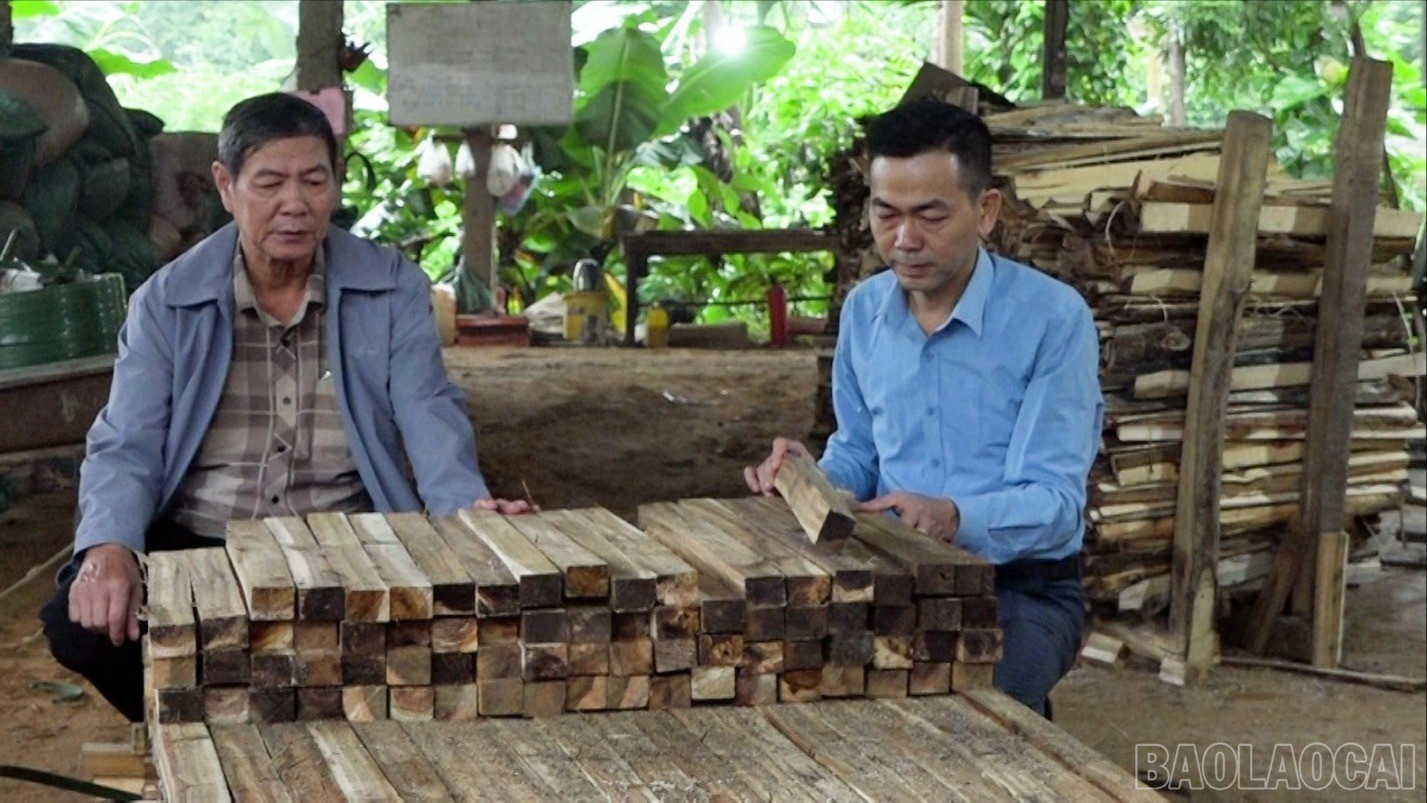
Leaders of the Provincial Cooperative Union visited the model of processing timber from planted forests at Tan Nguyen General Service Cooperative.
In addition, the agriculture and forestry sector attracts over 56% of active cooperatives. These cooperatives not only contribute to promoting the restructuring of the agricultural sector, linking, consuming, and processing agricultural products, but also create jobs for workers, especially in rural areas.
Hoa Loi Cooperative (Lao Cai Ward) has invested nearly 4 billion VND in building a 2,000 m² chili sauce production factory. To achieve an annual output of approximately 80 tons, the cooperative has partnered with nearly 200 households growing chili peppers as raw materials, and has also signed contracts with 10 permanent workers and 30-40 seasonal workers with stable salaries.
Ms. Nguyen Thi Hong Loan, Director of Hoa Loi Cooperative, said: "Most of the unit's workers are local people. The work is suitable for many ages and health conditions, so they have a long-term commitment to the cooperative."
Similarly, at the Suoi Giang Cooperative, the workforce is primarily composed of local people. From simply planting and caring for Shan Tuyet tea, many have now become directly involved in tea processing. The cooperative currently produces four main product lines: green tea, black tea, white tea, and yellow tea. Workers, who previously worked manually, have gradually become proficient in operating machinery and are now undertaking many important stages in the production line.
Mr. Sung A Giang, the technical manager, shared: “Previously, I only picked and sold fresh tea leaves, but now I am proficient in the processes of roasting, rolling, and flavoring. The job is stable, with regular salary and bonuses, so my family's life is more comfortable.”
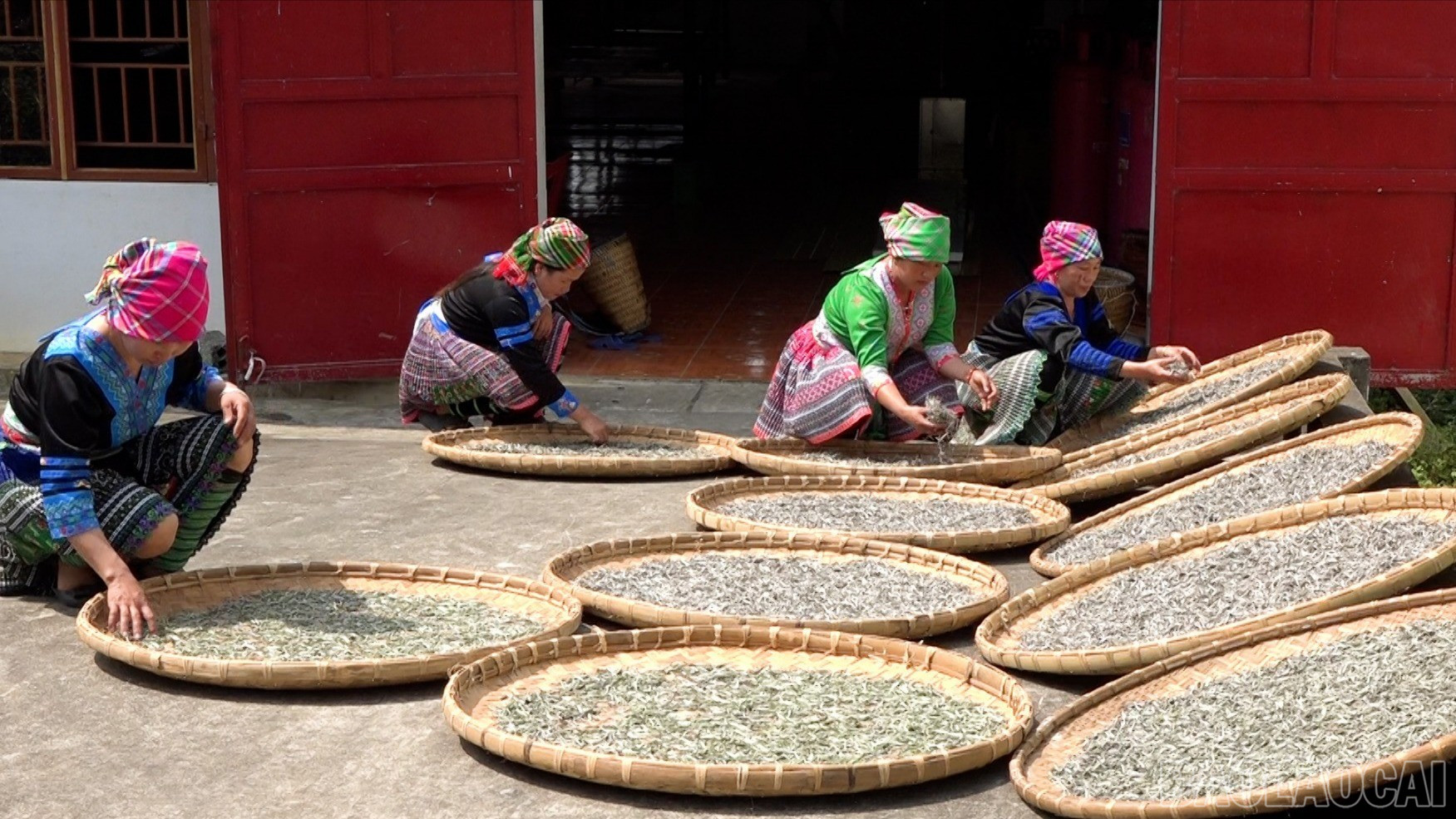
Drying the tea leaves is a crucial step in the production of Shan Tuyet tea by the Suoi Giang Cooperative.
Ms. Lam Thi Kim Thoa, Director of the cooperative, shared: "At the cooperative, workers participate in many stages from production, processing, and packaging to image promotion activities. Currently, there are about 20 local workers employed here, with an average salary of 6.5 - 7 million VND per person per month."
By 2025, from its four tea varieties, Suoi Giang Cooperative had brought over 12,000 products to the market, generating nearly 3 billion VND in revenue and contributing to increased income for its members and workers.
...to a sustainable livelihood foundation
Thanks to their diverse range of activities, cooperatives in the province have contributed to creating local jobs for the people. In 2025 alone, more than 18,000 workers had regular employment in cooperatives, with an average income of nearly 60 million VND per person per year.
Mr. Ha Hai Huynh, Vice Chairman of the Lam Thuong Commune People's Committee, said: "Currently, there are 9 cooperatives in the commune. These cooperatives have purchased agricultural products and created jobs for local laborers, especially women and ethnic minorities. The commune also encourages households and groups of households to link together to form cooperatives to create large-scale commodity production areas."
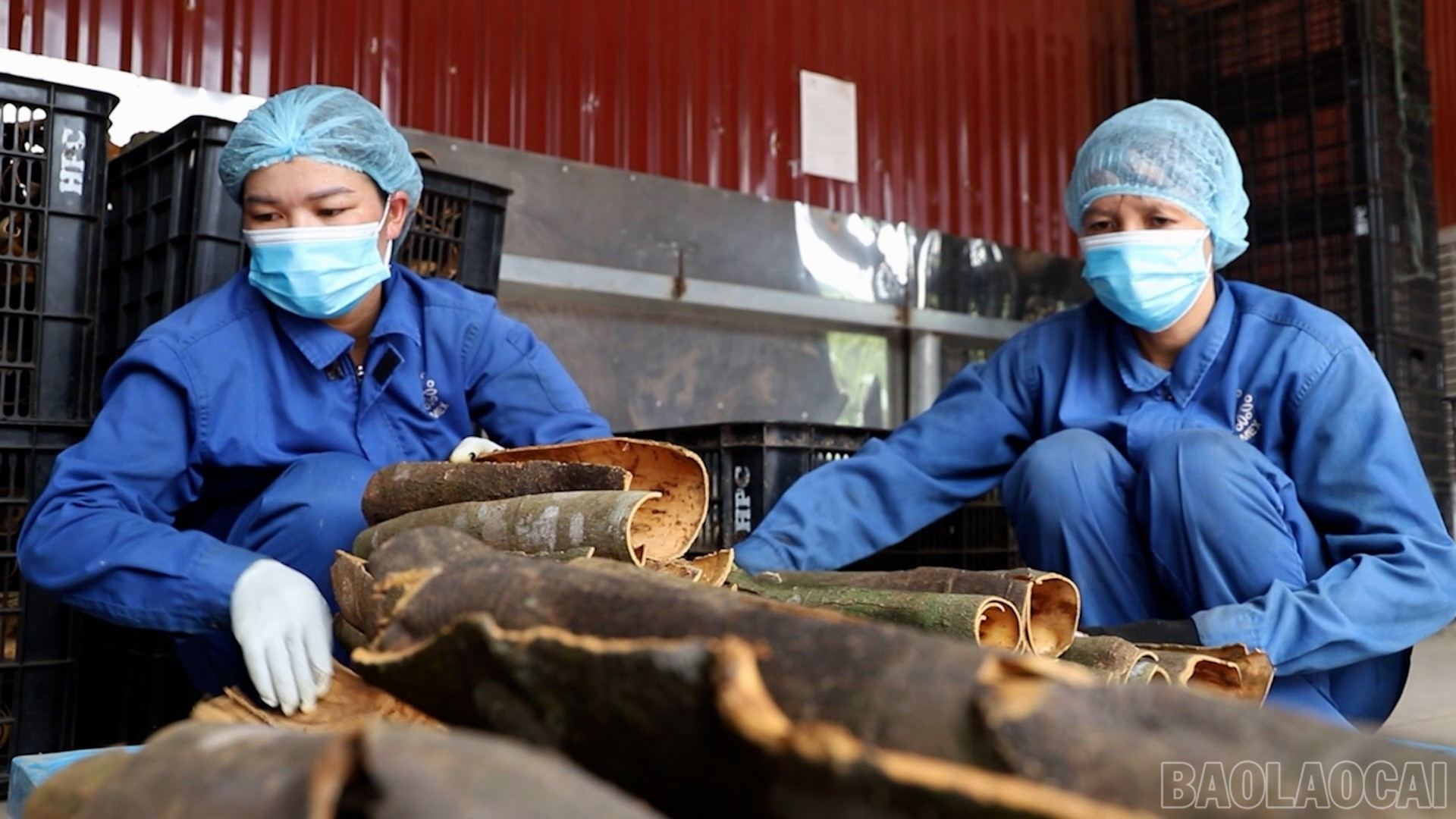
The Vietnam Cinnamon and Anise Cooperative (Tran Yen) provides regular employment for 80 local workers.
Cooperative societies not only provide employment opportunities for workers but also serve as a platform for technical and organizational support for members and local people. Through their work, workers gain access to modern machinery and production processes, thereby changing their mindset and applying science and technology to family production, creating sustainable livelihoods for economic development.
Mr. Nguyen Duc Lam, Vice Chairman of the Lao Cai Provincial Cooperative Union, stated: "By participating in and working at cooperatives, members and workers will receive support and guidance on technical and production methods; they will have access to new policies and support programs from the Party and State for the collective economic sector, especially in ethnic minority areas, creating momentum for the more sustainable development of the collective economy."
By 2026, Lao Cai province aims to create jobs for 30,000 workers. To realize this goal, the collective economic sector, with cooperatives as its core, is increasingly asserting its important role in retaining and creating stable jobs for workers in the homeland, contributing to promoting economic development and accompanying the province towards sustainable development goals.
https://baolaocai.vn/hop-tac-xa-dong-hanh-cung-tinh-huong-toi-muc-tieu-phat-trien-ben-vung-post895600.html