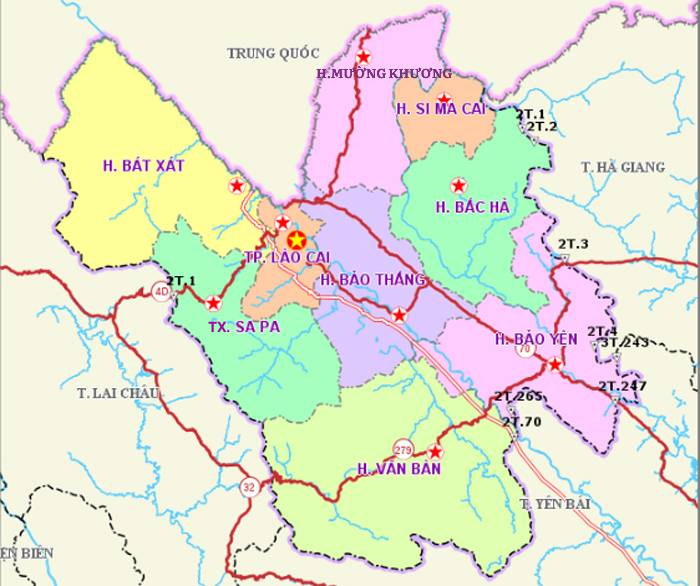
Planting the seeds of aspirations for establishing a career in one's homeland.
In recent years, along with socio-economic development, the youth entrepreneurship movement in Lao Cai province has spread strongly. Many young people choose to stay in their hometowns, exploiting existing potential to build effective economic models, from livestock farming and agricultural production to community tourism development.
Starting a business in clean agriculture.
Born and raised in Ba Khe village, Cat Thinh commune, Hoang Ngoc Khanh (born in 1990) often pondered his career path. Recognizing the growing market demand for clean food and specialty products, he decided to try his hand at raising hybrid wild boars organically.
Initially, lacking experience, Khanh primarily learned through books, newspapers, and the internet. After mastering the basic techniques, he went directly to reputable breeding facilities in Thanh Hoa to purchase breeding stock.
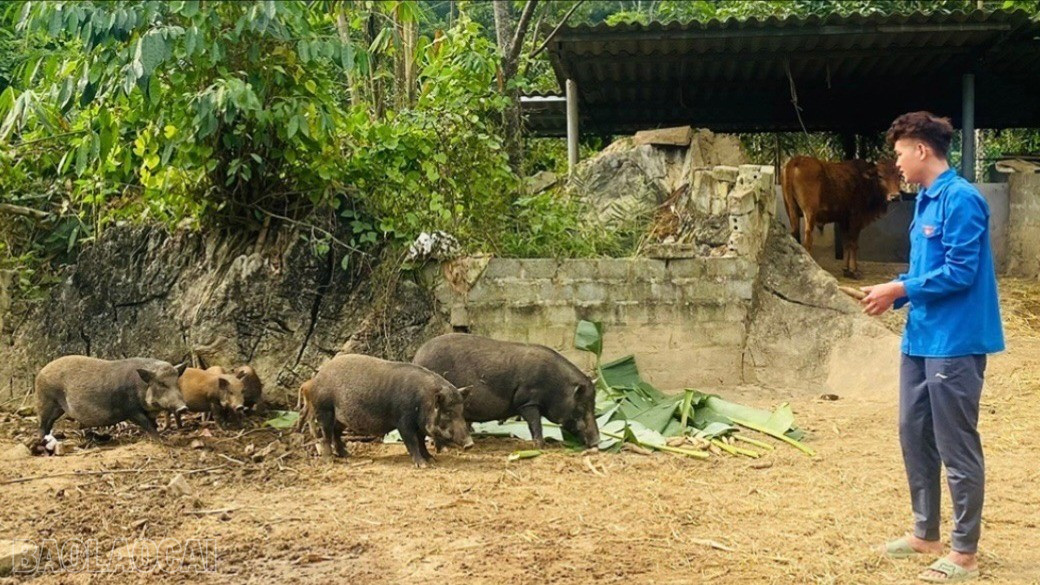
Hoang Ngoc Khanh's hybrid wild boar farming model is proving economically effective.
With limited initial capital, Khanh started his herd with only 5 sows and 1 breeding boar.
Mr. Hoang Ngoc Khanh shared: "In rural mountainous areas, stable job opportunities are not abundant. Therefore, I think that to have a good income, I have to find my own path. My family has always been involved in agriculture, so I chose to develop the economy from agriculture, but in a new way."
According to Khanh, hybrid wild boars are quite suitable for mountainous areas because of their good adaptability, low susceptibility to disease, and the fact that they don't require overly complex care techniques. Their main food consists of green vegetables, rice bran, corn bran, potatoes, and cassava, which are readily available locally.
To ensure the quality of his livestock, he employs a semi-natural farming method, combining grazing in a fenced area. Vaccination and sanitation procedures are thoroughly implemented to minimize the risk of disease outbreaks.
Thanks to the delicious, firm meat quality, Khánh's family's hybrid wild boar products were quickly embraced by the market. Currently, his family sells about 50 commercial pigs annually, with an average weight of 30 kg/pig, at a price of 130,000 - 150,000 VND/kg live weight. In addition, the family also supplies about 30 piglets, priced at over 1 million VND/pig.
The total revenue from this model reaches nearly 300 million VND per year. After deducting expenses, his family earns approximately 150-170 million VND.
Alongside raising hybrid wild pigs, Khanh also developed models for raising turtles and frogs to increase his income.
In the future, he plans to further expand his livestock farming operation and is ready to share his experience with young people who want to develop a similar economic model.
Building a career from the fields of one's homeland.
In Cau Thia ward, the youth economic development movement is making many positive strides. The ward currently has 9 cooperatives and more than 20 effective youth economic models, demonstrating a clear shift in the awareness of young people.
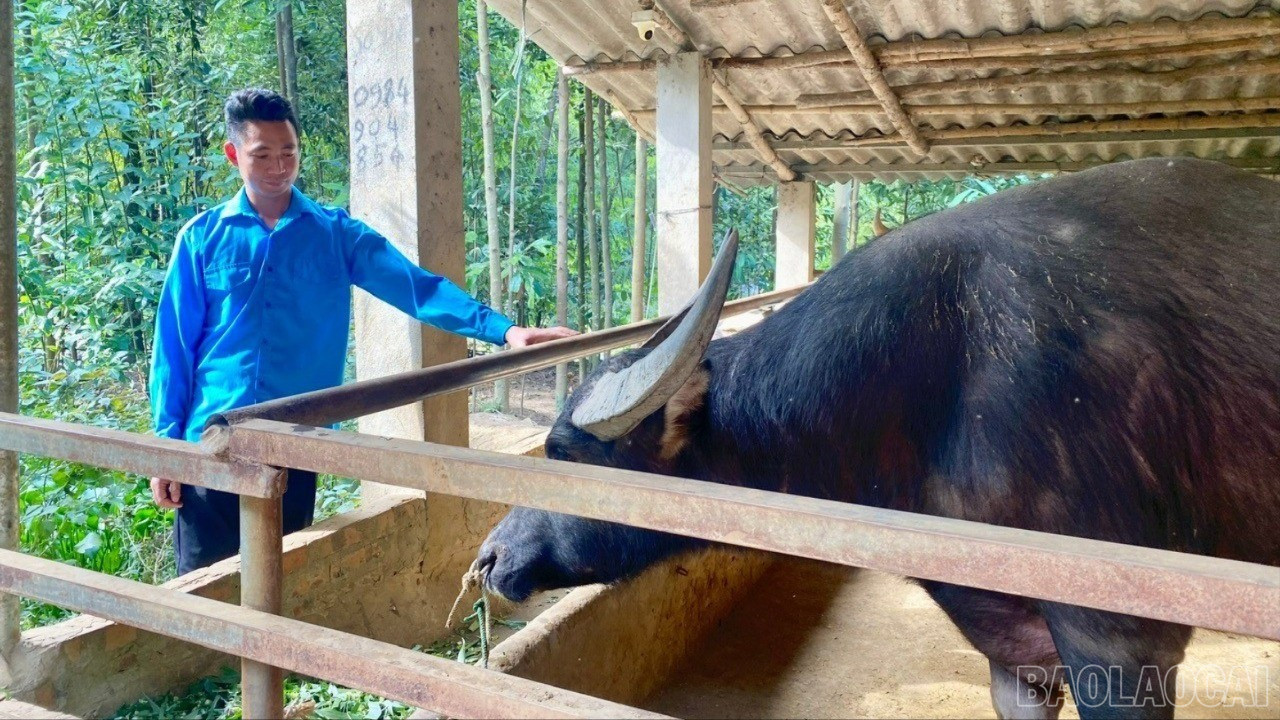
Lo Van Nam's buffalo and cattle farming model is suitable for the local natural conditions and production practices.
Mr. Lo Van Nam, from Ban Han residential area, is one of the exemplary young people. Previously, he worked far from home hoping to improve his life. However, after many years of struggling, Nam realized that his hometown was still the place where he could build a lasting future.
Returning to his village, he began developing buffalo and cattle farming – livestock suitable for the local natural conditions and production practices.
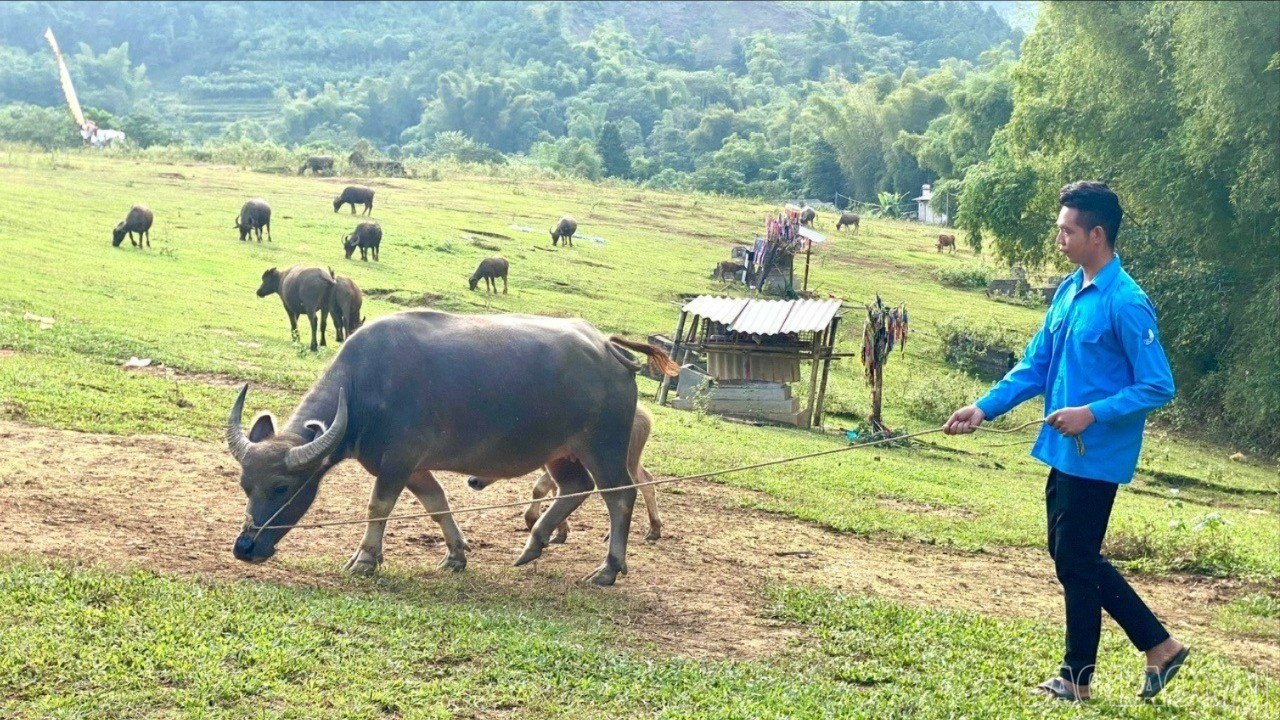
Many farming households in Cau Thia ward are replicating the model of raising buffalo and cattle.
Initially, the scale of livestock farming was small, but thanks to hard work and the application of appropriate farming methods, his family's livestock herd gradually developed steadily.
Currently, Nam's family sells 20-30 buffaloes and cows each year, bringing in over 200 million VND in revenue.
Not only has Lo Van Nam's model helped his family achieve a more stable life, but it has also become a testament to the daring and innovative spirit of young people in the highlands in their journey to build a career.
Starting a business from cultural identity
Besides agriculture, some young people in Lao Cai are choosing a new direction in community-based tourism linked to local culture. A prime example is Giang A Sua, a Mong ethnic minority from Mang Mu village, Mu Cang Chai commune.
In 2017, inspired by the familiar image of corn cobs hanging all over porches after each harvest season, he came up with the idea of building a cultural experience space called "Màng Mủ Corn House".
Súa has transformed her home into a unique cultural space. Thousands of golden ears of corn are hung throughout the porch, on the roof, and in various living areas, creating a characteristic highland scene that attracts the attention of tourists and photographers.
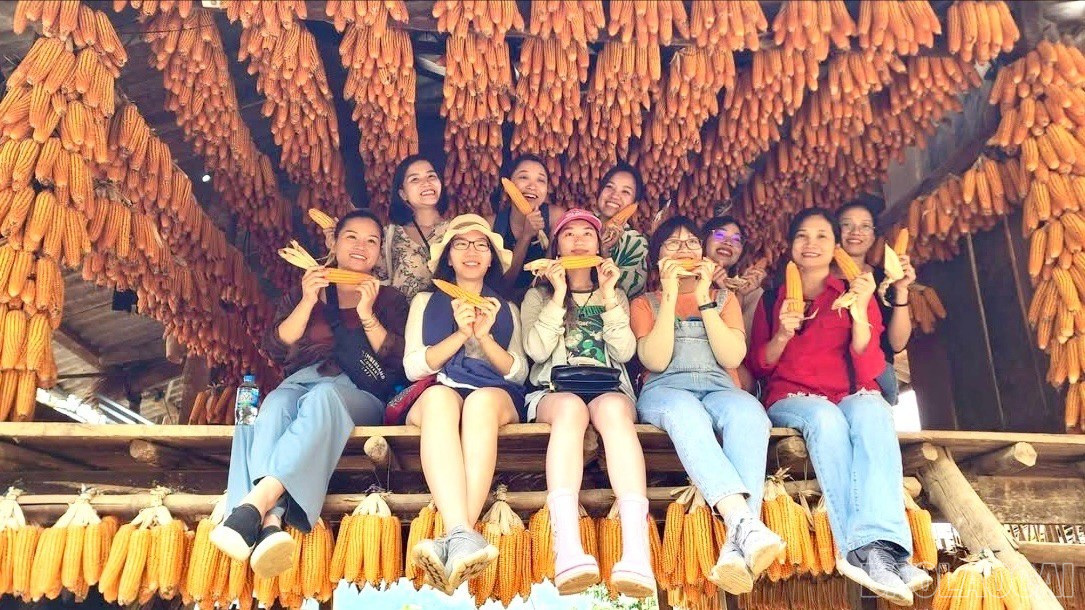
Tourists visit and take photos at the "Màng Mủ Corn House".
Here, visitors can explore and experience many activities associated with the life of the Hmong people, such as grinding corn, pounding rice, spinning flax, weaving brocade, and drawing patterns with beeswax.
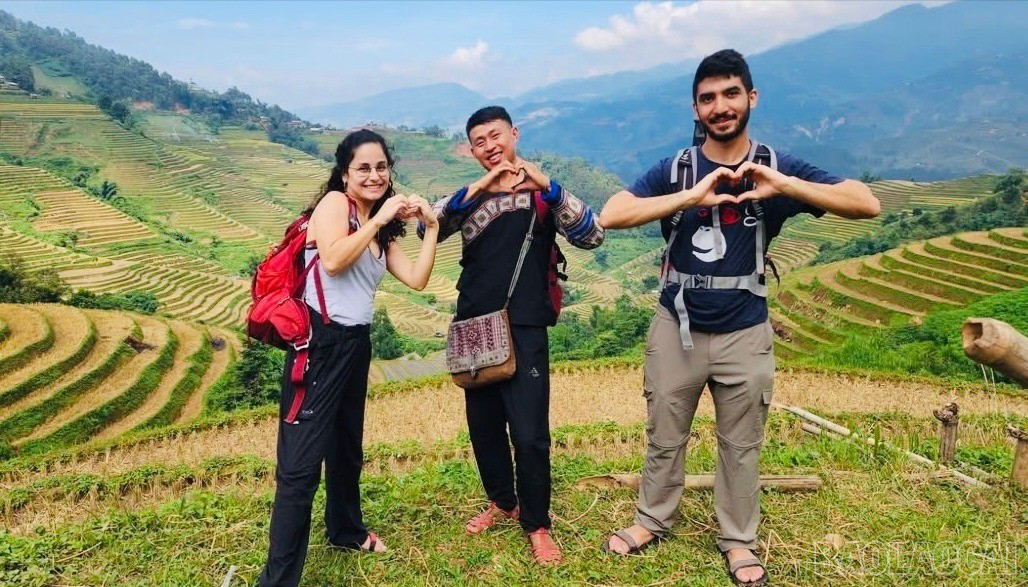
Giàng A Súa (standing in the middle) poses for a photo with foreign tourists during their experience exploring Mu Cang Chai.
Giàng A Súa shared: "Initially, I only built a house to hang corn as a family tradition. Later, seeing how much tourists enjoyed it, I expanded the experiential activities."
Currently, the Mang Mu Corn House welcomes hundreds of domestic and international visitors each year. With an entrance fee of 20,000 VND per person, his family earns an additional 20 million VND per year. Furthermore, the sale of agricultural products, brocade fabrics, and souvenirs brings in another 30-40 million VND.
Based on this model, Súa also encouraged young people in the village to form the Màng Mủ Community Tourism Cooperative. Members are trained to become local guides, organizing trekking tours and experiencing local culture and cuisine.
Spreading the entrepreneurial spirit among young people.
The economic models of young people in many localities in the province demonstrate the dynamism and creativity of the younger generation. Although they choose different fields, their common point is the aspiration to become wealthy in their own homeland.
Over the past period, the Youth Union at all levels in the province has implemented many activities to support young people in starting businesses, such as providing loan support, technical training, and building collective economic models.
Over the past year, the Youth Union branches at all levels in Lao Cai province have developed 7 youth entrepreneurship models, established 13 cooperative groups and 4 cooperatives owned by young people.
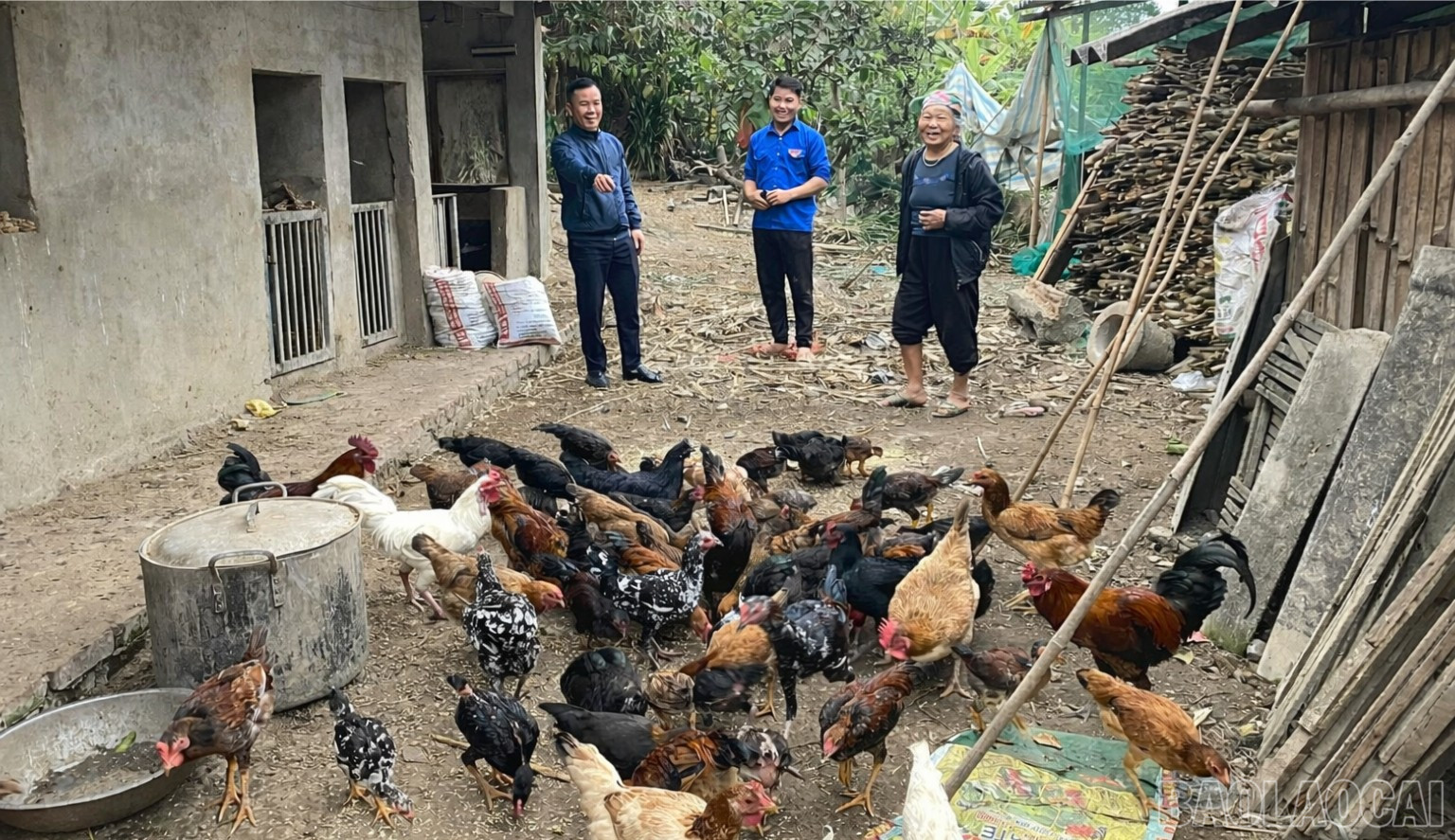
Many youth-led economic models in the province are proving effective.
These figures show that the youth entrepreneurship movement is increasingly spreading, contributing to local economic development and opening up many opportunities for sustainable careers for the younger generation in their hometown of Lao Cai.
https://baolaocai.vn/gieo-khat-vong-lap-nghiep-tren-que-huong-post895491.html