The worship of Saint Tran in Lao Cai ward.
As the only ward in the province bordering China, Lao Cai ward is closely associated with the glorious history of defending the nation's borders and boasts many historical relics related to the worship of Saint Tran, such as Thuong Temple, Cam Temple, Quan Temple, and Van Hoa Temple.Upon their first visit to the border region of Lao Cai, the family of Ms. Nguyen Doan Huyen Trang, tourists from Hanoi, chose the Thuong Temple on Hoa Hieu Hill as their first stop. Here, the clear blue Nam Thi River merges with the red, silt-laden Red River, and across the Nam Thi River lies neighboring China.
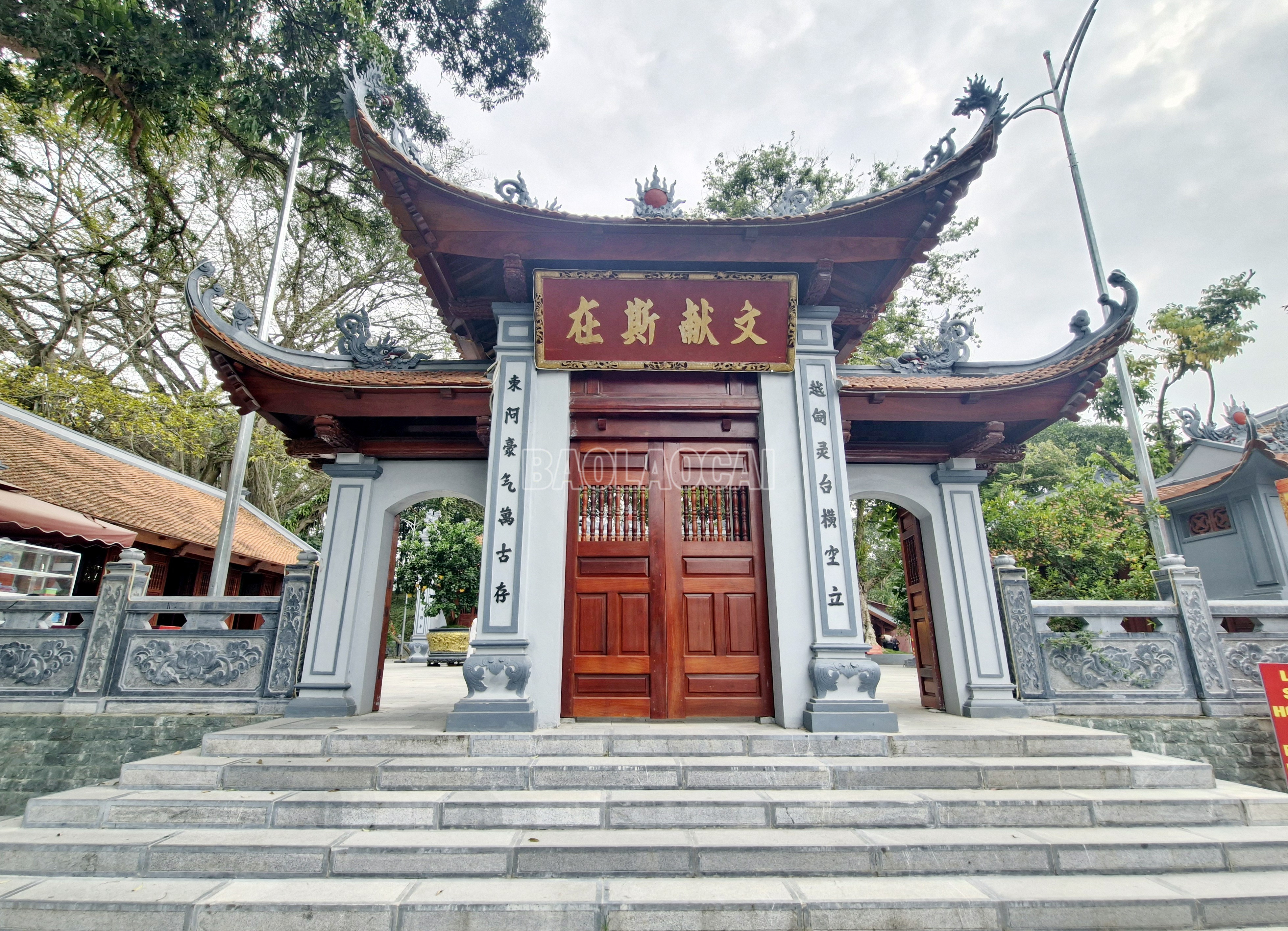
The Upper Temple in Lao Cai has been restored and renovated to a magnificent state.
Although she had visited many famous spiritual sites in the country, when she came to Thuong Temple in Lao Cai ward, Ms. Trang couldn't help but feel moved and touched when she heard the story about the temple's origins and its unique historical and cultural values.
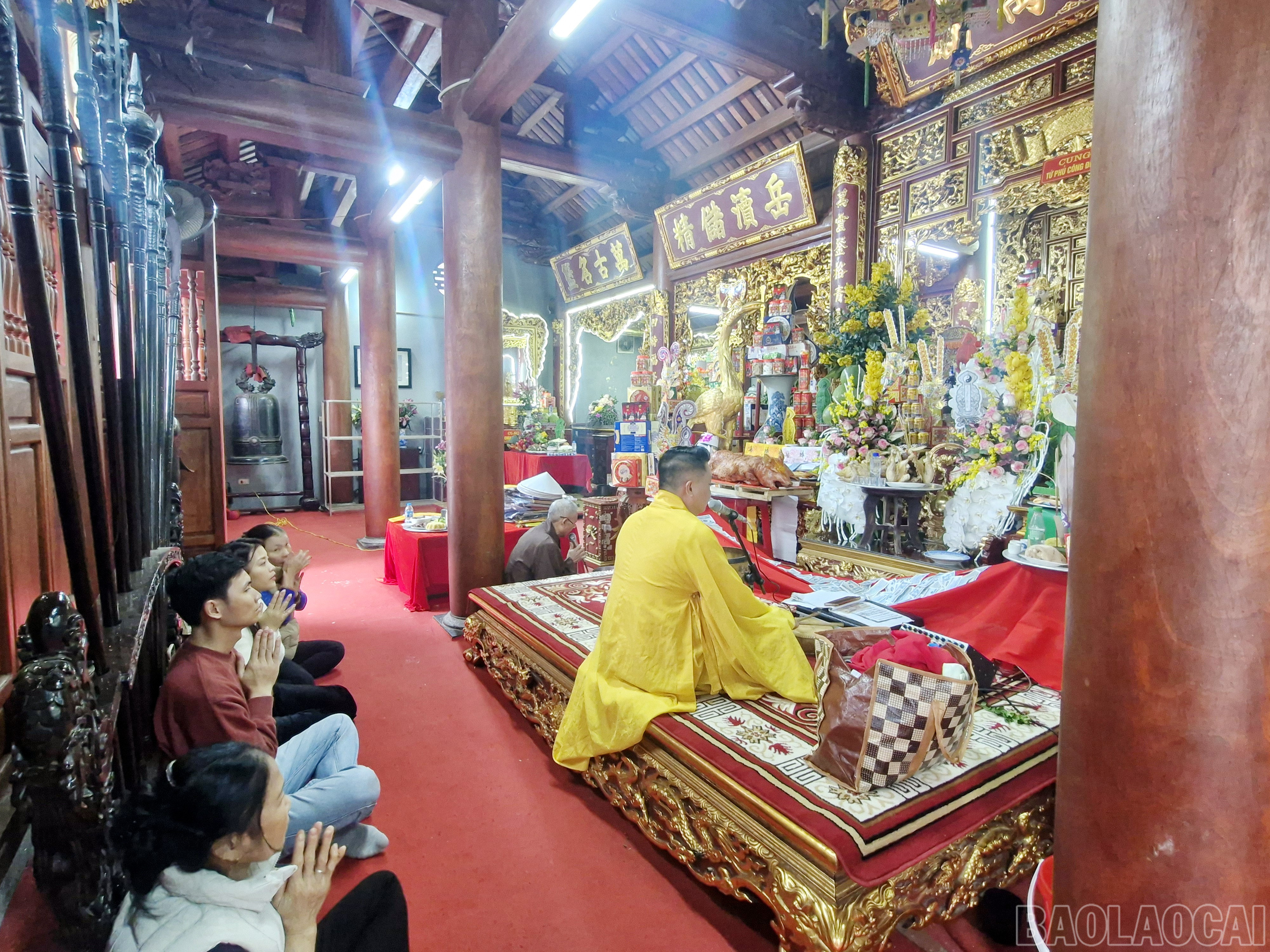
The Upper Temple in Lao Cai is a place of worship dedicated to the national hero Tran Quoc Tuan, also known as Hung Dao Vuong.
Not only Ms. Trang, but many tourists who visit the Upper Temple express unforgettable impressions. This is because it is not only a national historical and cultural relic, but also a place for every citizen, tourist, and Buddhist to express gratitude to National Hero Tran Quoc Tuan - the hero who repelled the Mongol invaders three times and contributed to defending the border.
According to the Dai Nam Nhat Thong Chi (Comprehensive Gazetteer of Dai Nam), during the Tran Dynasty, the area of the former Lao Cai province belonged to Van Ban and Thuy Vi districts, part of Quy Hoa camp. During this period, in 1256, the entire Yunnan region (now in China) was under Mongol rule. In 1257, the Mongol army launched an offensive against the Southern Song Dynasty, and a contingent from the southwest advanced into Dai Viet (Vietnam), then circled around to Lang Son, ambushing the Song army from behind. This period was part of the military activities expanding Mongol influence in Southeast Asia.
According to historical records, when the Mongol army launched its campaign against Dai Viet in late 1257, they gathered troops from the southwest (the Yunnan region of present-day China) and advanced towards the border. Facing the threat of invasion, the Tran dynasty proactively strengthened its defenses in the northwestern border region. King Tran ordered his generals, including Tran Quoc Tuan, to mobilize both naval and land forces to strategic positions along the Red River and the border area to protect the territory. In the following years, Tran Quoc Tuan became the main commander in the resistance against the Yuan-Mongol army, contributing to Dai Viet's many important victories in the invasions of 1258, 1285, and 1287-1288.
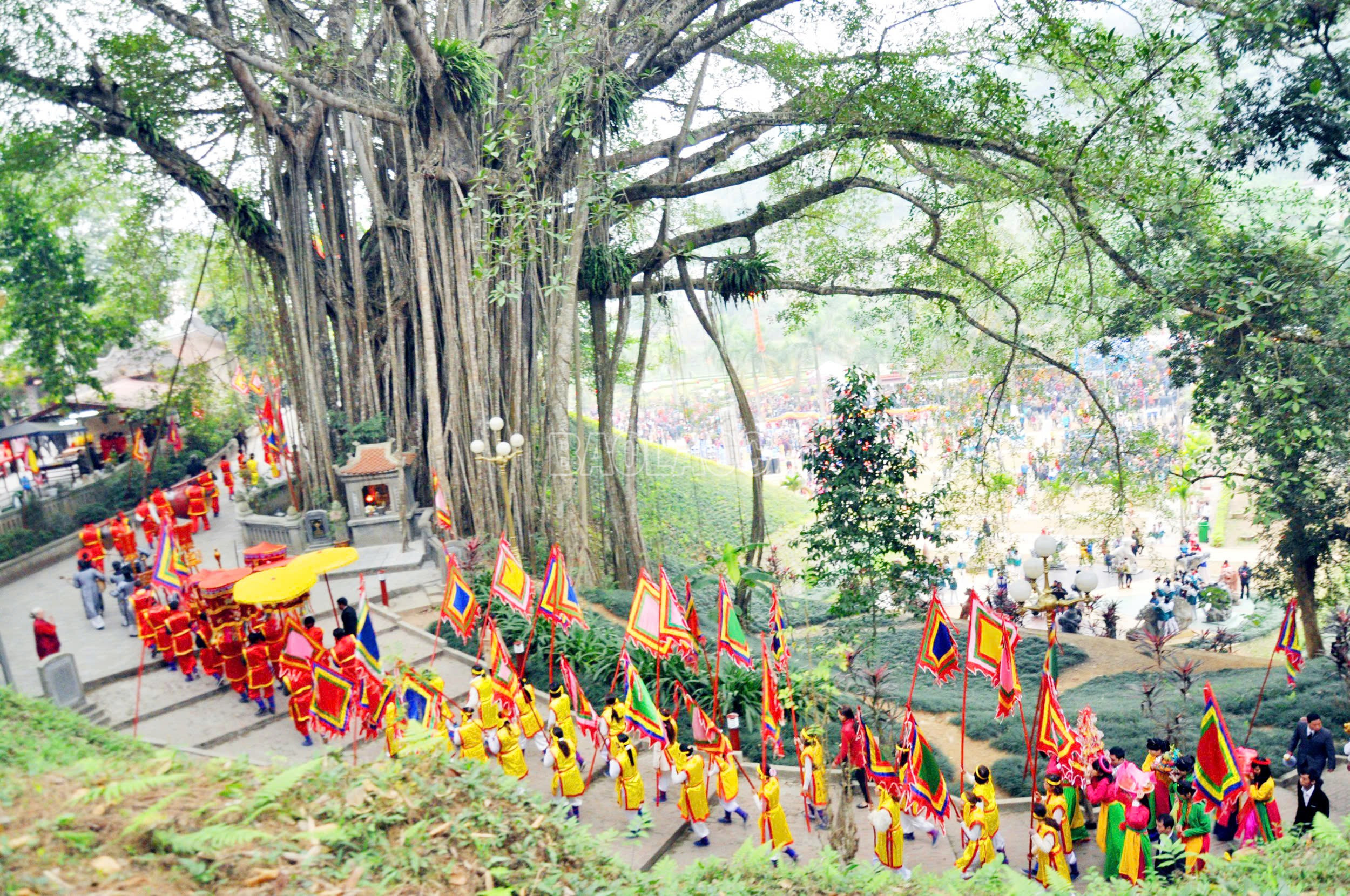
The Thuong Temple Festival is held every January.
During the Le Dynasty, in the Chinh Hoa era (1680 - 1705), the people of Lao Cai established the Lao Cai Upper Temple, also known as Thanh Tran Tu, located on Hoa Hieu hill near the confluence of the Nam Thi River and the Red River, to worship National Hero Tran Quoc Tuan, also known as Hung Dao Dai Vuong.
Mr. Nguyen Dinh Luu, the caretaker of Thuong Temple, said: "Over more than three centuries, Thuong Temple has been restored and renovated many times, but it still retains its ancient and majestic appearance at the headwaters of the border. In particular, Thuong Temple has recently been restored and expanded, better meeting the needs of the people and tourists who come to visit and worship. Every year, Thuong Temple holds a festival on the 15th day of the first lunar month. In addition, a ceremony of offering incense is also held on the anniversary of the death of Hung Dao King Tran Quoc Tuan (20th day of the 8th lunar month)."
With its rich historical and cultural value, since 1996, Thuong Temple has been recognized as a national historical and cultural relic.
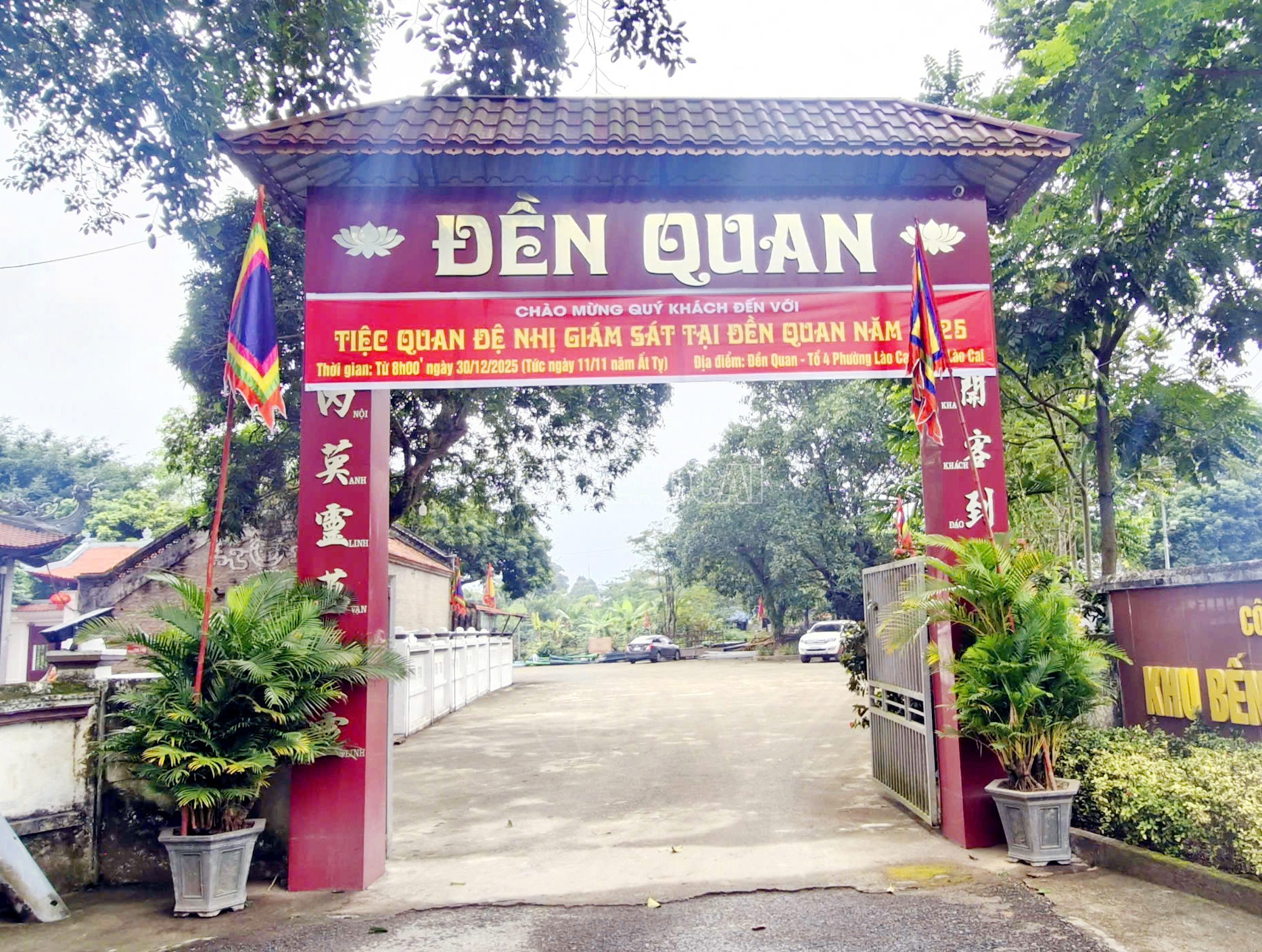
Quan Temple is a place of worship dedicated to the Second Superintendent and the generals and soldiers of the Tran Dynasty who sacrificed their lives for the country.
Along with the historical and cultural relic of Thuong Temple, Lao Cai ward also has three temples located along the Red River associated with the worship of Saint Tran, including Cam Temple, Quan Temple, and Van Hoa Temple. Among them, Cam Temple is where five Tran Dynasty officers and soldiers are worshipped who bravely sacrificed themselves to protect the border.
The Quan Temple is dedicated to the Second Supervising Official in the Four Palaces Mother Goddess religion and also to the generals and soldiers of the Tran dynasty who fought in the resistance war to protect the country.
The Van Hoa Temple is dedicated to Hung Dao Dai Vuong Tran Quoc Tuan. All three temples have a long history, each associated with a story about the border defense efforts of the Tran Dynasty's officials, soldiers, and generals.
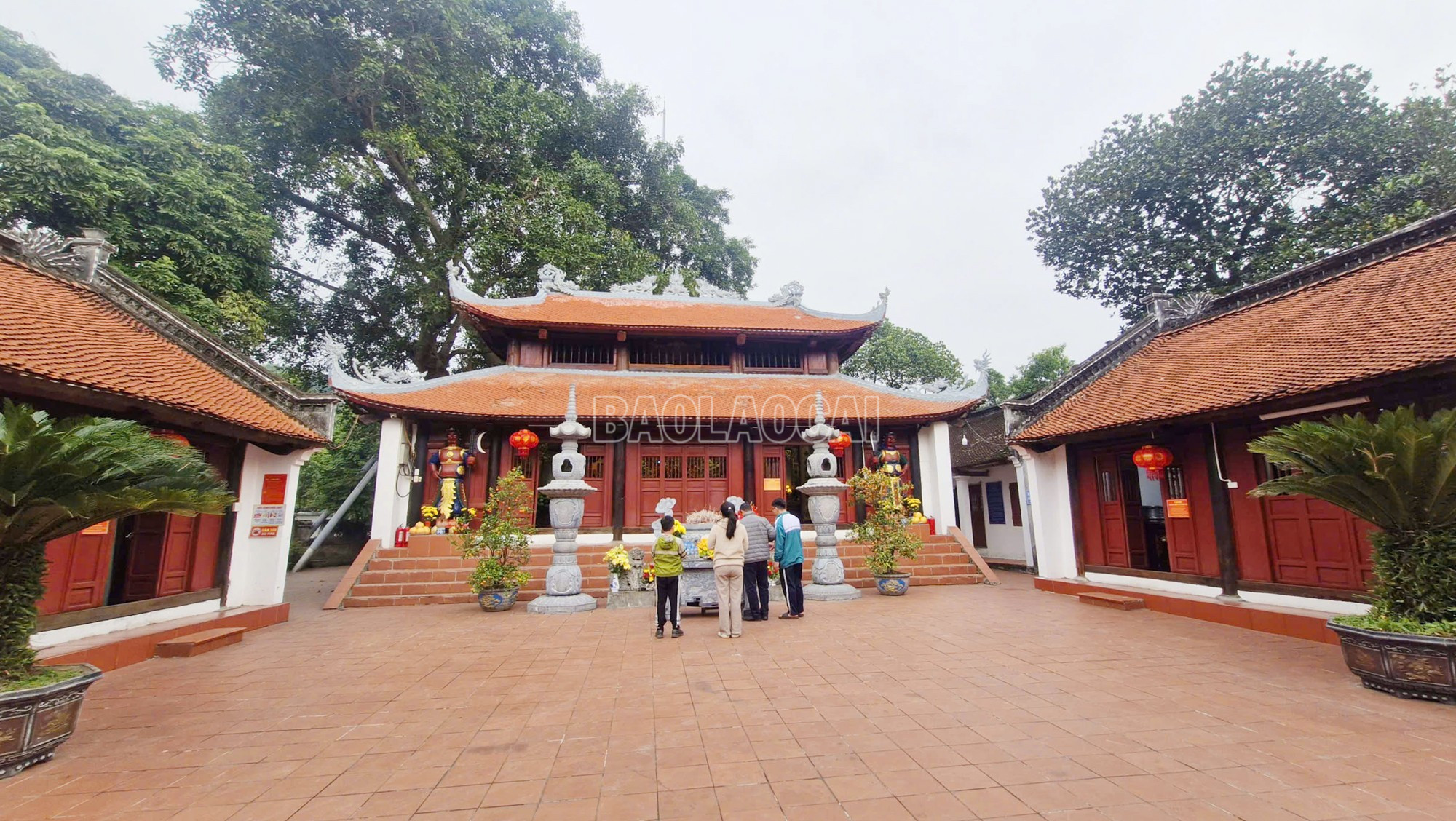
The Quan Temple has been renovated and upgraded to a more spacious and beautiful setting, meeting the needs of
tourists who come to visit and worship.
Legend has it that when General Tran Quoc Tuan commanded the Tran Dynasty army up the Red River to Lao Cai to protect the border, he stopped for a night on a hill in the Canh Chin hamlet, Van Hoa commune, to inspect his troops. Later, the local people built a village temple to worship the famous general Tran Quoc Tuan, which is now the Van Hoa Temple. The location of the Cam Temple, more than 700 years ago, was where the Tran Dynasty army set up a camp. The Quan Temple was formerly a guard post for Tran Dynasty soldiers.
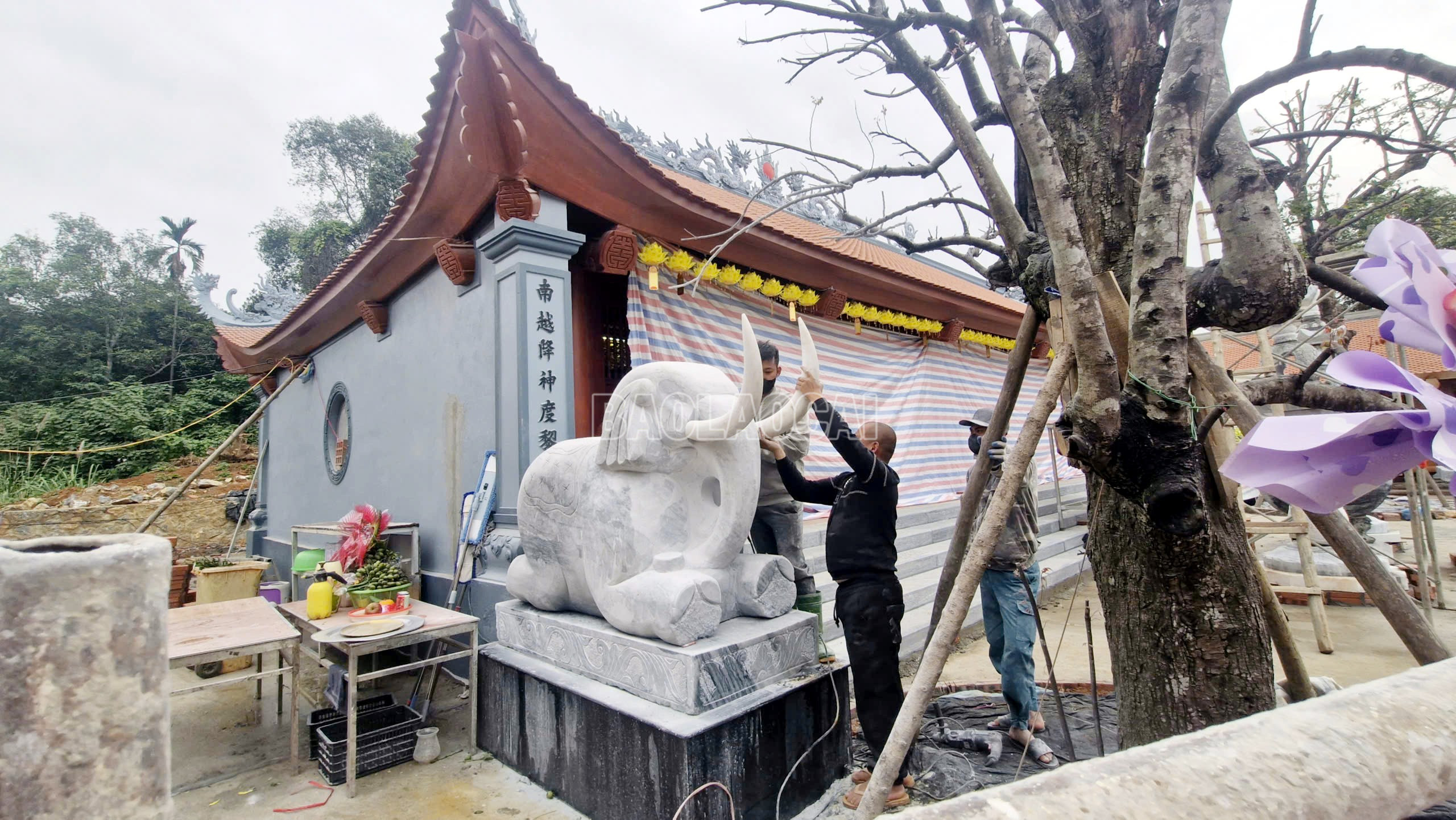
The Forbidden Temple, dedicated to five generals of the Tran Dynasty who sacrificed their lives defending the border, has been recognized as a National Historical and Cultural Monument and is currently undergoing restoration and renovation.
Speaking to reporters about historical and cultural relics related to the worship of Saint Tran, Mr. Ngo Ngoc Ha - Head of the Relic Management and Tourism Development Board of Lao Cai Ward, said: Thuong Temple, Cam Temple, Quan Temple, and Van Hoa Temple are four sacred temples along the Red River associated with the history of fighting to protect the border by the famous general Tran Quoc Tuan and the Tran Dynasty's soldiers. They are also places where many locals and tourists from all over come to offer incense, participate in festivals, and express their gratitude to the Tran Dynasty's generals and soldiers who contributed to protecting the border.
In recent years, in order to develop cultural and spiritual tourism, the Relic Management Board has advised local Party committees and authorities to strengthen the restoration, preservation, and beautification of relics, creating a spacious and clean environment to welcome people and domestic and international tourists. At the same time, traditional festivals are maintained annually, attracting a large number of visitors to visit and worship.
It can be affirmed that the long-standing historical and cultural relics of Lao Cai ward, associated with the worship of Saint Tran and the Four-Realm Mother Goddess religion, are a beautiful cultural feature that expresses gratitude and the principle of "drinking water, remembering the source" of the people of Lao Cai in particular, and Vietnamese people in general.
Currently, these historical sites are receiving attention for restoration and beautification, becoming attractive spiritual tourism destinations in the province.
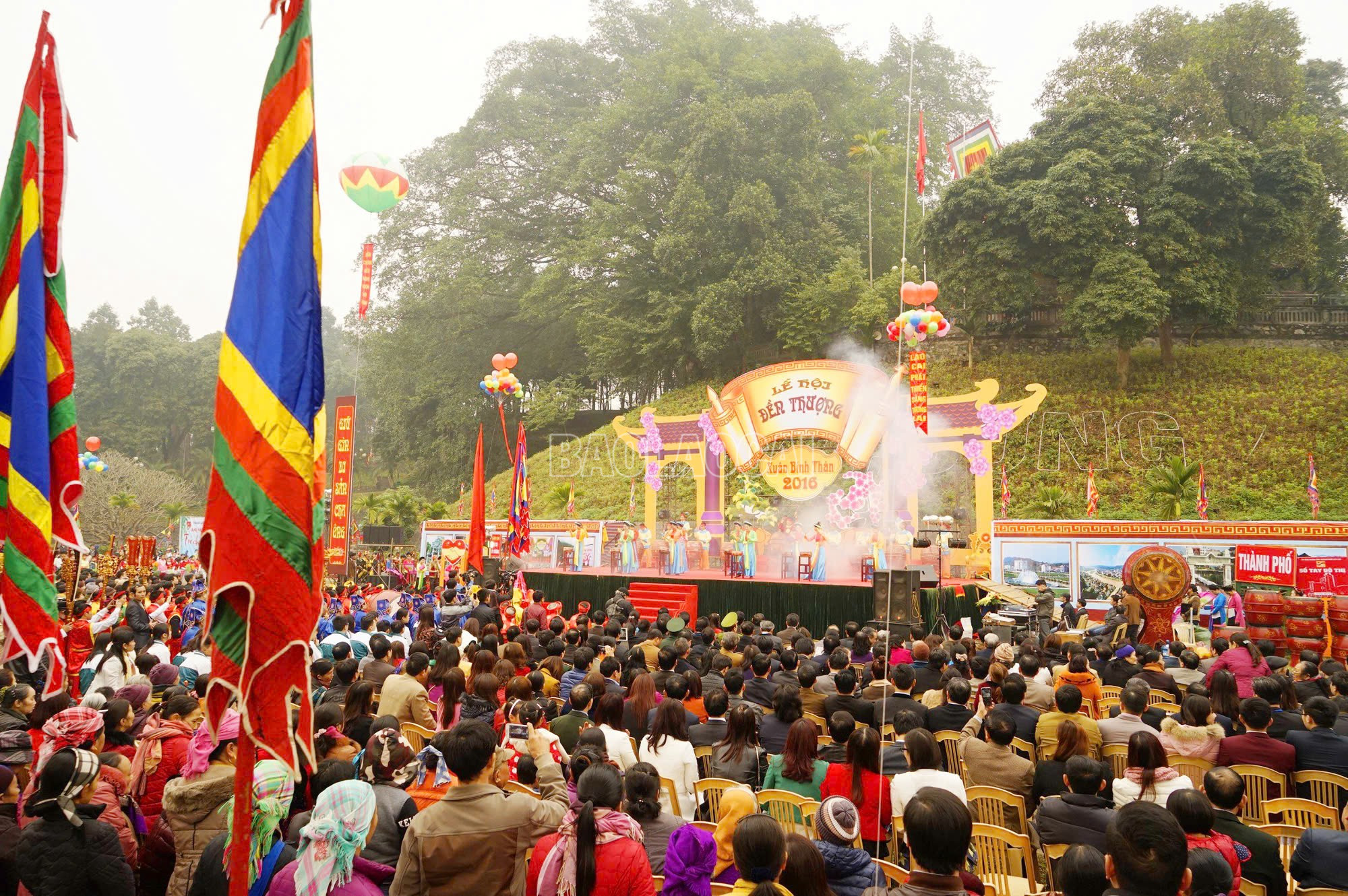
The worship of Saint Tran is a beautiful cultural aspect of the Vietnamese people, reflecting the principle of "drinking water, remembering the source."
Lao Cai Upper Temple, along with Cam Temple, Quan Temple, and Van Hoa Temple, is not only a vibrant symbol of the spiritual culture of the northern border region, but also an unmissable destination for tourists who love ethnic culture and wish to return to the roots of patriotism and the principle of "drinking water, remembering the source."
https://baolaocai.vn/tin-nguong-tho-duc-thanh-tran-tai-phuong-lao-cai-post890899.html