Preserving the cultural identity of the Red Dao people in Tan Linh
Tan Linh commune, Lao Cai province is the residence of ethnic communities including Tay, Dao, H'Mong, etc. The Red Dao people bring separate cultural colors shown through costumes, cuisine, and traditional festivals, contributing to creating a rich land in potential for culture, tourism, and economy.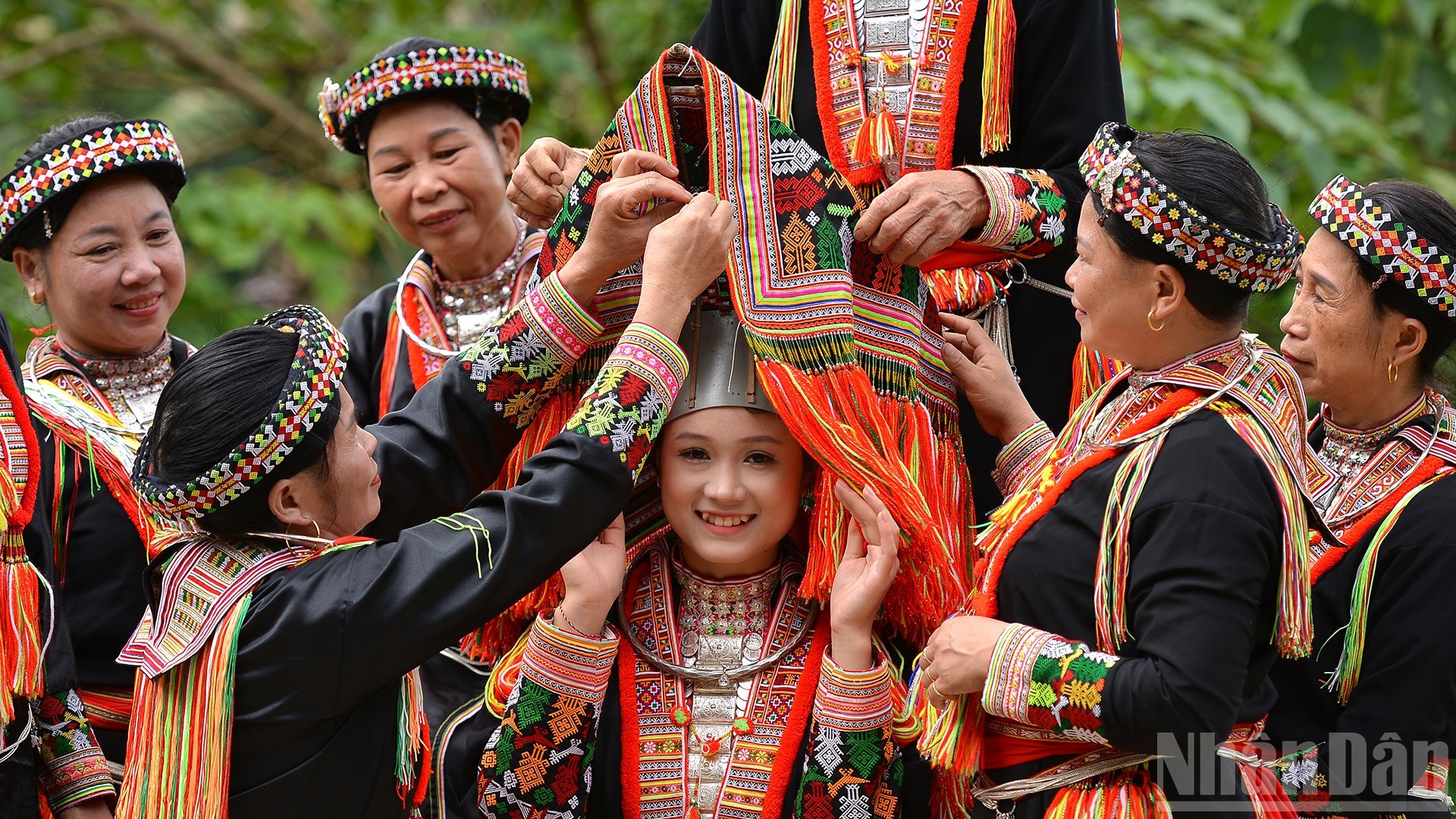
Bridal costume of Red Dao women in Tan Linh, Lao Cai.
In the rich cultural treasure of the Red Dao people, the wedding ceremony holds a particularly important position for both families and relatives. This is a sacred ritual reflecting the moral principle "Remembering the roots", community bonding spirit, and appreciation of family values.
The traditional wedding is an occasion to recreate customs and ancient rituals preserved through many generations and is also an environment to educate children about history and ethics.
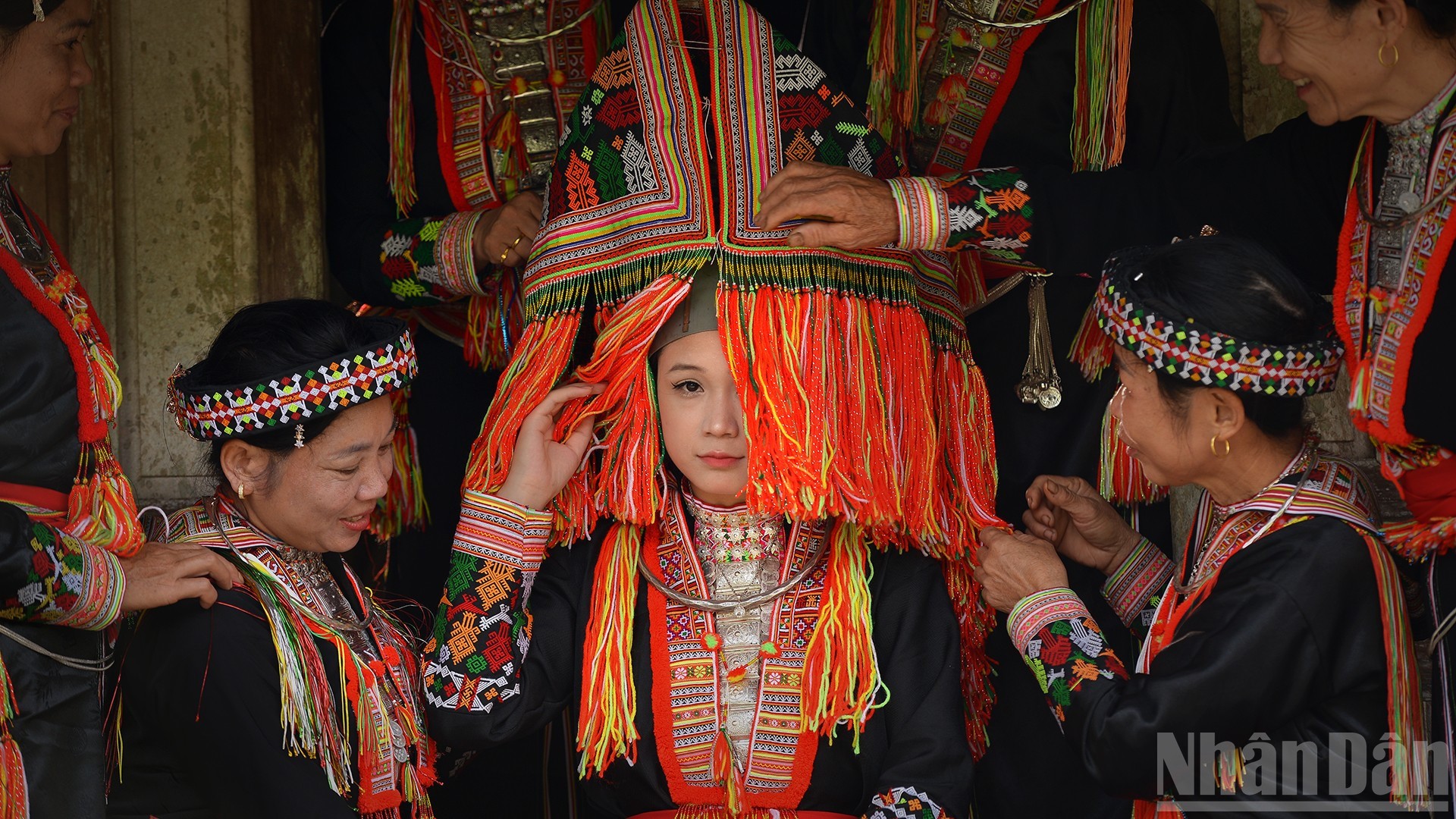
Traditional wedding ceremony preserved by Red Dao people through many generations.
One of the highlights clearly showing the identity of the Red Dao people is the bride's wedding costume. On the big day, the bride stands out with a traditional ceremonial dress including a scarf, a head-covering hat attached with colorful thread tassels and exquisite brocade patterns.
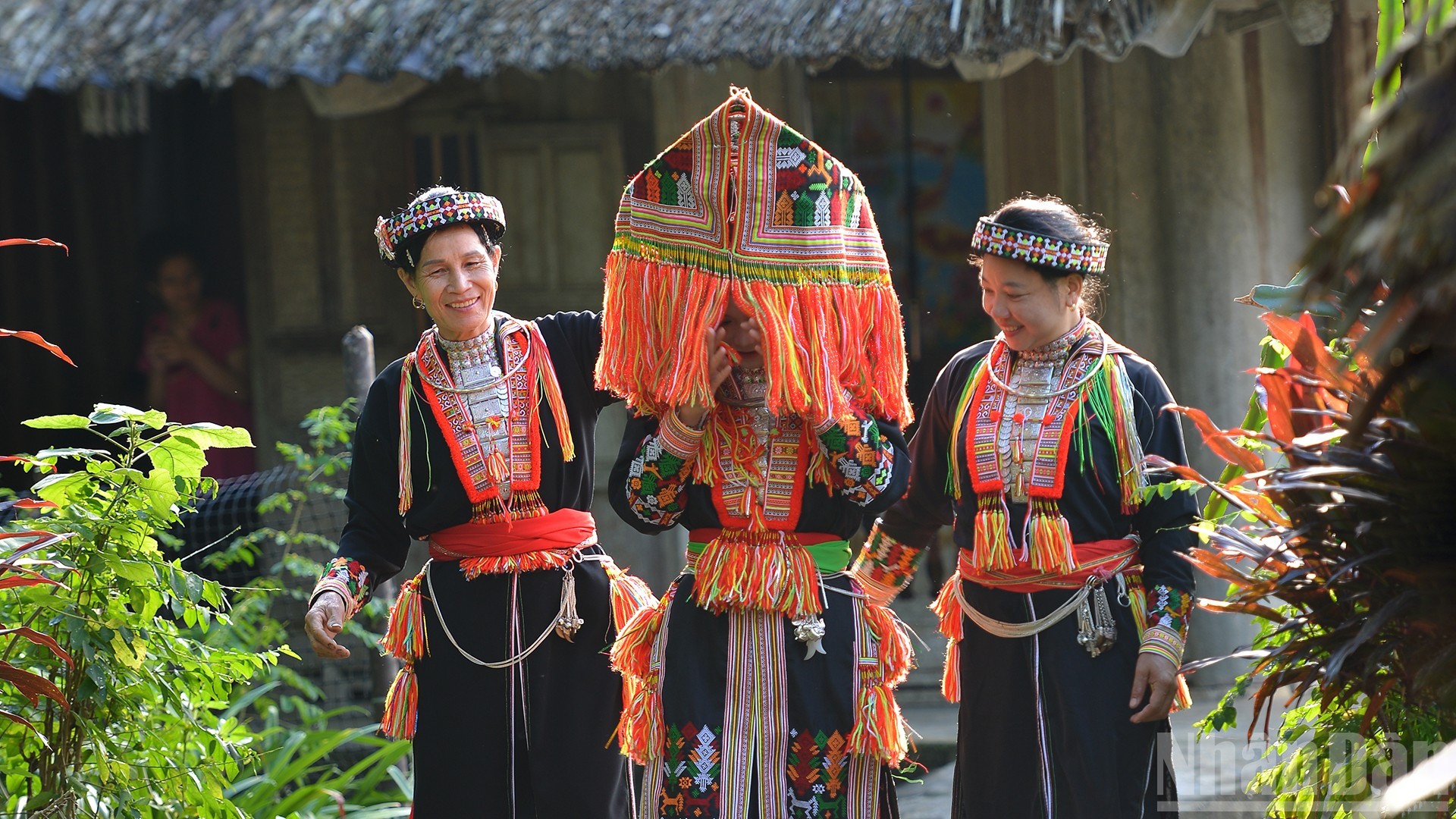
Head-covering hat attached with colorful thread tassels.
The hat and shirt of the bride are artistic products combining harmoniously between exquisite hand embroidery techniques and brocade pattern shaping art carrying deep symbolic meanings. Red symbolizes the dawn, aspiration for happiness, and intense vitality; green reminds of mountains and forests, where people are attached for survival; white shows the purity and faithfulness of the girl. Additionally, silver jewelry attached to the cloths both carries aesthetic value and is an object to ward off evil spirits and pray for luck according to folk concepts.
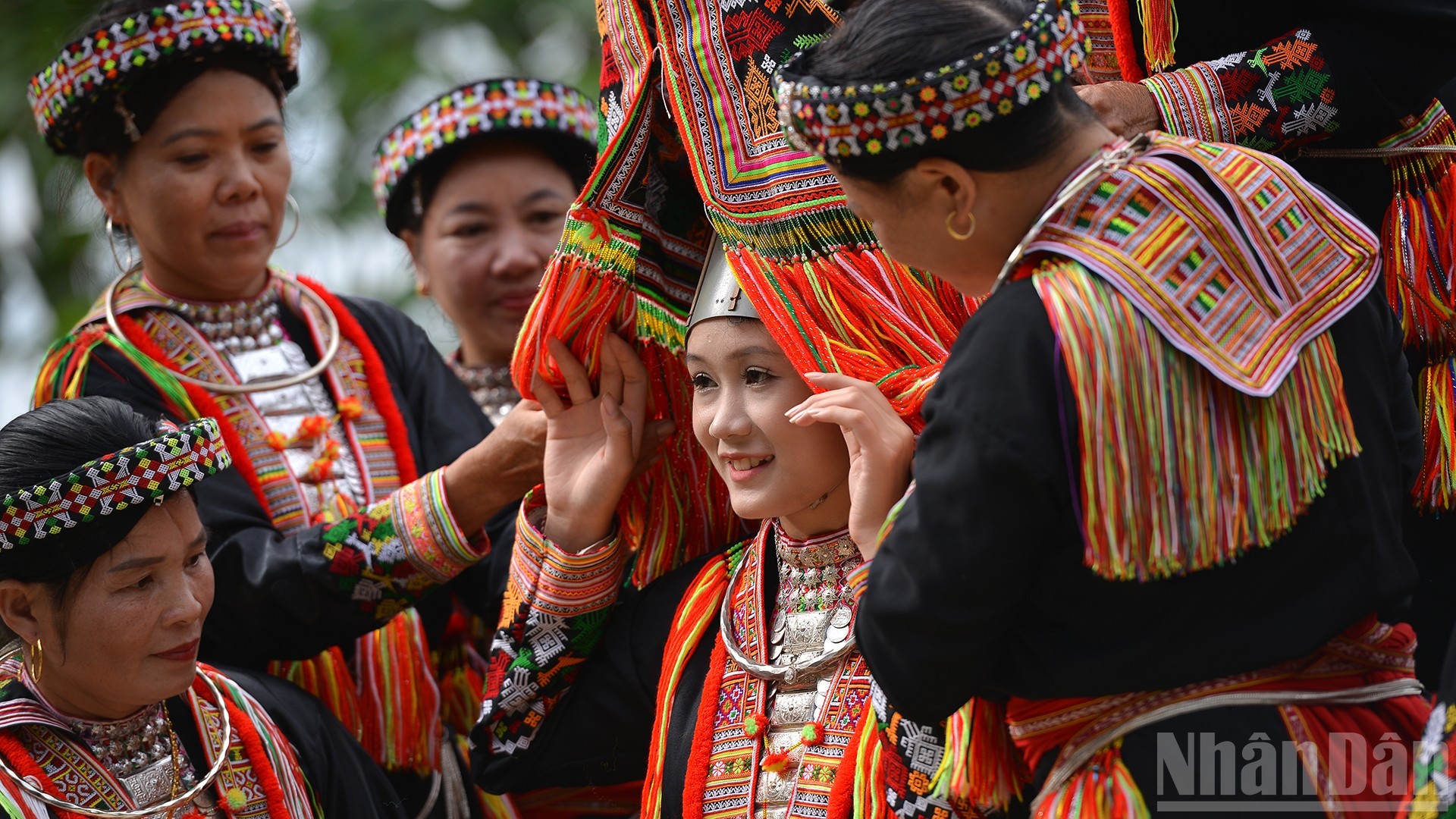
Impressive wedding costume of the Red Dao bride.
The wedding costume of Red Dao women reflects exquisite aesthetic taste, skillful hands, and rich creative ability. Each needle line and thread stitch shows love for labor and entrusts aspirations for a happy, fulfilling life.
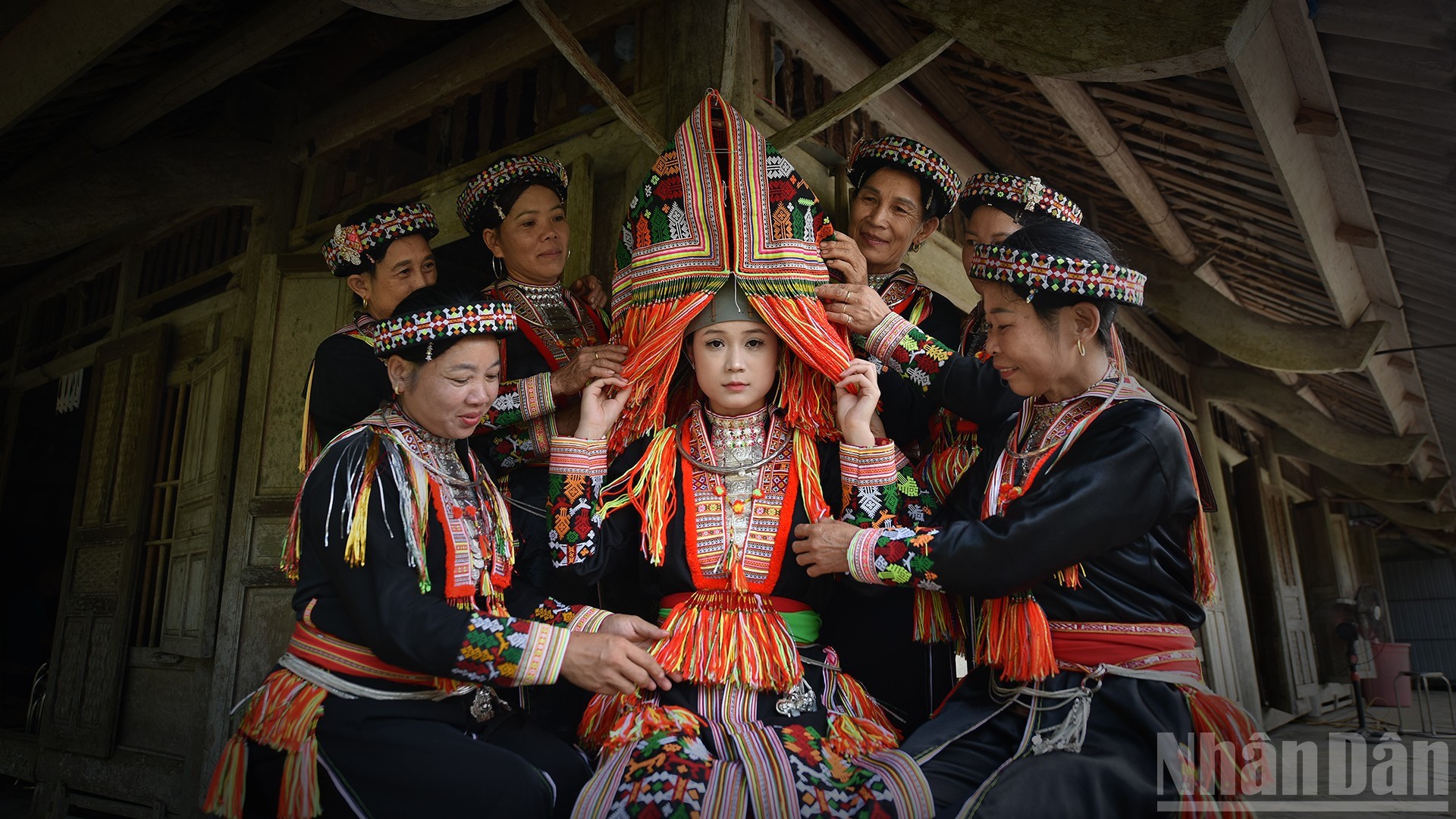
Wedding costume of Red Dao women reflects aesthetic taste and skillful hands.
Besides wedding costumes, traditional costumes of Red Dao women are also taken cared of, meticulously hand-embroidered with exquisite, brilliant patterns. They often wear indigo Ao Dai, with collars, belts, sleeves, and shirt flaps embroidered with prominent red, green, and yellow threads; heads wearing red scarves with soft thread tassels.
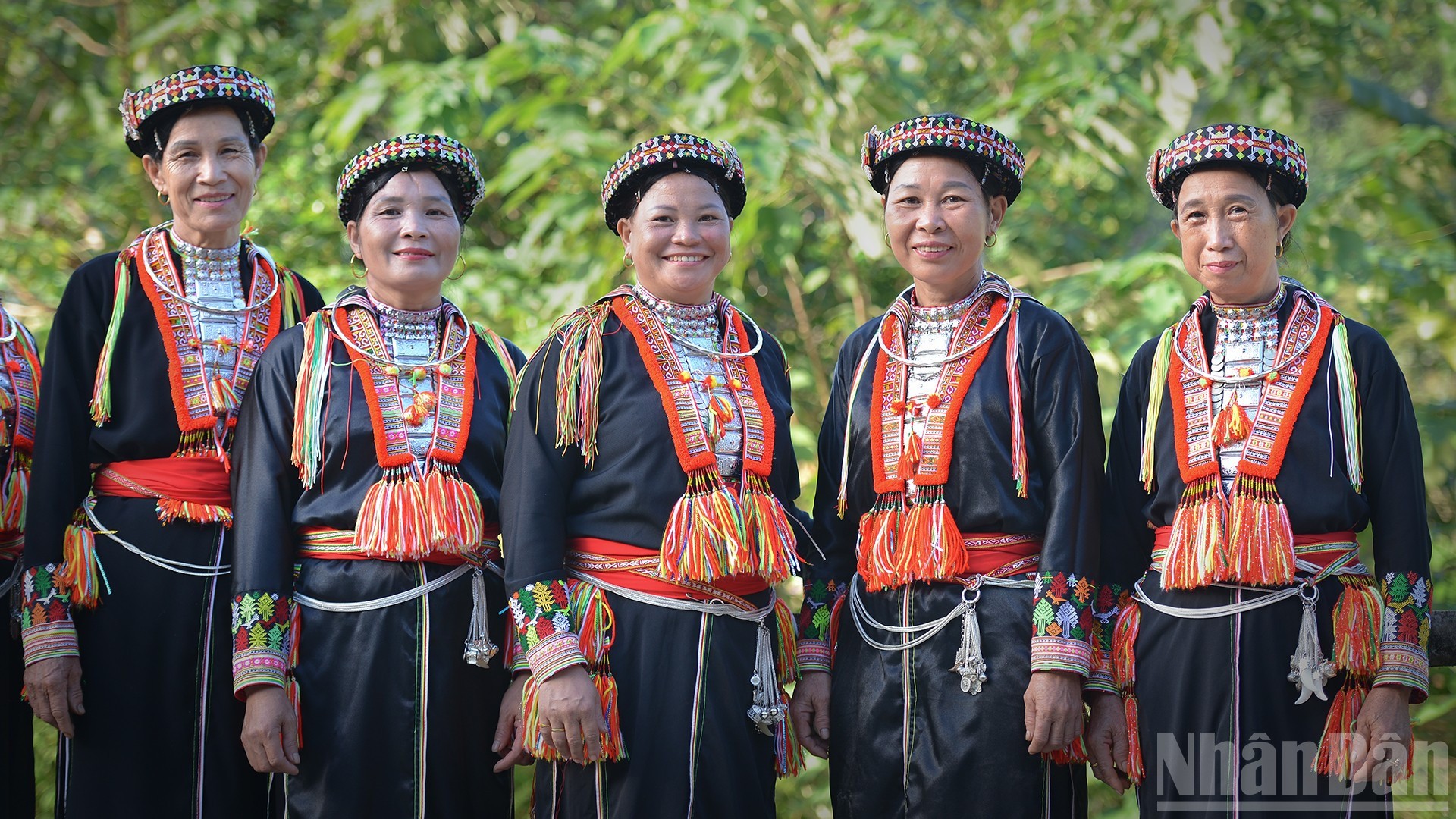
Traditional costume of Red Dao ethnic women in Tan Linh commune, Lao Cai province.
The costume not only carries artistic beauty but also symbolizes the position, age, and cultural identity of the woman in the community.
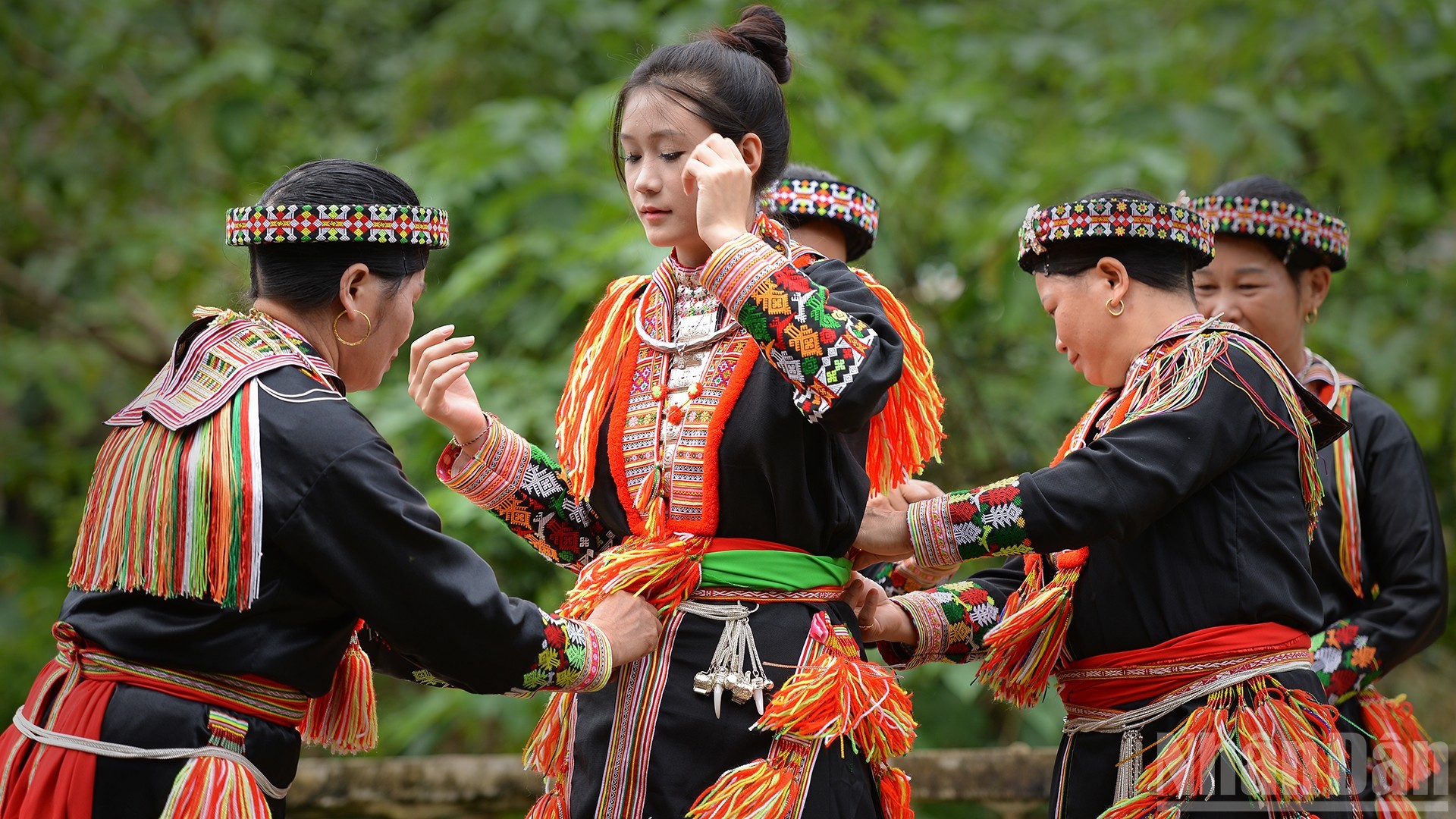
Traditional costume of Red Dao ethnic women, Tan Linh commune, Lao Cai province.
Preserving wedding ceremonies, teaching brocade embroidery techniques, and sewing traditional costumes both contribute to preserving traditional crafts and help the Red Dao community affirm cultural identity in life today.
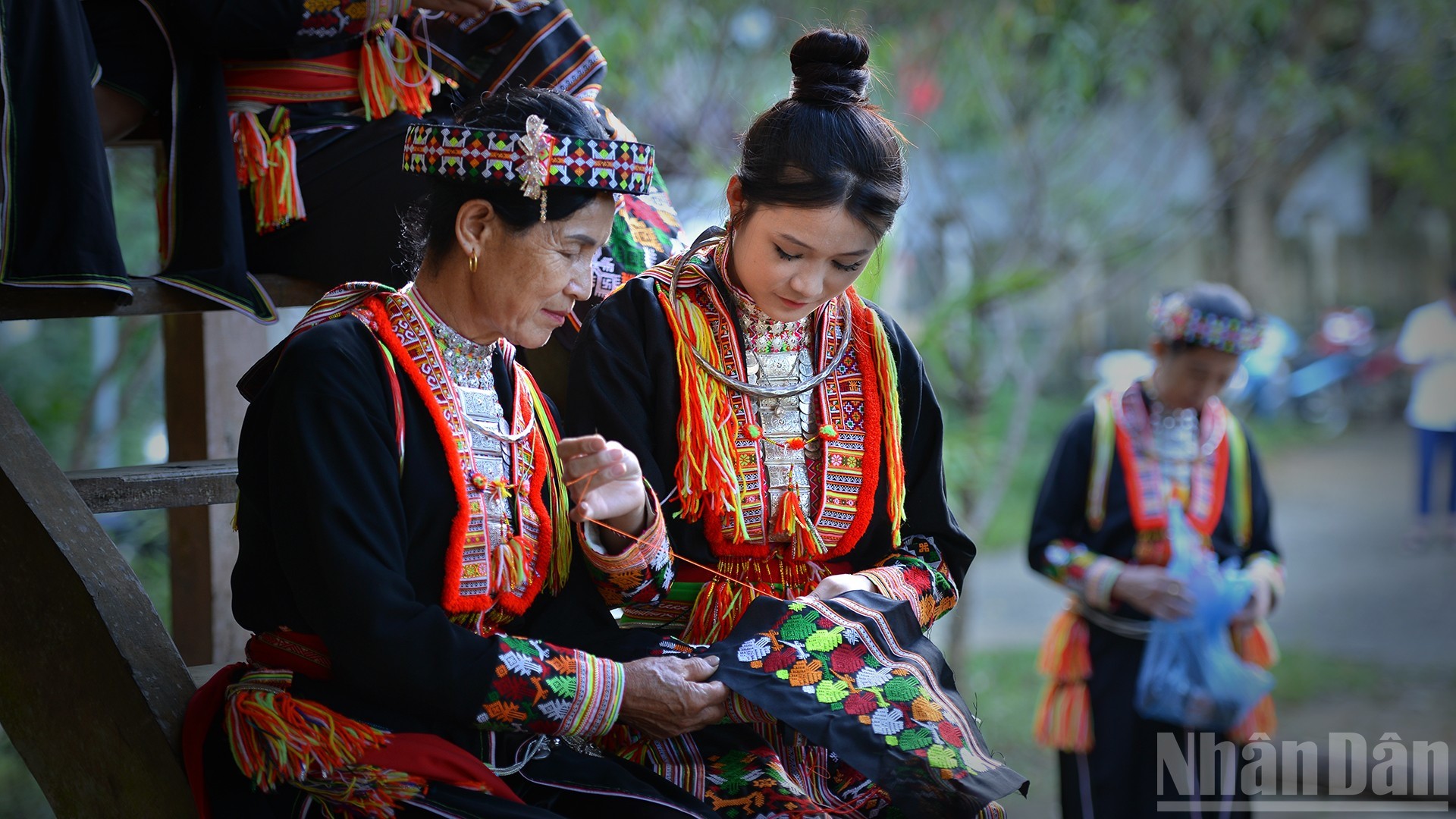
Teaching brocade embroidery techniques to the young generation.
Local authorities are implementing folk culture preservation programs, restoring dances, brocade weaving, and opening vocational teaching classes. These activities contribute to promoting the cultural identity of the Red Dao ethnic group, opening up directions for community tourism development, creating jobs, and increasing income for people.
https://nhandan.vn/giu-gin-ban-sac-van-hoa-nguoi-dao-do-o-tan-linh-post916299.html