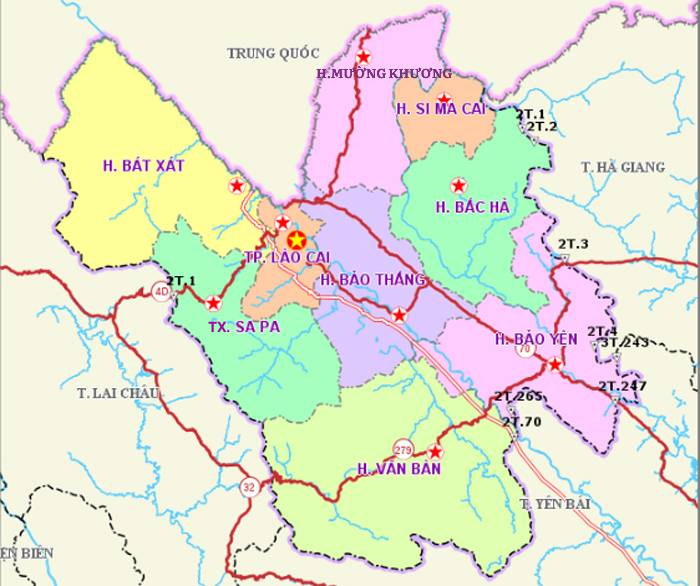
The Ha Nhi people in A Lu preserve their ethnic identity
When mentioning the Ha Nhi community in the highland communes of the former Bat Xat district, many people immediately think of Y Ty or Nam Pung. However, the borderland of A Lu is also a long-standing home of the Ha Nhi people. Remarkably, after hundreds of years of settlement here, the Ha Nhi people have preserved their ethnic cultural identity intact, from their distinctive rammed-earth houses to their customs, traditions, and rituals, creating a strong bond within the community
On the last day of the year, as the peach blossoms began to bloom in the dry, chilly highland sunshine, I had the opportunity to visit A Lu 1 and A Lu 2 villages, formerly part of A Lu commune (now Y Ty commune). During this time, the Ha Nhi families here were bustling with preparations for the Ga Tho Tho festival, also known as the early festival or winter festival. According to Ha Nhi customs, the Ga Tho Tho festival is the biggest traditional festival of the year, a time when families offer their produce from the past year to the ancestral altar to report their gratitude to their ancestors and deities, and to pray for a peaceful, prosperous, and happy life.
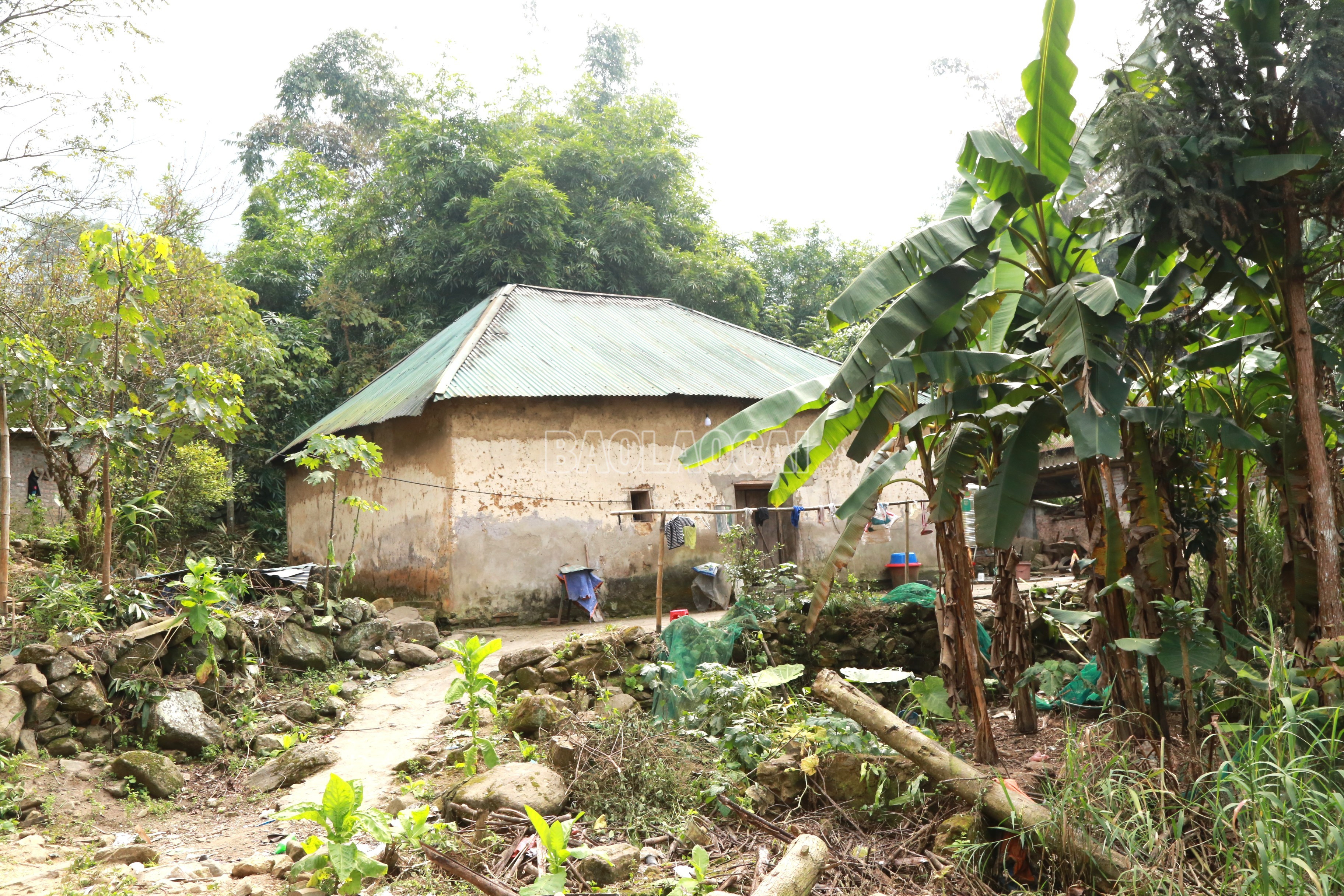
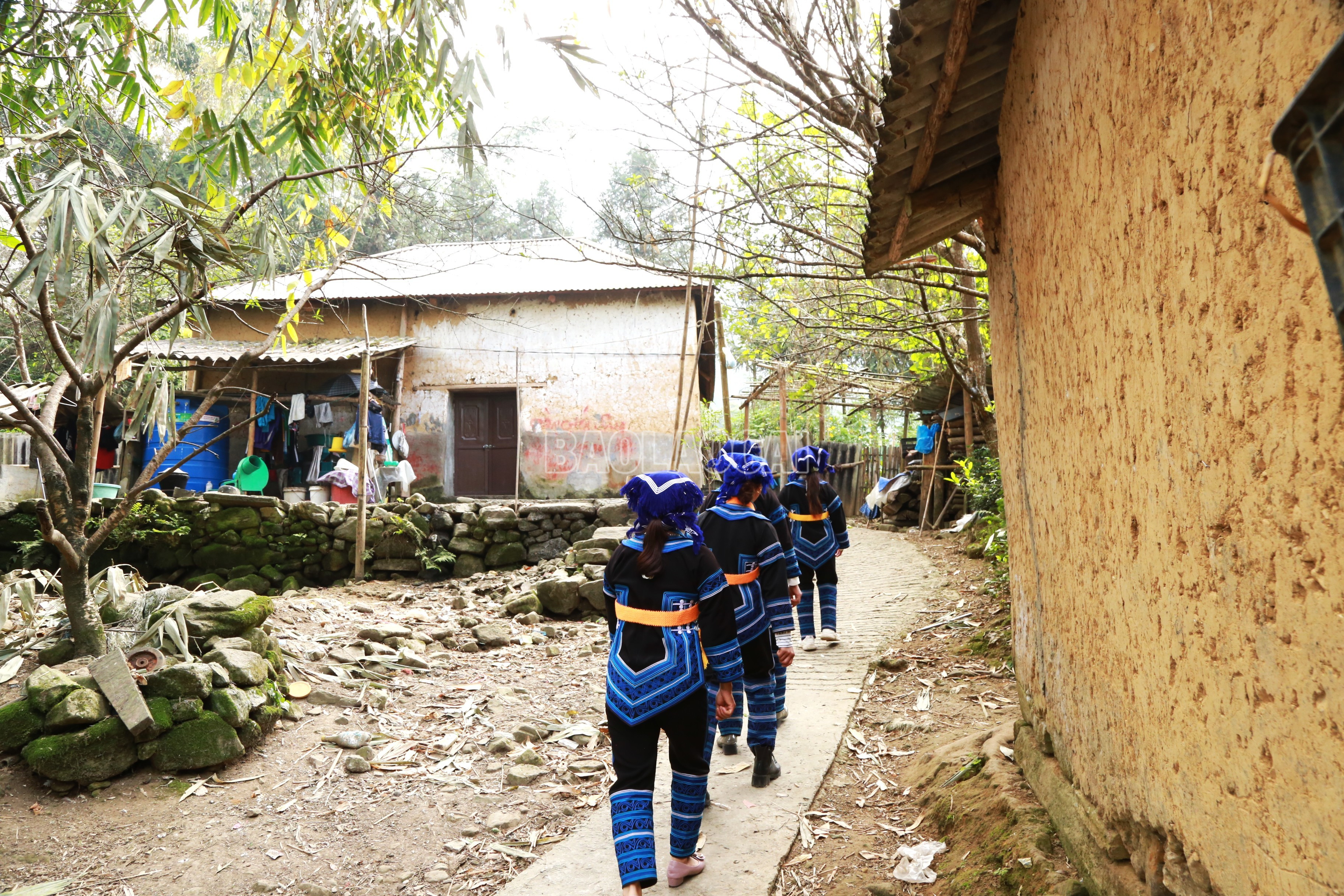
In A Lu 1 village, there are still earthen houses that were built more than 50 years ago.
Because Ga Tho Tho Tet is the biggest festival of the year, almost every family prepares to slaughter pigs and chickens and arrange lavish, warm feasts to invite neighbors and friends to celebrate together. Ha Nhi women wear traditional green costumes with brocade patterns, head coverings, and distinctive wigs. Children are excited in their new clothes, receiving rice cakes and participating in folk games. The atmosphere in the village becomes lively, bustling, full of joy and vibrant cultural colors.
Visiting A Lu 1 and A Lu 2 villages, I was surprised to see that the Ha Nhi people there still maintain their traditional earthen houses. Mr. Sao Ha Gio, the head of A Lu 1 village, shared: "Currently, A Lu 1 and A Lu 2 villages have 110 households, mostly Ha Nhi people. Due to long-standing customs, the ancestors of the Ha Nhi people often lived in areas with harsh climates, with foggy and icy winters. Therefore, hundreds of years ago, they built houses with earthen walls to protect against the cold of winter and keep cool in summer. Currently, in these two villages, over 90% of the households still maintain the traditional earthen house architecture. Some of these houses were built 50 to 70 years ago."
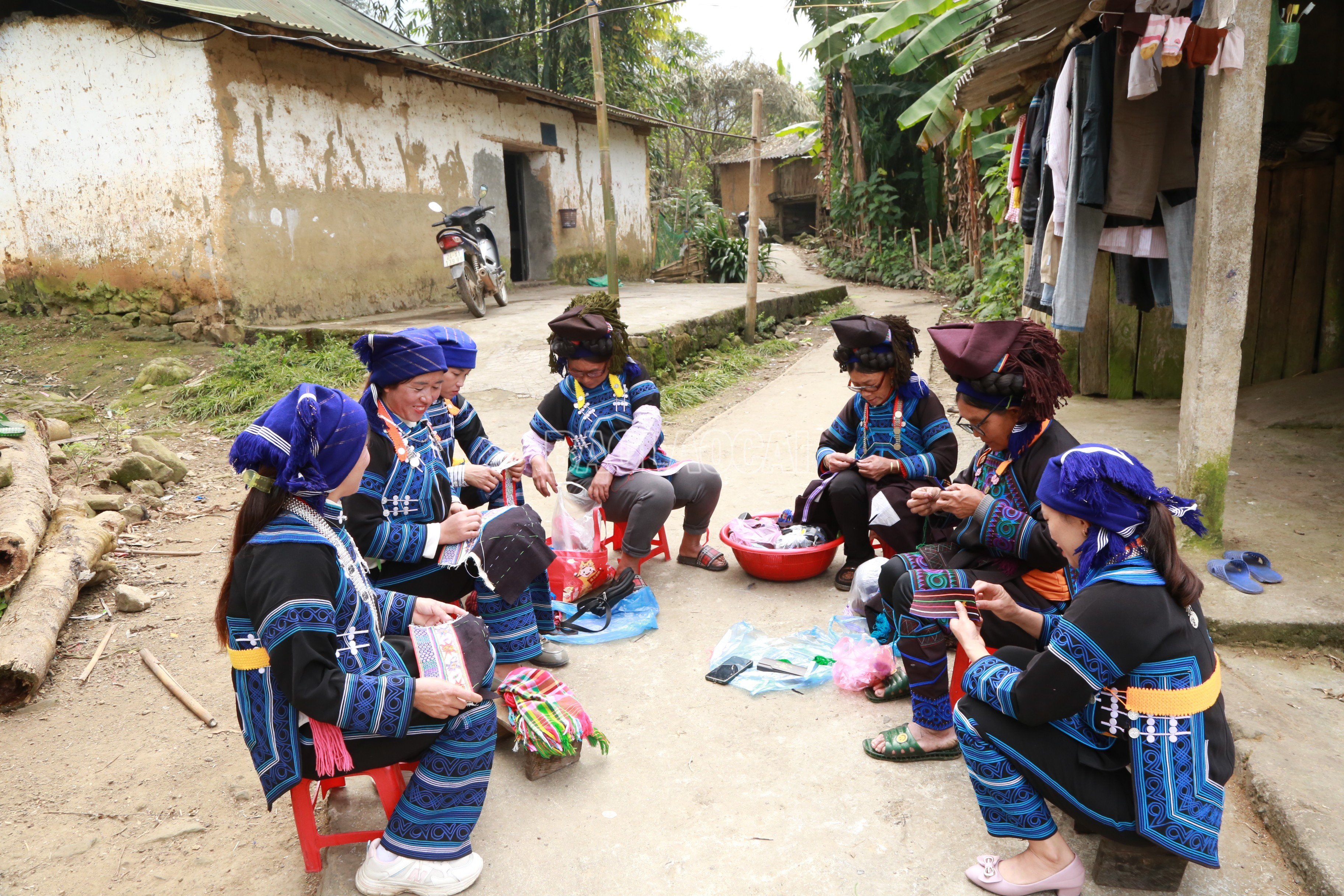
The Ha Nhi women in A Lu preserve the craft of brocade embroidery.
I expressed my concern about why, in many villages and hamlets of the highlands, the Ha Nhi people have demolished their traditional earthen houses to build modern ones, while they still maintain their traditional earthen houses. Mr. Gio explained that the village has been regularly educating the people about the importance of preserving their ethnic cultural identity and traditional houses. Currently, many old earthen houses are cramped and cramped. To meet the needs of modern life, some households in the village have built brick houses, but still according to the square house architecture of the Ha Nhi people. Even though they build new houses to live in, the villagers still retain their old earthen houses as places of worship for their ancestors and deities. This approach both provides housing for the people and preserves their ethnic identity.
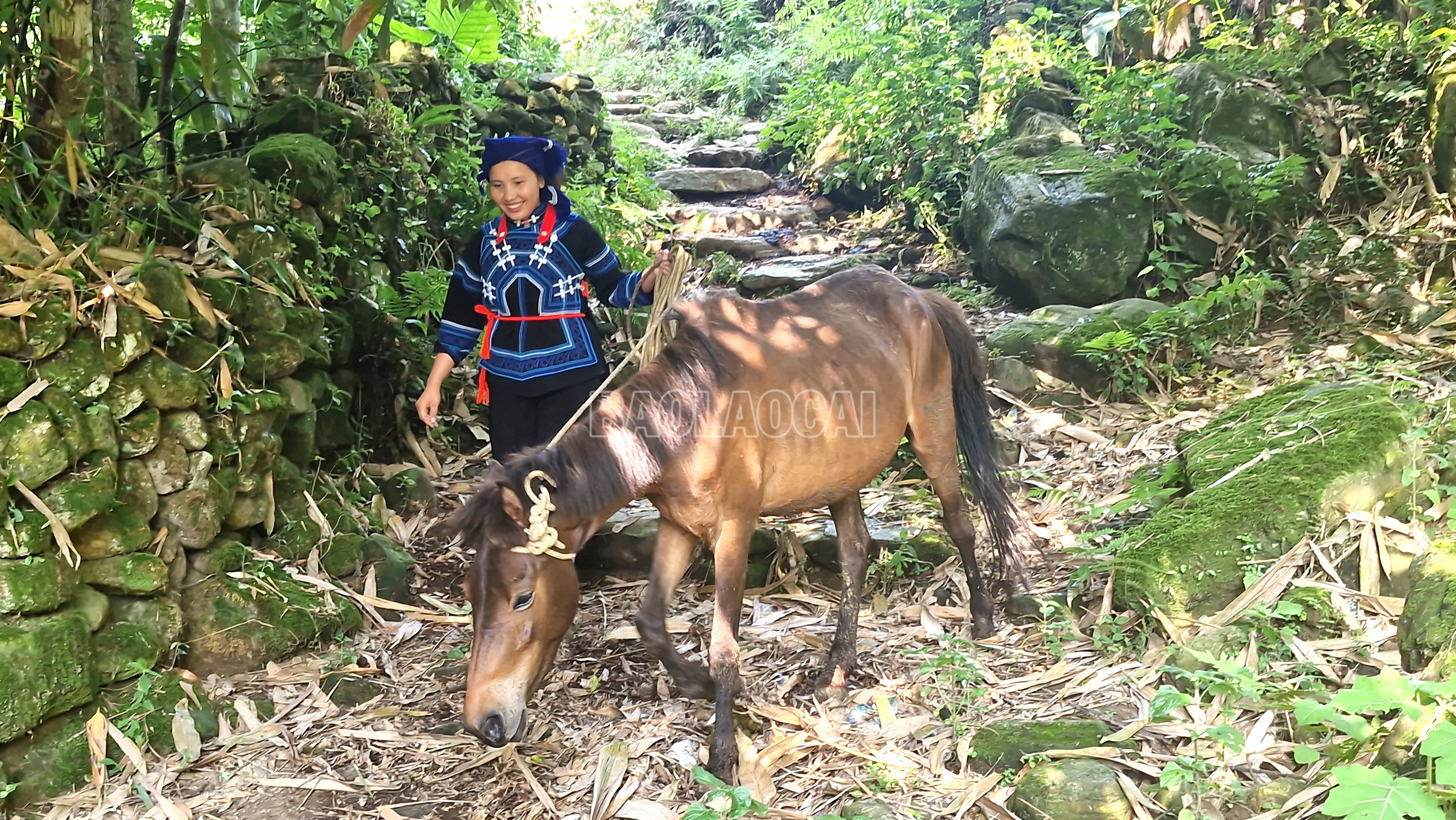
Life is peaceful in A Lu 1 village.
In the highland village of A Lu, I met Ha Nhi women sitting together, basking in the sun, chatting, and teaching each other how to embroider traditional patterns. Mrs. Phan Mo Go, 52 years old, said that as a Ha Nhi woman, one must know how to sew and embroider traditional patterns to make clothes for the family. Nowadays, many patterns on Ha Nhi clothing can be woven by machine, but some intricate details still require hand embroidery, such as the headscarf (O pho pa kho) and leg wraps (kho bo). To preserve the traditional embroidery craft, the elders in the village have approved on to the younger generation techniques that are both fast and beautiful.
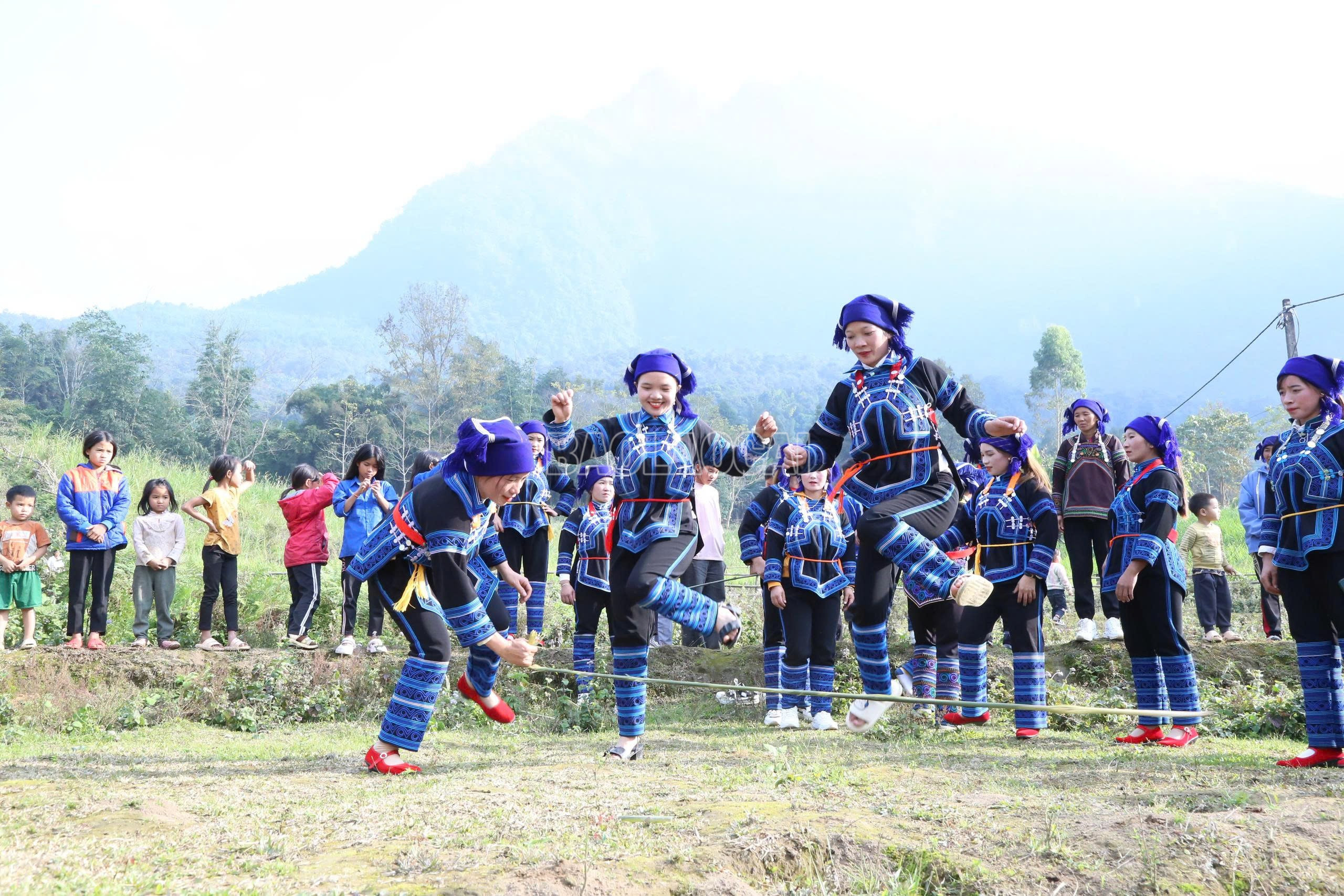
Ha Nhi women play the stick-jumping game during their ethnic New Year celebration.
Visiting A Lu 1 and A Lu 2 villages during festivals such as the Ga Ma O Tet, Du Do Do Tet (held in January), and Kho Gia Gia Tet (held in June of the lunar calendar), tourists will be immersed in the lively atmosphere of the festivities. To the sound of vibrant music, the A Lu 1 and A Lu 2 village folk art troupes, comprised of handsome and skillful Ha Nhi men and women, will perform graceful and fluid dances depicting scenes of the villagers' labor, such as planting corn, harvesting rice in terraced fields, pounding sticky rice cakes, and fetching water at the beginning of the new year. Along with these, there will be traditional folk games such as stick jumping, stilt walking, rope swinging, and carousel rides.
It is known that over the years, the Ha Nhi people here have preserved and restored many folk songs and dances of their ethnic group, preventing them from fading away over time.
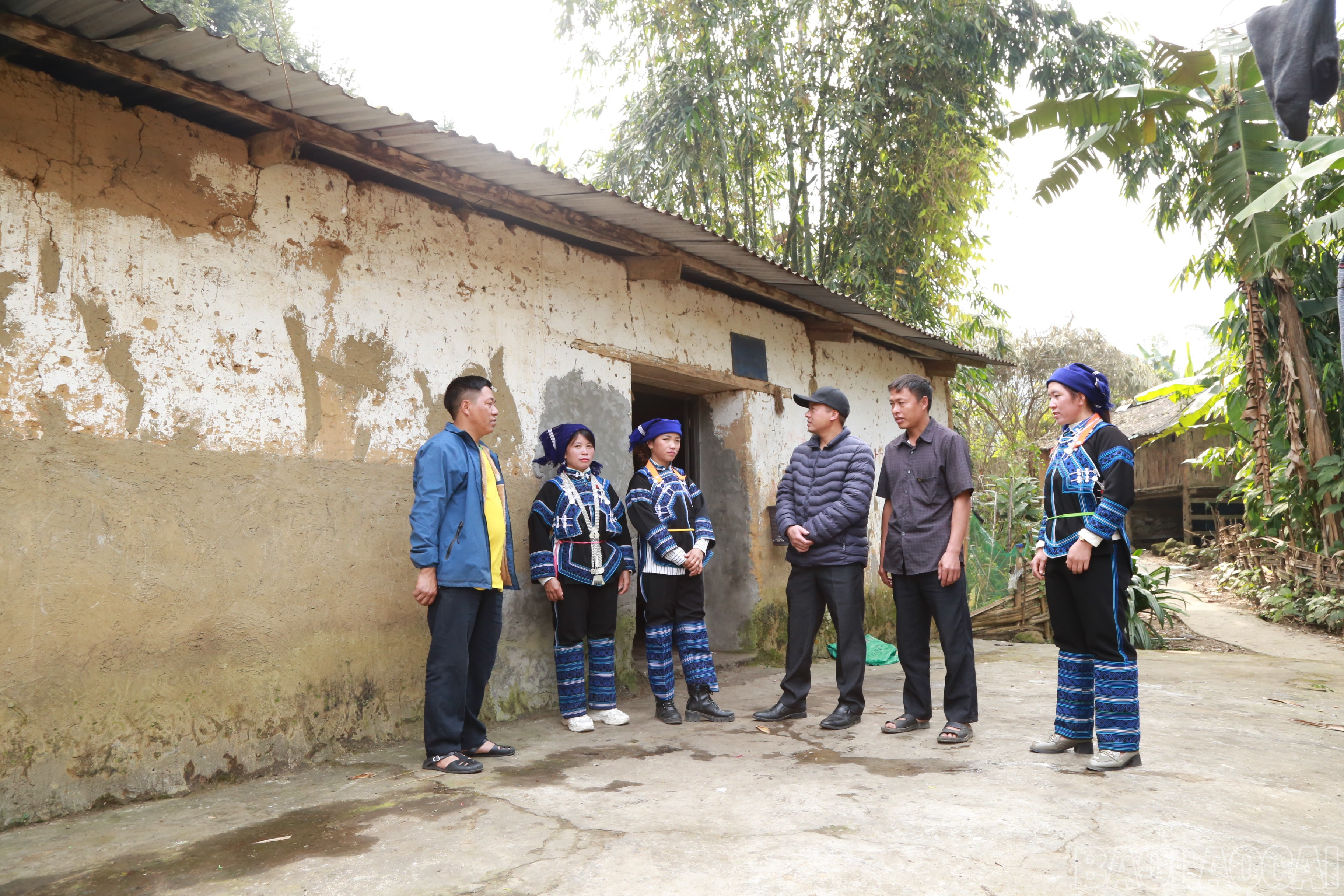
Emphasis has been placed on public awareness campaigns, contributing to raising the awareness of the Ha Nhi ethnic community in preserving their ethnic identity.
Mr. Lo A Sinh, Vice Chairman of the People's Committee of Y Ty commune, said: "The villages of A Lu 1 and A Lu 2, formerly belonging to A Lu commune, have now been merged into Y Ty commune. Although these two villages are far from the commune center, they still maintain a peaceful village atmosphere with traditional earthen houses and lush green bamboo forests year-round. Local people preserve and maintain their ethnic cultural identity, contributing to a strong bond of unity and solidarity within the community."
Currently, Y Ty commune is focusing on developing tourism in a green, sustainable, and culturally rich direction. Therefore, the commune's Party committee and government always encourage and motivate people to do a good job of protecting the landscape and environment, preserving and promoting the cultural beauty of the ethnic groups, and linking it with community tourism development so that A Lu 1 and A Lu 2 will soon become attractive destinations for tourists to visit and experience.
https://baolaocai.vn/nguoi-ha-nhi-oa-lu-giu-ban-sac-dan-toc-post888221.html