"Keeping the soul" of Mong ethnic costumes
Modern life creeps into every highland village, meaning that many beautiful traditional cultural features of ethnic groups face the risk of being lost, including traditional costumes of the Mong people. However, there are still many Mong ethnic women who daily preserve the identity of their ethnic group through each needle line and thread stitch.
Taking advantage of leisure time, Ms. Vang Thi Cha in Tu San village, Nam Co commune, together with grandmothers and sisters in the village, embroiders patterns for new skirts to wear on Tet and festivals. To make traditional dresses, knowledge about the meaning of each pattern motif is essential. Taught by her mother about pattern embroidery and dress sewing since childhood, Ms. Cha's hands nimbly "draw" motifs on the linen background.
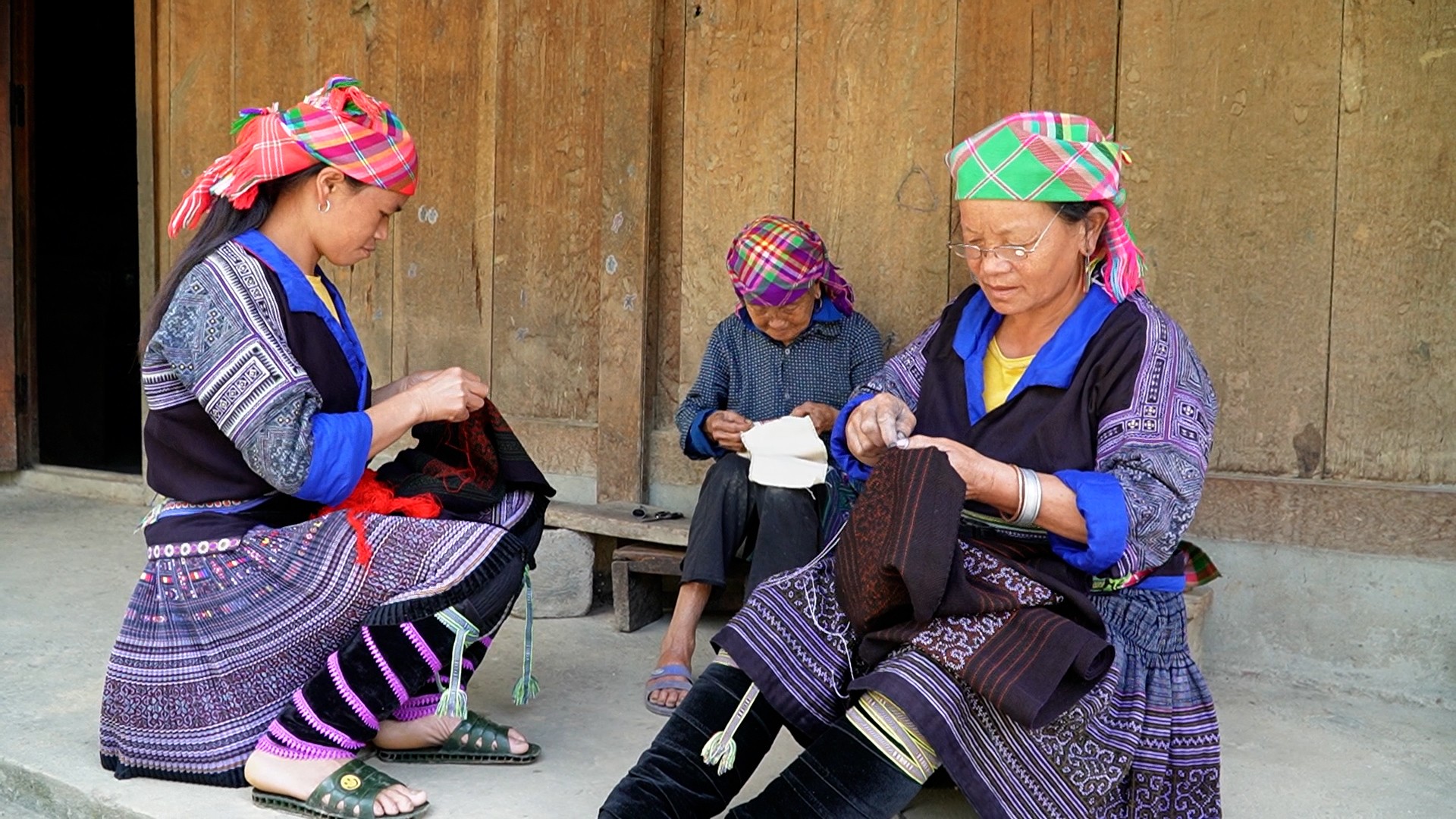
Ms. Vang Thi Cha (left) taking advantage of leisure time to prepare for new dresses.
"Mong people conceive that the skirt is the soul of a woman. When celebrating Tet or going to festivals, everyone wants to wear the most beautiful costume to show ingenuity and hard work. Since I was 7 years old, I was taught by my grandmother and mother how to make a traditional costume. I maintain self-making traditional costumes as I want to teach my daughter to understand and preserve the cultural identity of our ethnic group," Ms. Cha shared.
Mrs. Chang Thi Xu, Tu San village, Nam Co commune is nearly 60 years old this year. Mrs. Xu has known how to embroider and sew dresses since she was 8 years old and cannot remember how many costumes she has completed to gift to her children and grandchildren. According to Mrs. Xu, each costume will have different patterns, showing the creativity of the embroiderer. However, the patterns all show deep meanings about culture, life, and beliefs of the Mong people.
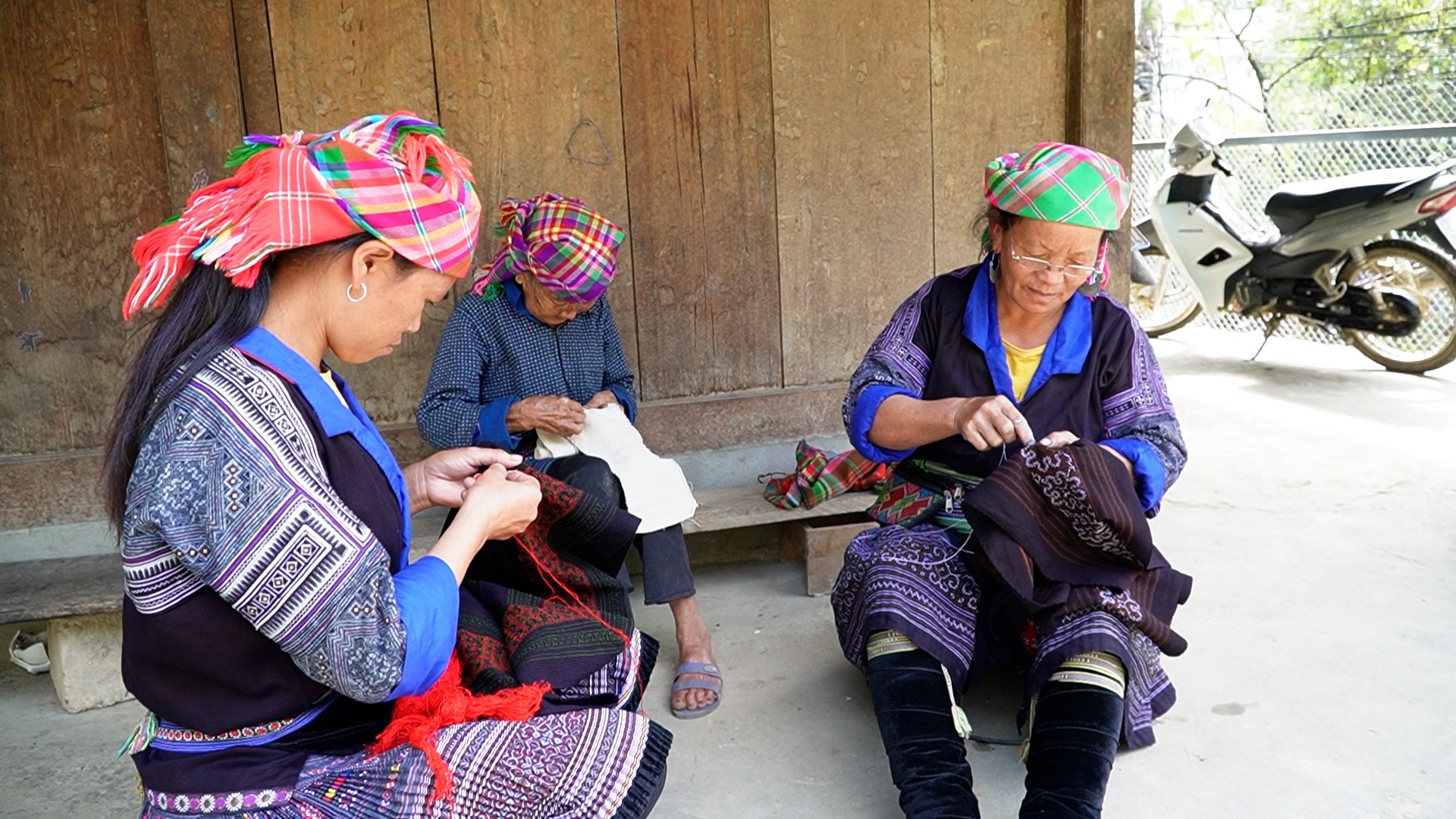
Mrs. Chang Thi Xu (right) finishing a new dress for her daughter.
"A Mong daughter who does not know how to grow flax, weave fabric, and sew dresses is not yet mature. I hope the young class in the village maintains the self-making of traditional costumes so that the cultural features of the ethnic group will not fade," Mrs. Xu shared.
To make a traditional costume of the Mong ethnic group, the worker must go through dozens of meticulous stages: from growing flax, stripping bark, soaking, pounding, drying, spinning yarn, weaving fabric, to dyeing indigo and embroidering patterns. Each stage requires ingenuity, patience, and deep love for ethnic culture.
One of the important stages is beeswax drawing to create patterns on the fabric background. To draw patterns, a beeswax drawing pen is indispensable.
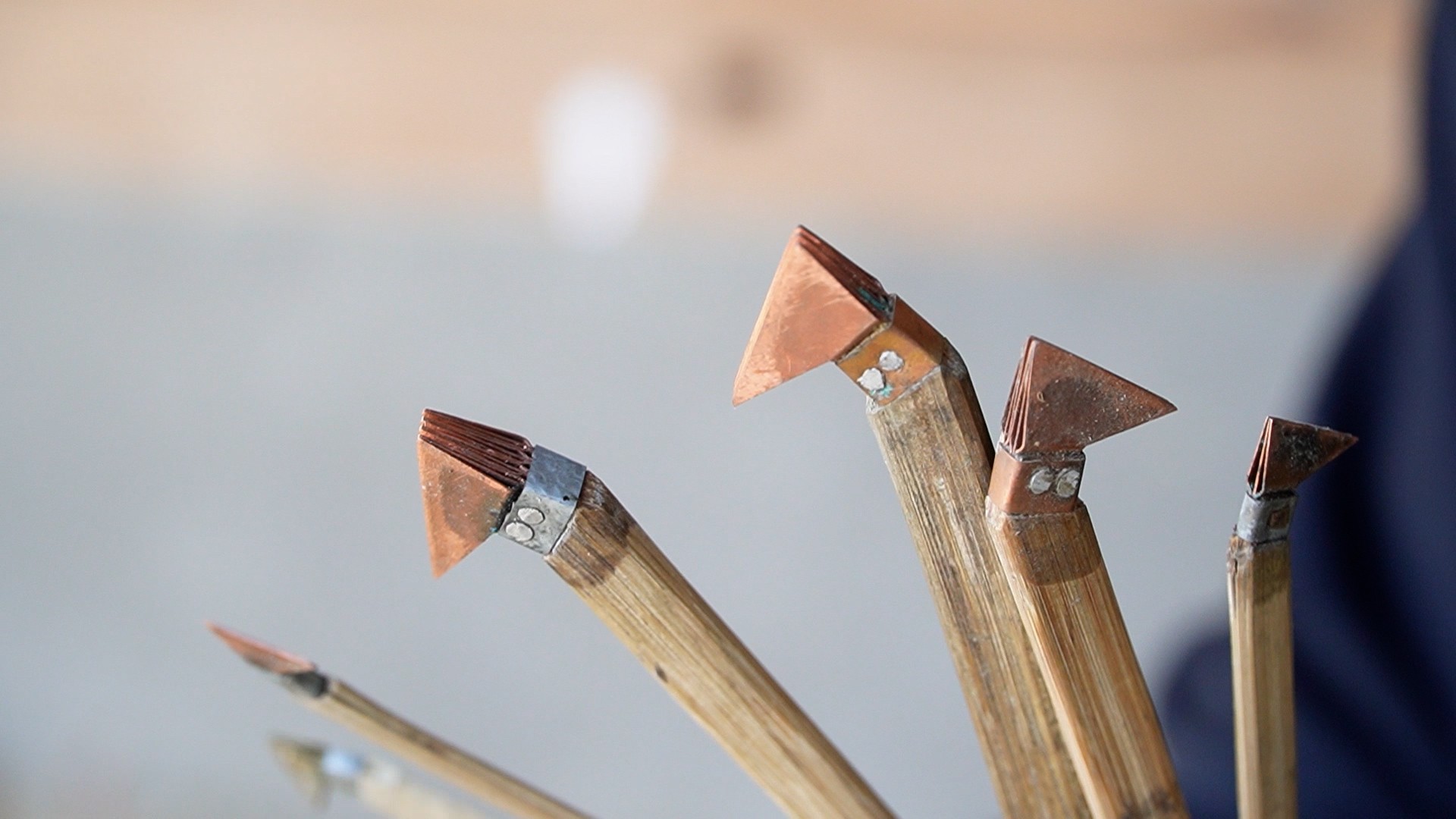
Set of beeswax drawing pens to create patterns on fabric.
The beeswax drawing pen of the Mong people, looking simple at first glance, contains sophistication in creativity.
The pen is usually made of a small bamboo stick or wooden stick, one end attached with a thin pure copper blade, cut in a funnel shape; between the blades, there are small gaps so that when dipped into beeswax, it holds and spreads wax evenly along the drawing line on linen fabric.
When drawing, the worker holds the pen lightly, gliding evenly on the fabric surface, creating characteristic motifs, including: spiral shapes, triangular patterns, sunflowers, flying birds, mountains, etc. Each motif carries its own meaning – showing aspirations for happiness, sufficiency, and faith in life.
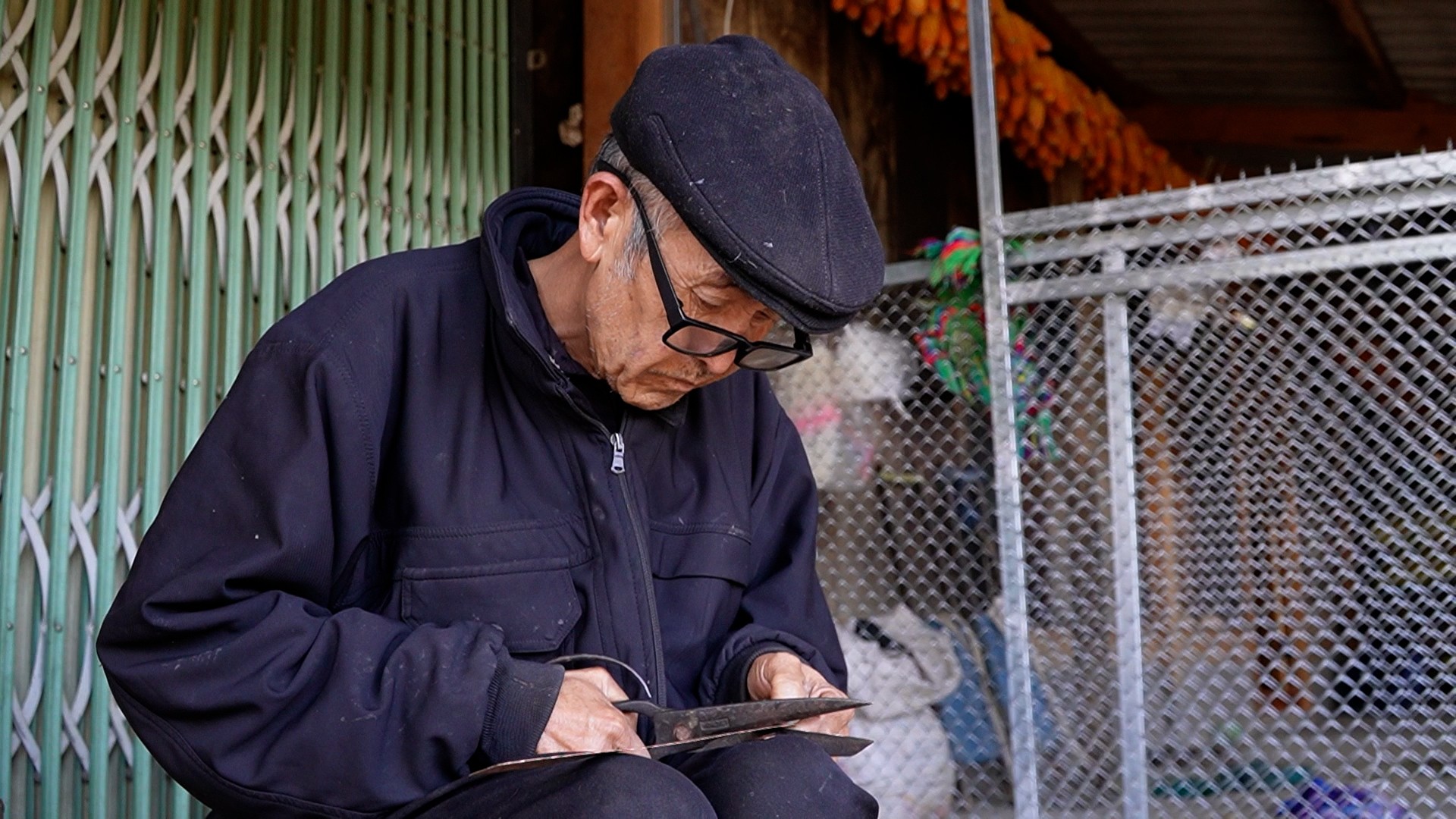
Mr. Giang Sang Pha making beeswax drawing pens.
Mr. Giang Sang Pha in Cang Dong village, Pung Luong commune, is known as an artisan making beeswax drawing pens.
Mr. Pha is 61 years old this year and has more than 20 years of making beeswax drawing pens. Each pen he makes always shows ingenuity, sophistication, and durability, which is sought after by people from other highland communes.
"Previously, beeswax drawing pens only had 1 stroke, so drawing took a long time and the lines were not even or beautiful. Meanwhile, a set of pens I make has 4 pieces, from 1 stroke to 4 strokes, thanks to which drawing motifs is faster. Pens made meticulously with good quality can draw sharp, beautiful patterns" - Mr. Pha shared.
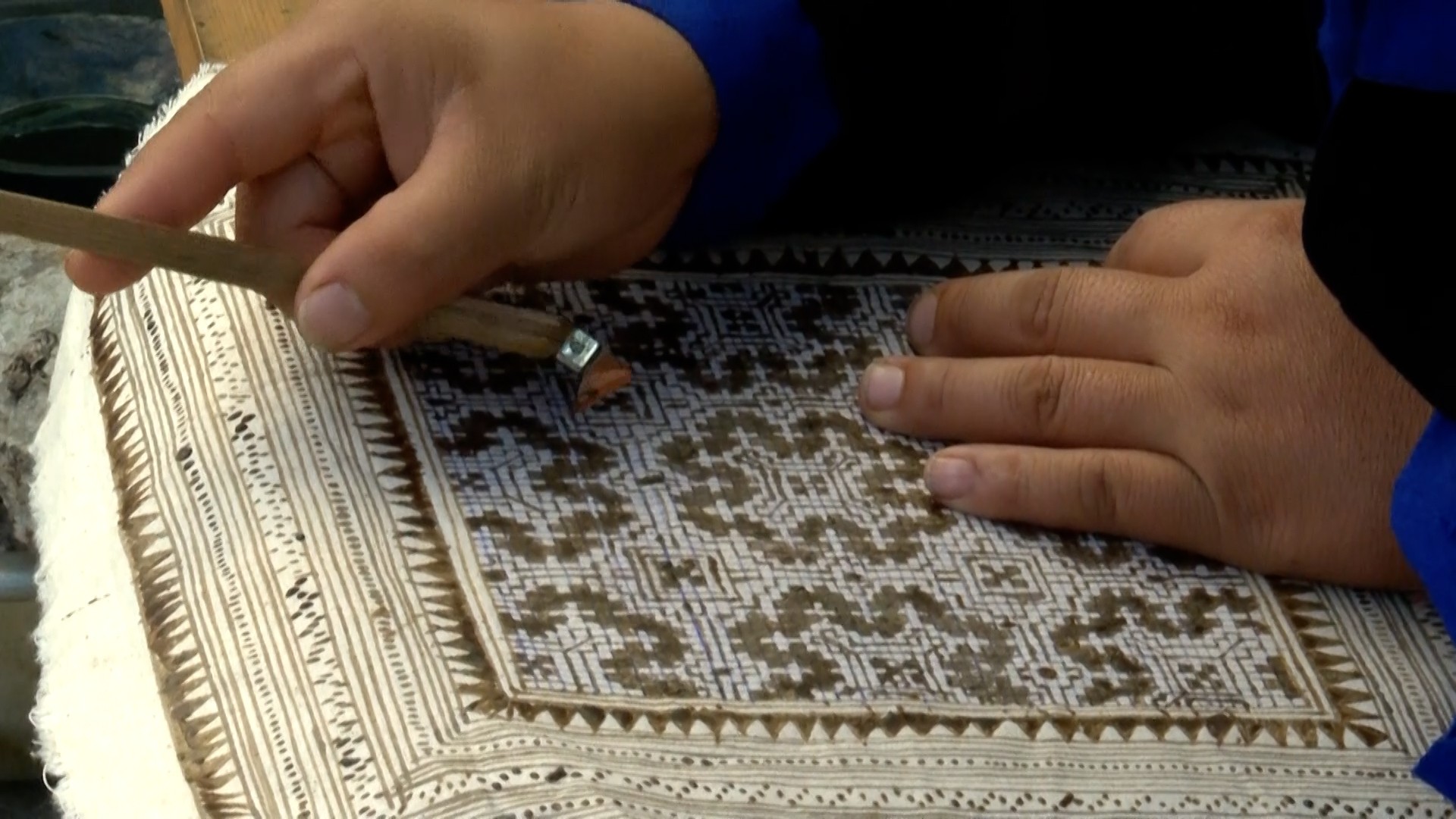
Patterns created from the beeswax drawing pen.
Beyond the scope of use within the family, traditional costumes of the Mong ethnic group have now stepped into the large market. To protect traditional costumes of the Mong ethnic group from being lost, in 2024, from a cooperative group, Ms. Ly Thi Ninh, Trong Tong village, Mu Cang Chai commune established Mong Style Brocade Embroidery and Weaving Cooperative, with 50 members.
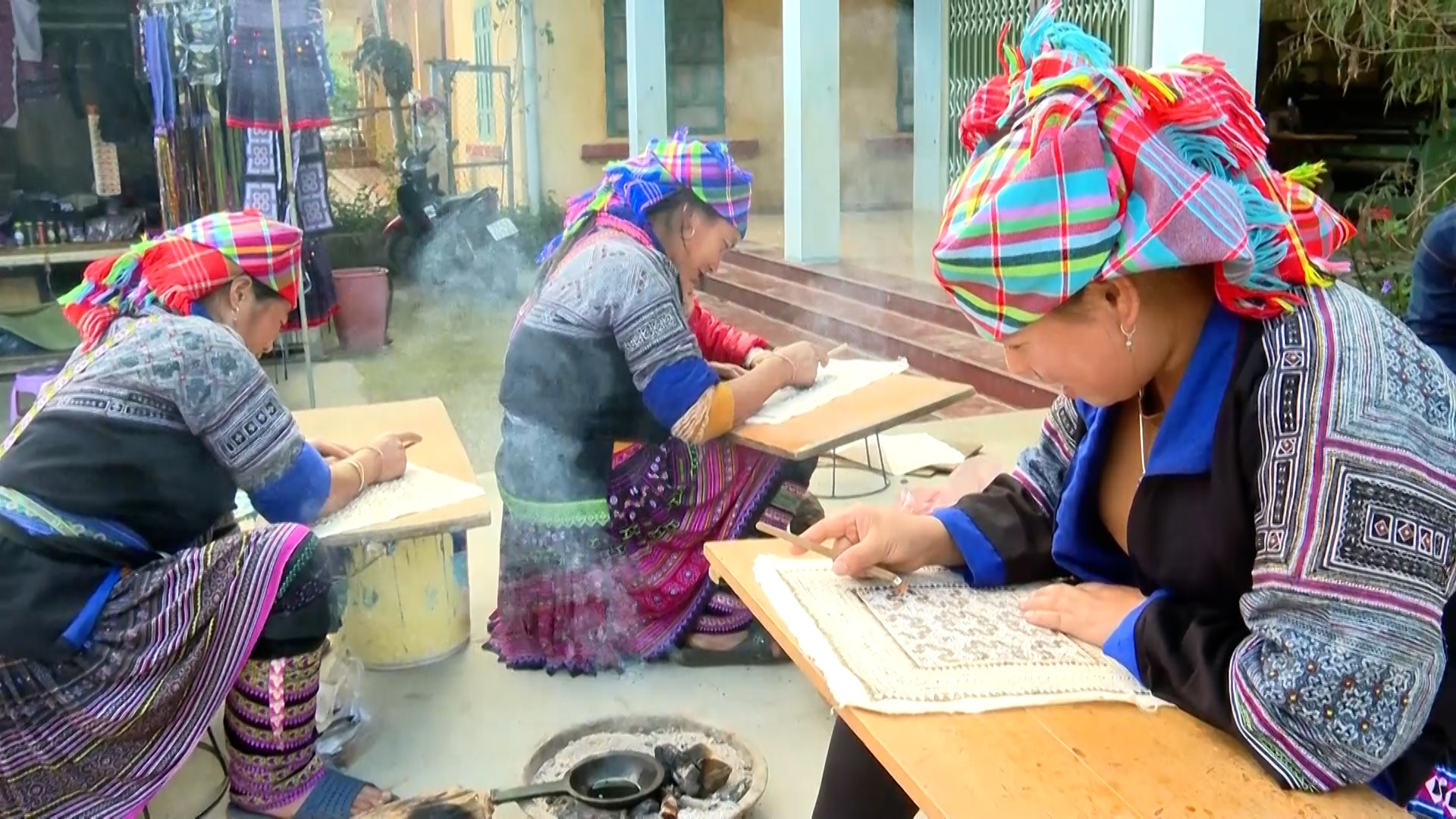
Members of Mong Style Brocade Embroidery and Weaving Cooperative, Mu Cang Chai commune drawing patterns on fabric.
Besides maintaining the production of traditional dresses, the members always explore, create, and learn experiences to make products with many diverse designs, meeting customer needs and promoting cultural beauty.
Currently, the cooperative's products are displayed and sold in Hanoi, bringing an income of 5 to 7 million VND/month for the members.
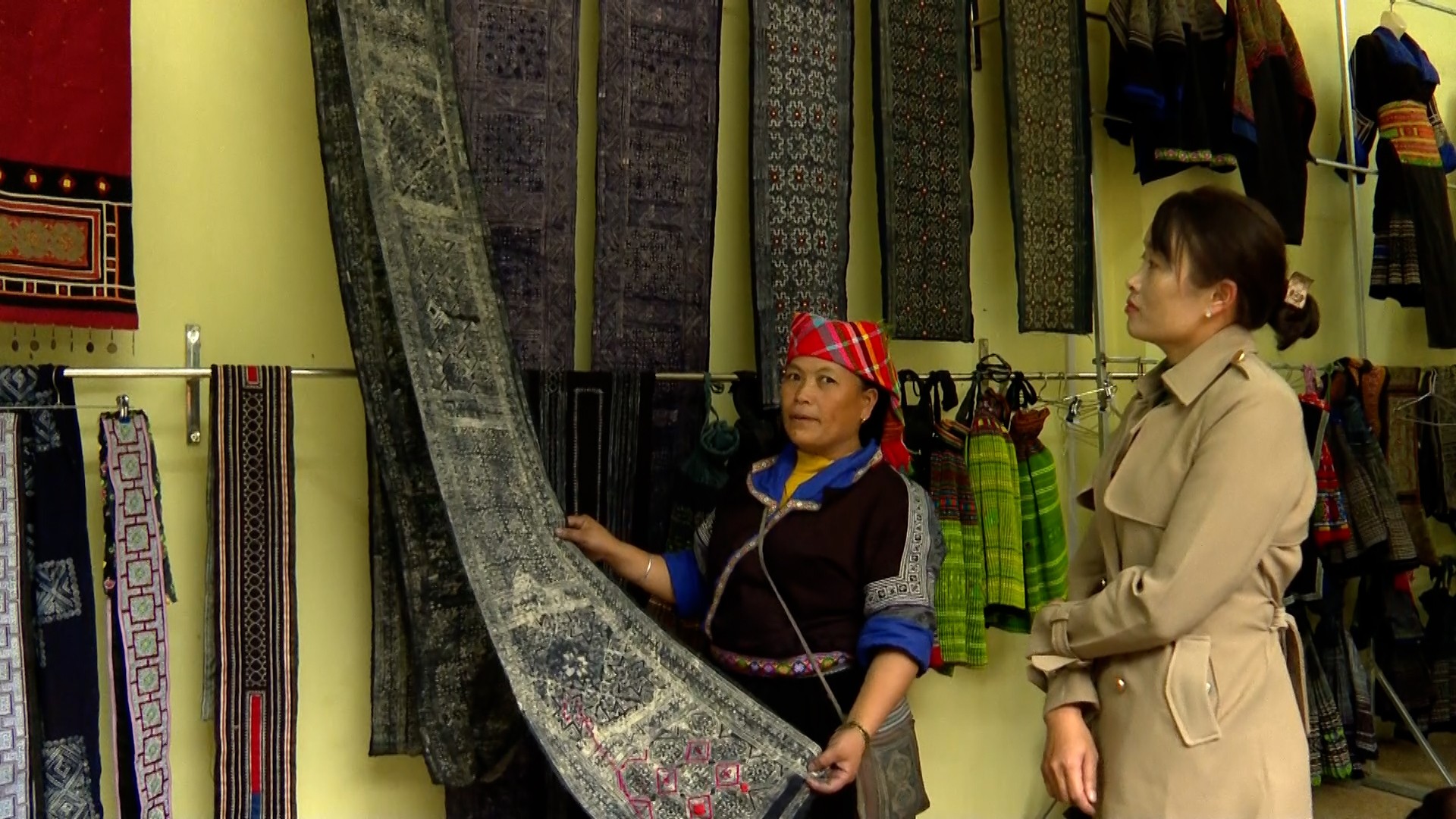
Ms. Ly Thi Ninh introducing brocade items to customers.
Traditional embroidery and weaving professions not only bear the meaning in preserving the culture of ethnic groups in general and the Mong ethnic group in particular, but also contribute to tourism development. Therefore, recently, highland communes in the province have attached special importance to the preservation of traditional culture, including the embroidery and weaving profession of the Mong people.
The teaching of brocade embroidery, weaving, and other cultural features is also cared for by schools through extracurricular lessons.
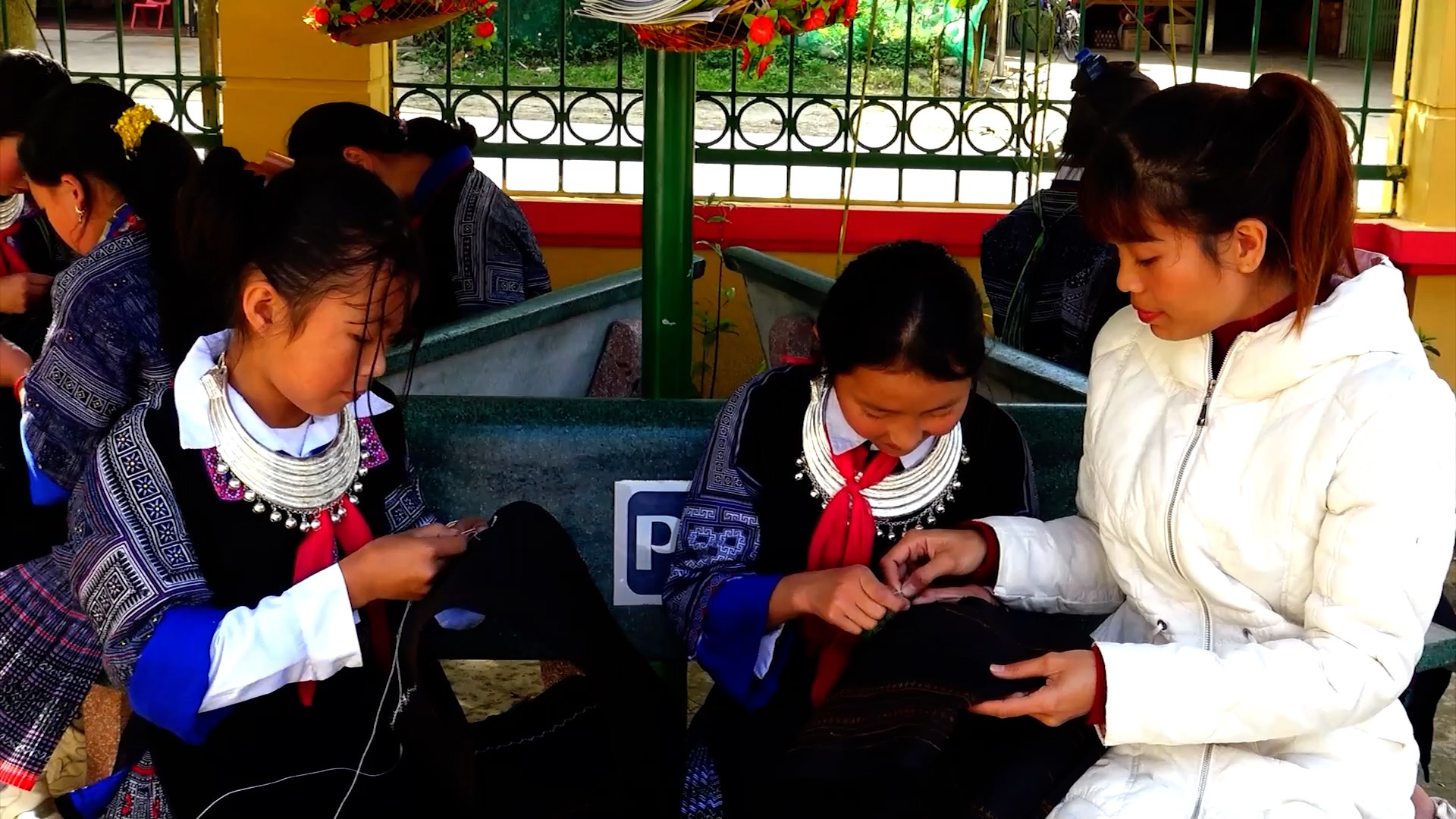
Students learning brocade embroidery during extracurricular hours.
Teacher Dao Trong Giap - Principal of Lao Chai Commune Ethnic Semi-boarding Primary School said: "Located in a highland commune, with mainly Mong people, the school determines that cultural preservation is very important. We encourage students to wear traditional costumes; bring sports, folk songs, folk dances into teaching, especially, female students will learn traditional costume embroidery in extracurricular hours".
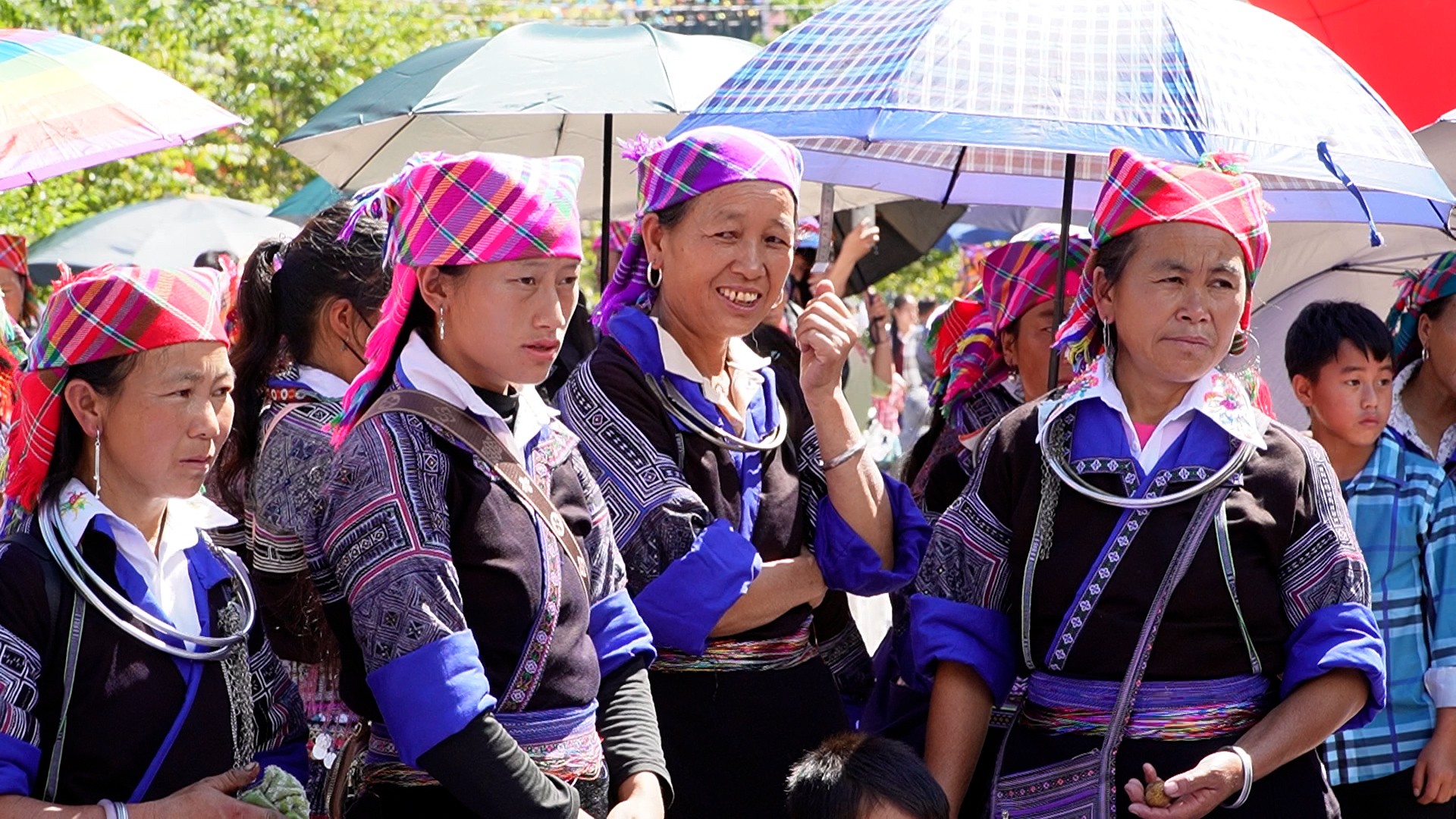
The beauty of Mong ethnic women's costumes.
The costume of each ethnic group is not only a formal beauty but also contains the culture of the people, showing spiritual life, aspiration to rise, and belief of highland people. For the Mong ethnic group in particular, preserving traditional costumes is not simply keeping the uniform, but also preserving cultural features to remember the origin.
https://baolaocai.vn/giu-hon-sac-phuc-dan-toc-mong-post885088.html