Ritual of choosing spiritual abstinence direction of the Tay people
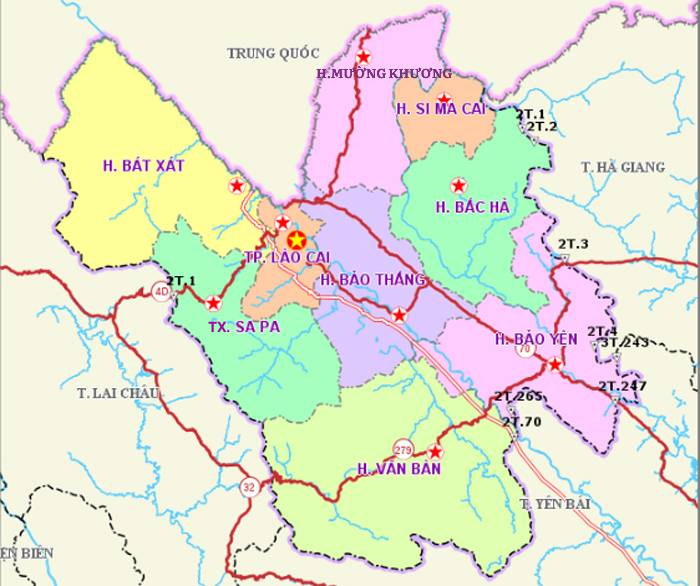
In the cultural treasure of the Tay people in Lao Cai, there are 6 heritages recognized as the national intangible cultural heritage: Then Tay, Khap Nom, tug of war, Ta Chai xoe dancing, the field-going festival and the spiritual abstinence direction ceremony. In particular, the spiritual abstinence direction is a unique ceremony, bearing the identity of the Tay ethnic group, recognized as a national intangible cultural heritage in 2019.Each year, the Tay chooses a different spiritual abstinence direction. For example, this year choose the north direction, next year choose the west ... with the expectation that there will always be development of the village and people in the year. Currently, only the Tày people in Lang Giang commune (Van Ban district) still keep this custom and maintain the annual organization.
 |
| The bowl dance in the festival after the ritual to choose the direction of abstinence |
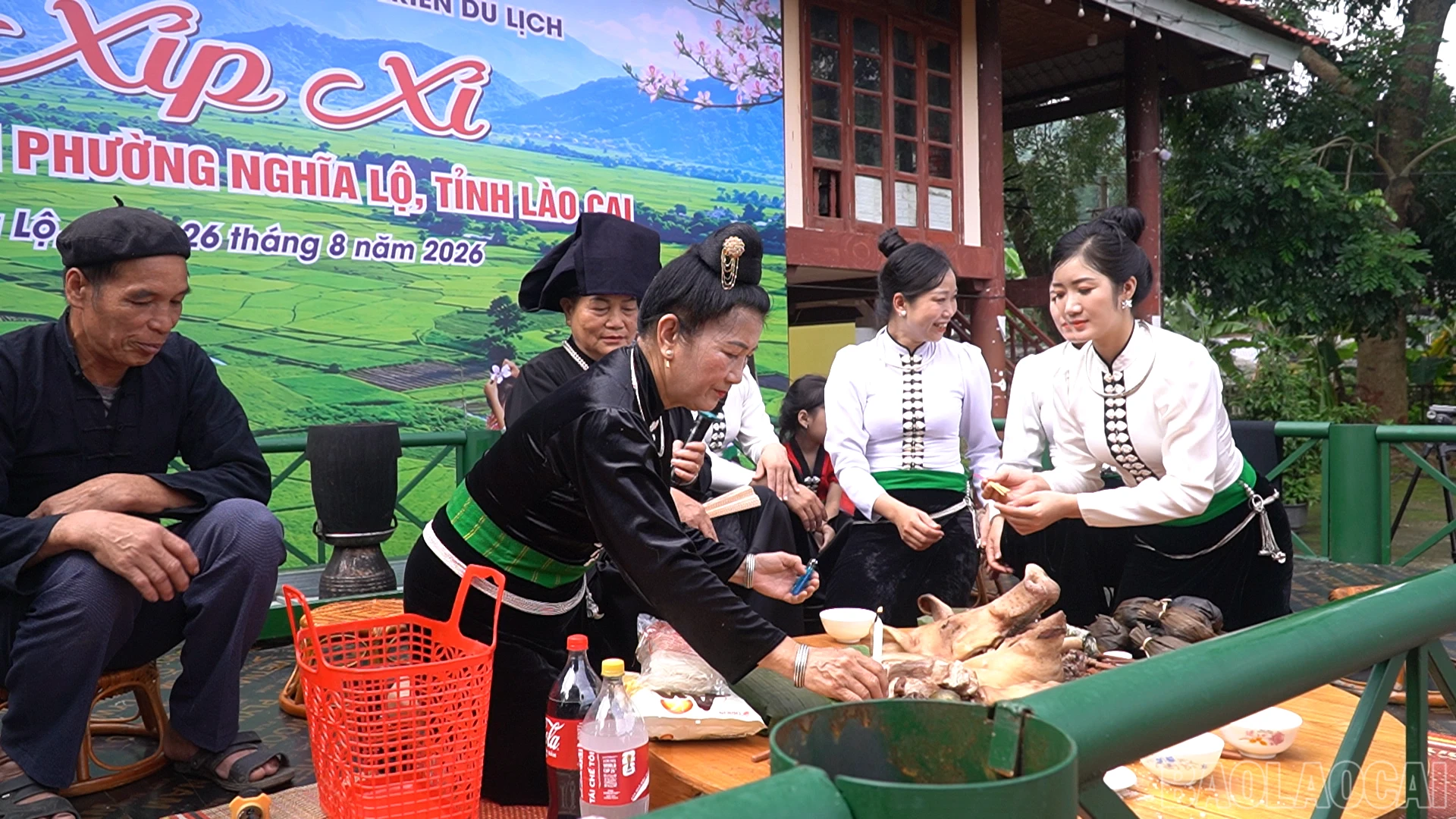
The ceremony of choosing abstinence direction is held by the Tay people on the morning of the first day of Tet to choose a good direction for the people of the whole village. This is the ritual of the community, all the people obey the direction of abstinence, under the lead of 3 priests, the most important one is the doctor who chooses the direction of abstinence and the priest worship the local god, the priest worship at the ceremony board to board.
The offering included an iron sword, 1 gold coin, bundle of incense, 2 cups of tea, and 12 cups of wine. The healers accompany the head of the household to the central field of the village to find the direction. All 3 teachers and the whole people offer incense in the central field of the village to offer incense, tea, medicine and gold coins to the spirits and land of the village.
According to the practice of the Tay people, the direction is selected according to the even - odd year, all of which have 4 directions along the east - west and south - north axis. If the year is even, the main direction of abstinence of the village is along the south-north axis; In the odd year, the village's abstinence direction is along the east-west axis, the Tày people choose the counter-clockwise direction. Which year knows the direction of abstinence of that year.
Once you have chosen the direction of abstinence, the whole village that year no one can build a house to return to that direction, even the chicken coop or the pigsty, when going to the forest, they also abstain from the chosen abstinence direction. Specifically, in 2020, the Tày people abstain from the south, until 2021, the Tày people abstain from the north ... Therefore, in the year which families in the village or commune build new houses, build cattle stables, all the important things of the village not chosen to face the direction of abstinence.
In the ritual of choosing abstinence in Lang Giang commune in 2020, the physician vowed: Thirty days are one month, twelve months are one year, the old year ends into the new year. Today, the Tày people's descendants do not abandon the customs of the ancient people, depart for the field, on the way to travel. On behalf of the Tay people in Lang Giang commune, the people who worked as a shaman, then departed, greet God Tam Sa and Thuyet Ta, bless their children and grandchildren for prosperity, all peace, longevity, obedient children, rapid growth, success ...
After choosing the direction of abstinence, people opened a crossbow shooting contest right in the central field, then returned to the home of the shaman to hold Khap Nom, xoe dance, beat drums to celebrate the new year.