"Resources" for tourism development
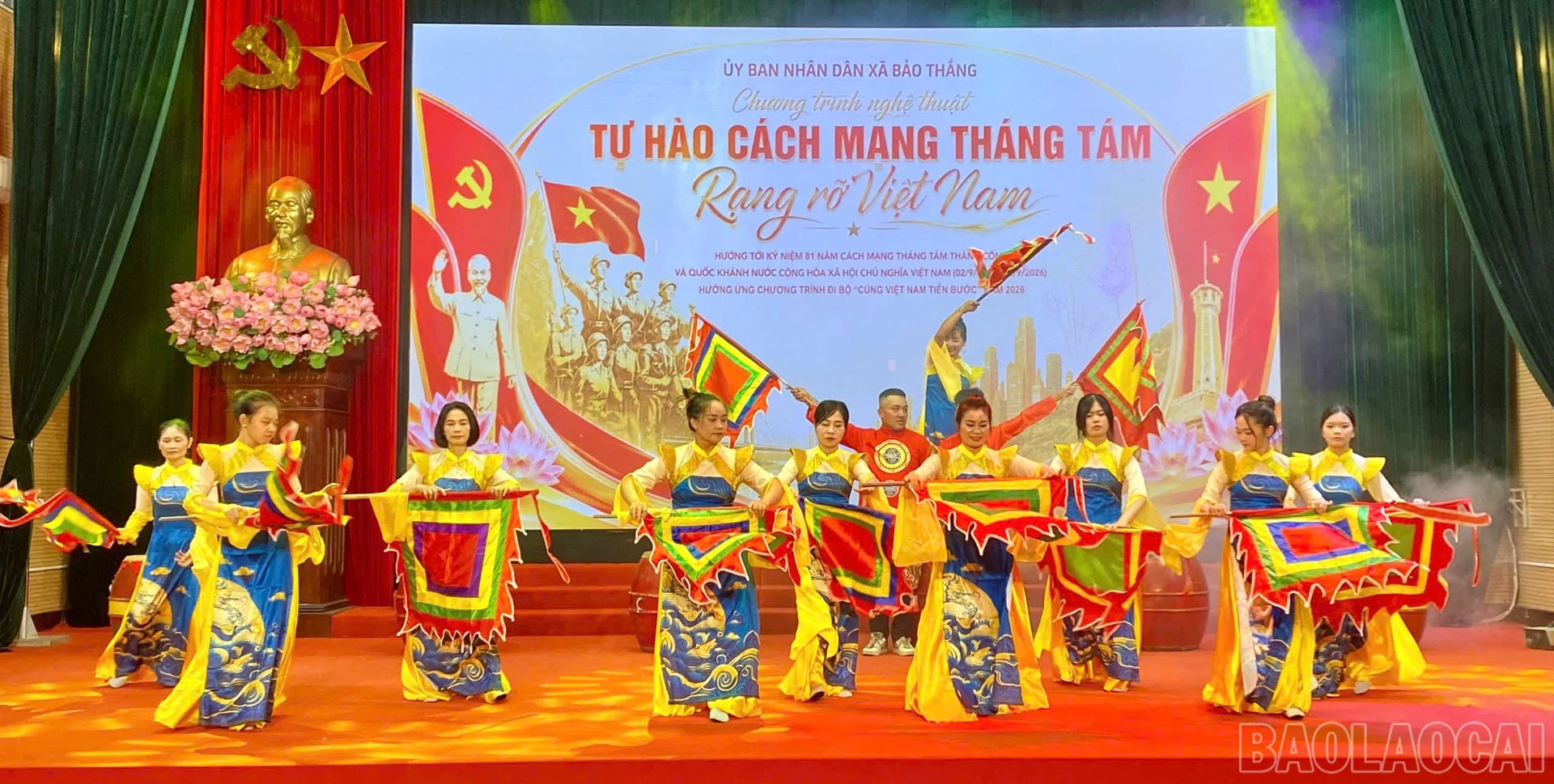
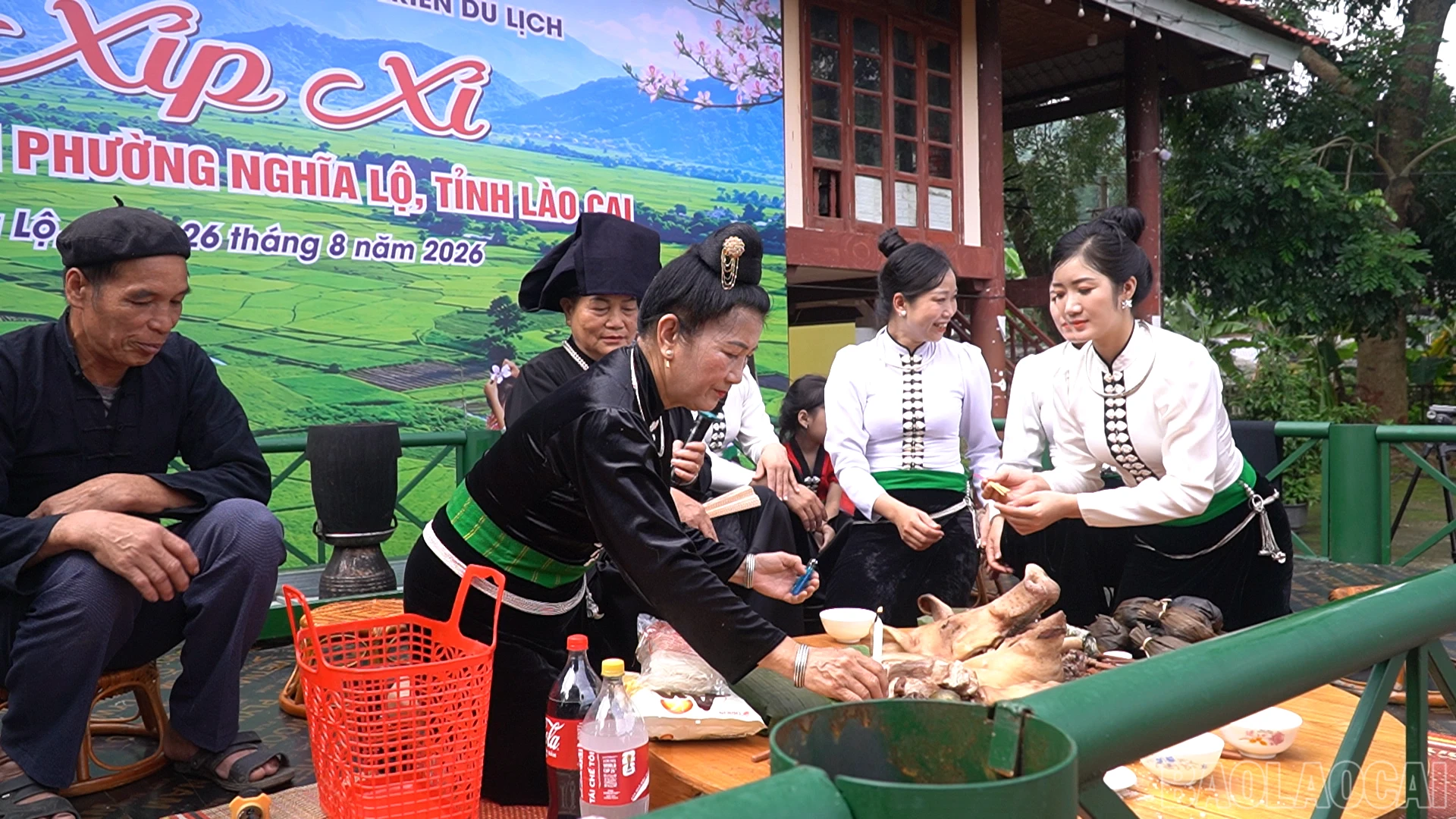
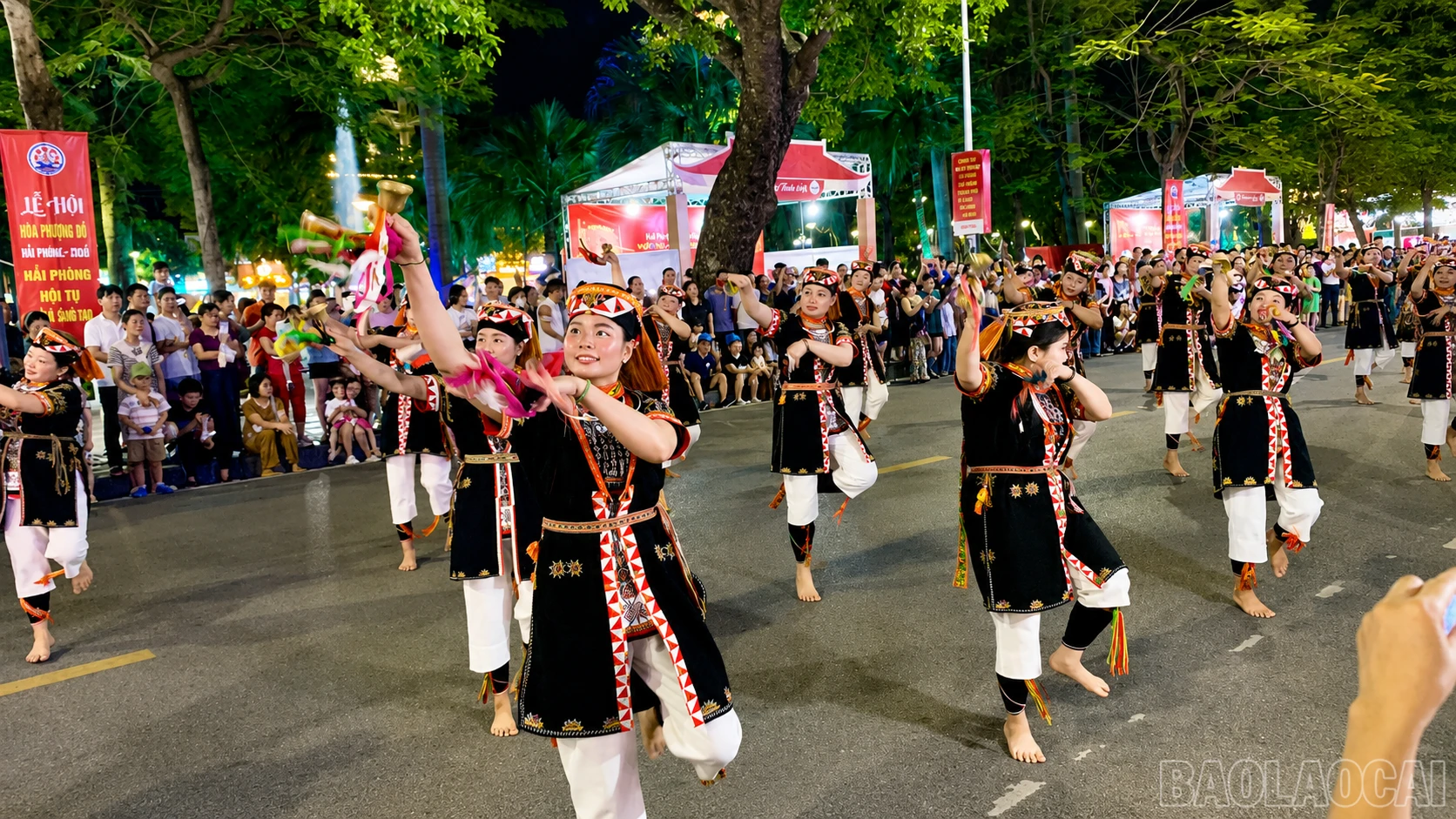
Lao Cai is the land with rich history and culture, with diverse and rich treasure of intangible cultural heritage. In recent years, the research, collection, restoration, preservation and promotion of cultural heritages have been promoted, contributing to making Lao Cai one of the few provinces and cities in the country that can preserve the types of national cultural heritages, in which, the number of national and world intangible cultural heritages is large and valuable, becoming an important "resources" for tourism development. |
| Forest worshiping ceremony of Ha Nhi people (Bat Xat). |
After 3 decades of development, from an economically poor and culturally backward province, Lao Cai has become developed province in all fields, in which culture has developed in the direction of selective absorption of the world's progressive cultural values, while protecting the diversity of traditional cultural forms in the spirit of the 8th Central Committee Resolution on "Building and developing advanced Vietnamese culture, deeply imbued with ethnic identities".
In recent years, realizing that traditional culture in general and intangible cultural heritage in particular play a very important role in building stable society and driving force for economic development, the Provincial Party Committee, the People's Council, the Provincial People's Committee has issued many mechanisms, policies, schemes and projects in order to preserve and promote effectively the traditional cultural values of the ethnic groups. Typically projects through congresses, such as "Preservation, exploitation and promotion of cultural identity of Lao Cai ethnic groups for the period of 2001 - 2005 up to 2010", "Cultural development, preservation and promoting the identity of Lao Cai ethnic groups in the period of 2006 - 2010", "Developing cultural institutions, preserving and promoting cultural identities of Lao Cai ethnic groups in the period of 2011 - 2015", "Developing culture, sports of Lao Cai province in the period of 2016 - 2020", "Development of culture and tourism in Lao Cai province in the period of 2020 - 2025"…
The results obtained from the projects over the past 30 years are very important: There have been nearly 50 ethnic ceremonies and festivals collected, restored and preserved; 2 traditional villages and hamlets preserved in association with tourism development; collecting nearly 2 thousand folk songs, customs and practices, 40 musical instruments, nearly 200 patterns, taking thousands of photos of festivals, customs and practices of ethnic groups; checking inventory of intangible cultural heritage of 25 ethnic groups and branches in 500 villages; 39 heritages have been developed scientific profiles proposed to the Ministry of Culture, Sports and Tourism to be included in the list of national intangible cultural heritages, 2 heritages have been recognized by UNESCO as intangible cultural heritages to represent humanity, namely: Rituals and tug of war games of the Tay, Giay people and Then practice of the Tay, Nung, and Thai people... This result has made Lao Cai the leading province in the country in terms of the number of honored cultural heritages, becoming an important resource for the development of community tourism and heritage tourism.

Nung artisan teaches embroidery to the younger generation.
Bao Yen district is the locality that has well implemented the preservation and promotion of the national cultural identity in association with the restoration and maintenance of many festivals, folk games and traditional crafts, while preserving and promoting the cultural beauty of the people as well as attracting tourists. Typically, the successful organization of Bao Yen District Culture and Tourism Week in 2022, attracting nearly 50,000 turns of residents and tourists, bringing jubilant, exciting, colorful cultural atmosphere and leaving good and unforgettable impressions on tourists.
With the goal of "turning heritage into property", over the years, many cultural heritages have promoted their value in creating unique tourism products, contributing to attracting tourists to visit, admire and worship, bringing great economic benefits to the people and local budget, such as Bao Ha Temple Festival, Tan An Temple Festival, Thuong Temple Festival... and Roong Pooc festivals of the Giay, Long Tong of the Tay people, dignitaries of the Dao people, Gau Tao of Hmong people, Khu Gia Gia of Ha Nhi people…
With the orientation of sustainable tourism development in Lao Cai on the basis of effectively promoting the value of the cultural heritage of the ethnic groups, in the past years, the cultural sector has always determined to preserve culture with the main objectives which are social stability, solidarity promotion, mutual assistance, economic development and tourism development. Therefore, cultural heritage protection programs always aim to develop Lao Cai's tourism more and more unique, diverse and rich in identity. Tourism becomes an effective way to contribute to better and more sustainable preservation of cultural heritage.
The work of preserving and promoting the value of intangible cultural heritages of ethnic minorities in Lao Cai has achieved many important results, contributing to the building and development of Lao Cai people to be increasingly united, civilized and friendly as well as supporting tourism for sustainable development, bringing economic benefits to people, increasing revenue for the provincial and local budgets.