Science paves the way for agriculture in Lao Cai.
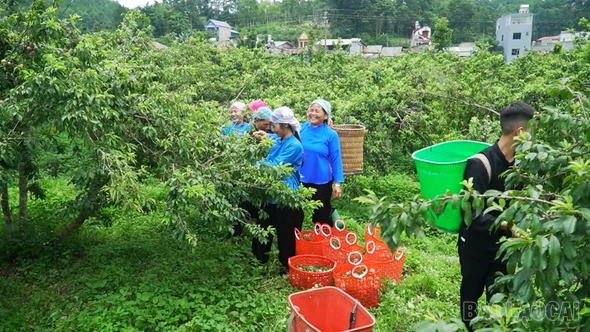
With the support of science and technology and the innovative spirit of farmers, Lao Cai is gradually realizing the goal of building a green, clean, and sustainable agriculture – enriching the people while preserving the landscape, environment, and cultural identity.
Farmers are proactively applying science and technology to production.
Having spent a long time trading agricultural products in the Central Highlands provinces, and possessing a keen market sense, in early 2025, Mr. Sung Pha Hoa, head of Co De Chai village, Bac Ha commune, introduced yellow passion fruit to his family's 1-hectare hillside farm for experimental cultivation. After only a few months, the yellow passion fruit plants yielded a harvest, selling for 40-50 thousand VND/kg, providing a good income.
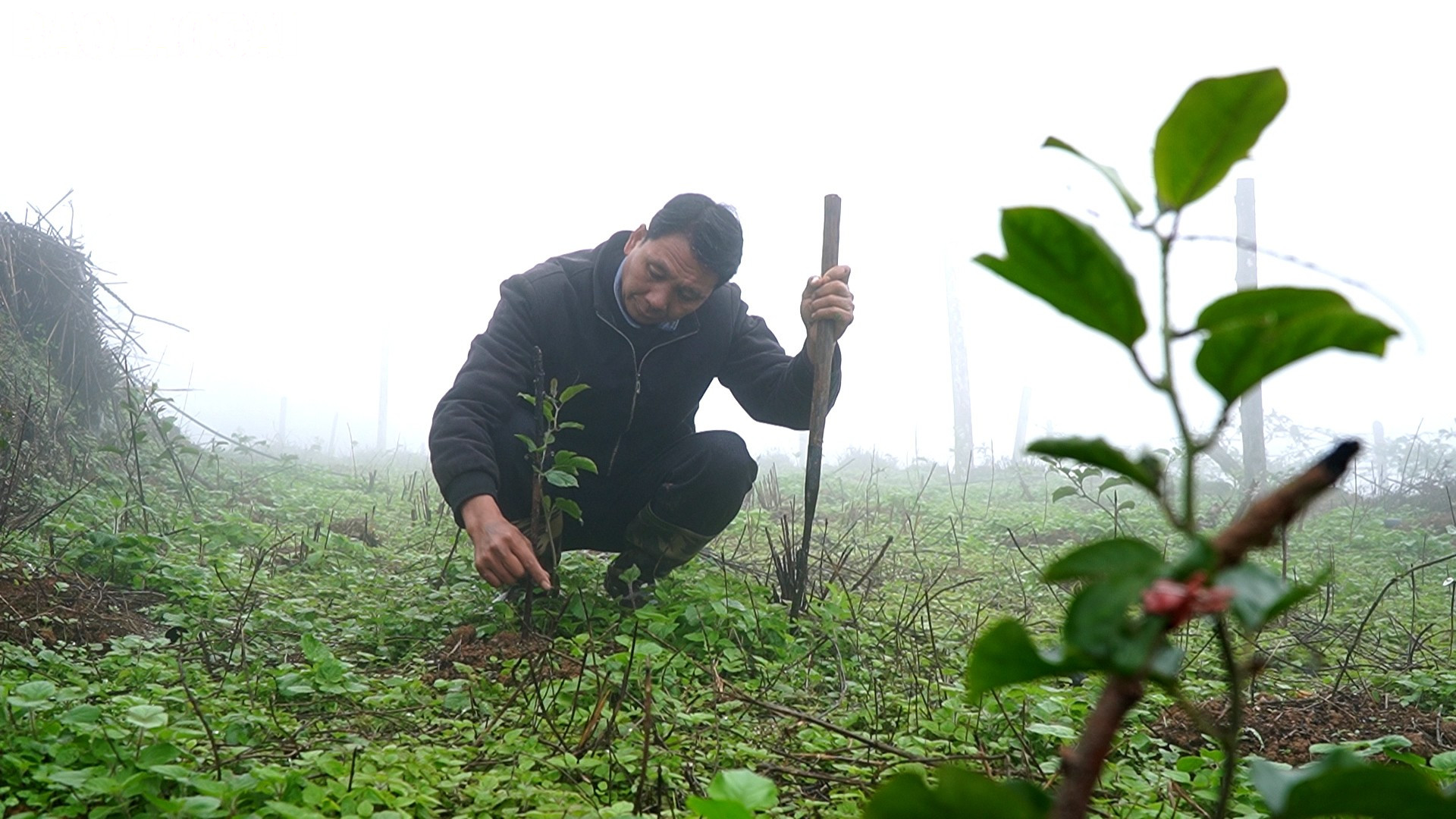
The yellow passion fruit plant has taken root in the soil of Co De Chai, Bac Ha commune.
However, when the local authorities decided to expand the area for growing yellow passion fruit to 40 hectares throughout the commune, Mr. Hoa was truly concerned.
“Now, not only my family but all the villagers are participating in planting. The methods need to change to achieve higher efficiency. I hope to receive training on techniques so I can pass them on to the villagers,” Mr. Hoa shared.
In response to this desire, with the support of the local community, Highlands Gia Lai Co., Ltd. - the supplier of yellow passion fruit seedlings to households participating in the "Yellow Passion Fruit Production Development Project in Bac Ha Commune" - has guided farmers on planting and caring techniques, and committed to purchasing the produce, helping farmers to produce with peace of mind.
In its development orientation, Bac Ha commune has identified tourism as a strategic breakthrough and specialty, endemic agricultural products as a solid foundation.
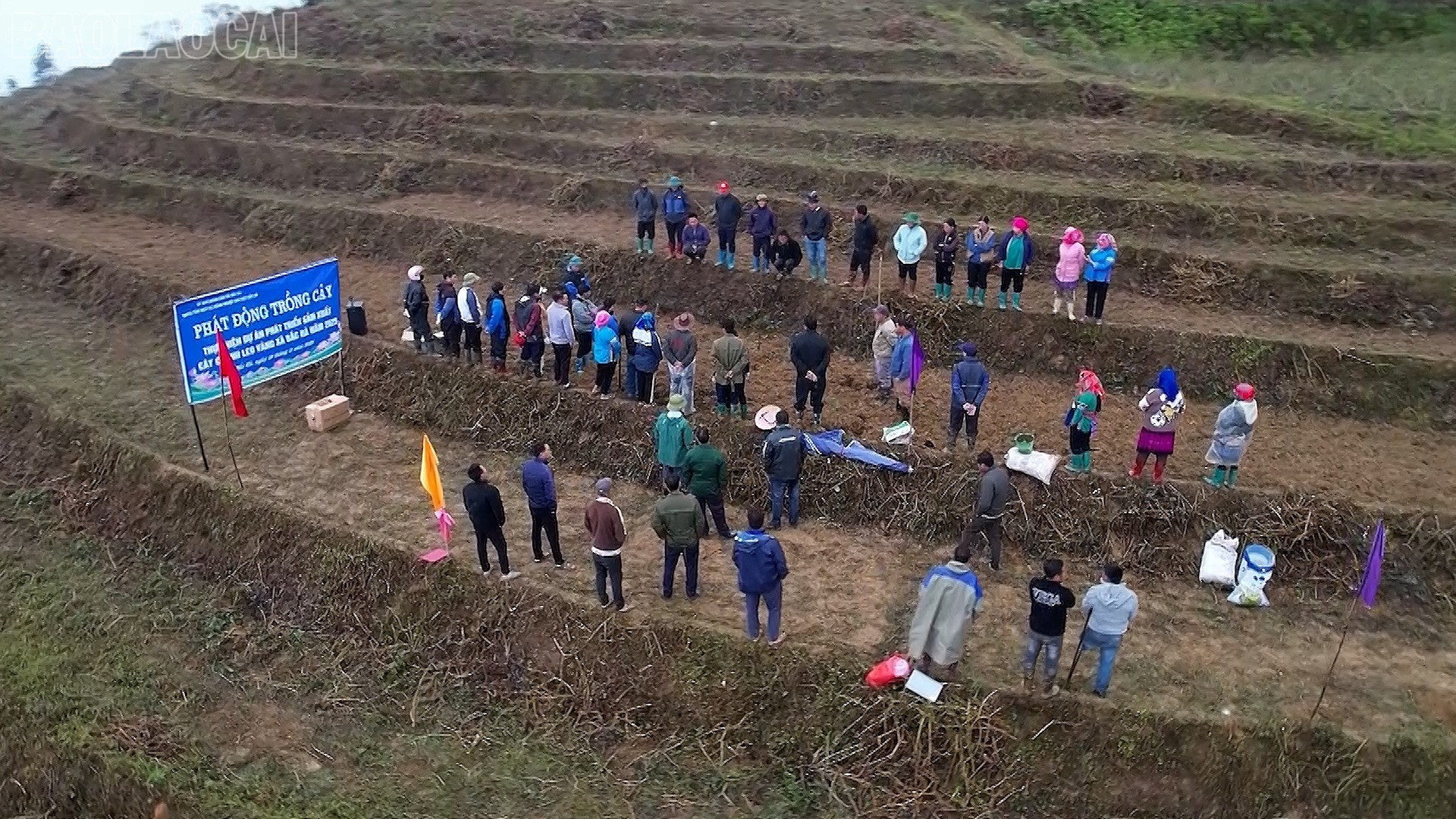
Launching ceremony for planting yellow passion fruit trees in Ban Ngo Thuong village, Bac Ha commune.
Mr. Bui Thi Ly, Permanent Deputy Secretary of the Party Committee of Bac Ha commune, said: Bac Ha will develop agriculture in the direction of "organic - specialty - circular", expanding the scale of commodity production of temperate fruit trees, medicinal herbs, safe vegetables and native livestock. With that orientation, the commune will focus on applying science and technology to the cultivation of some specialty crops such as Tam Hoa plums, Ta Van plums, and ancient tea trees; and promote the sale of agricultural products on e-commerce platforms.
Adjacent to Bac Ha commune, Lung Phinh commune is also gradually developing effective agricultural models through the application of science and technology in production.
Currently, Lung Phinh has 700 hectares of high-economic-value crops, including temperate fruit trees, medicinal plants, and various types of vegetables.
The value of agricultural production per unit of land using high-tech methods reaches approximately 70 million VND/ha, significantly higher than traditional farming methods.
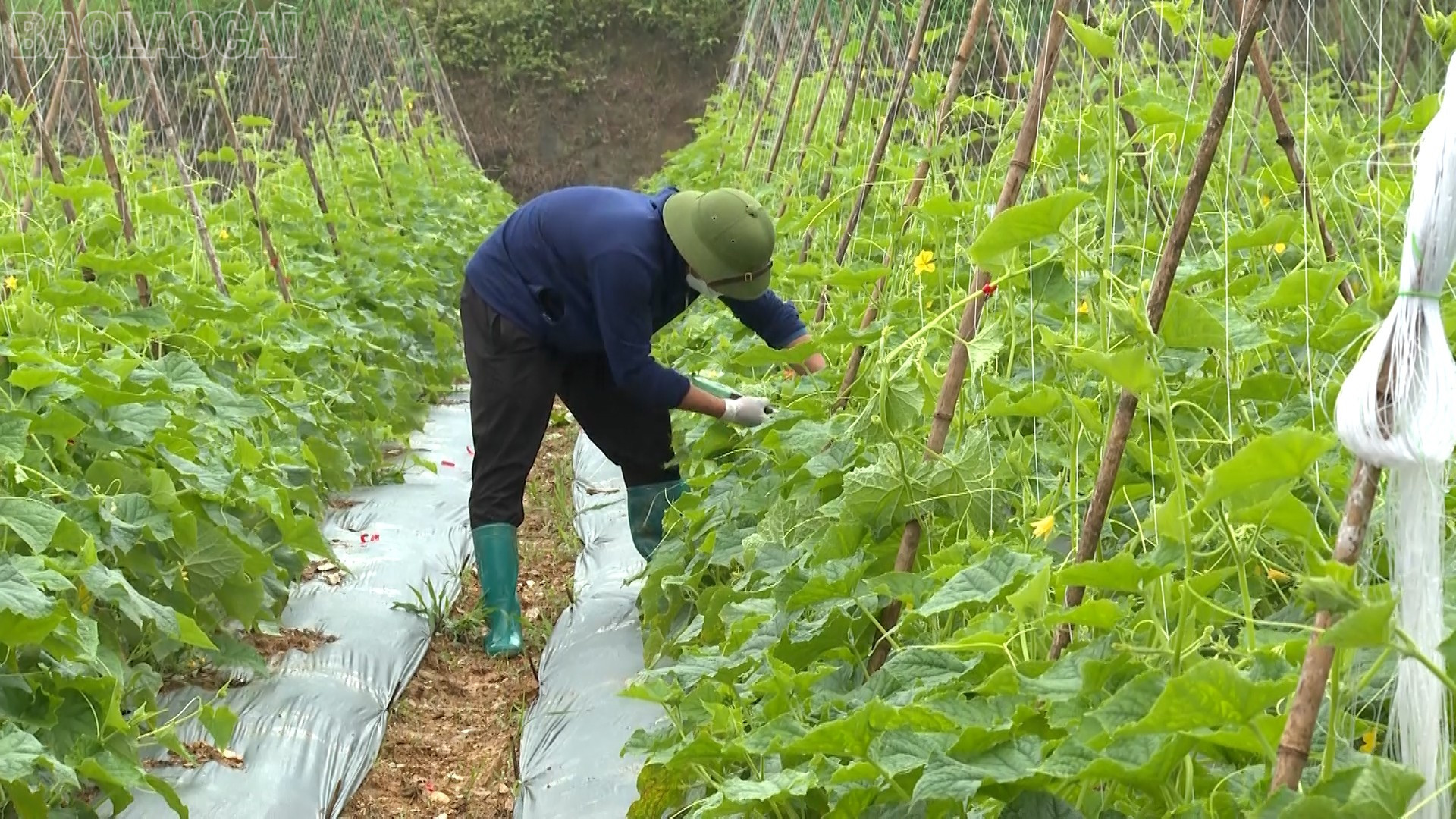
Farmers in Lung Phinh are stepping up the application of science and technology in production.
Mr. Ha Duc Thanh, Vice Chairman of the People's Committee of Lung Phinh commune, said: Currently, there are two cooperatives and one enterprise investing in and applying high technology to the production of safe vegetables in the area. These units focus on building greenhouses and polytunnels, applying safe production processes, limiting the use of pesticides, and gradually forming a concentrated area for commercial vegetable production. This is considered a suitable and sustainable direction.
Science paves the way for sustainable development.
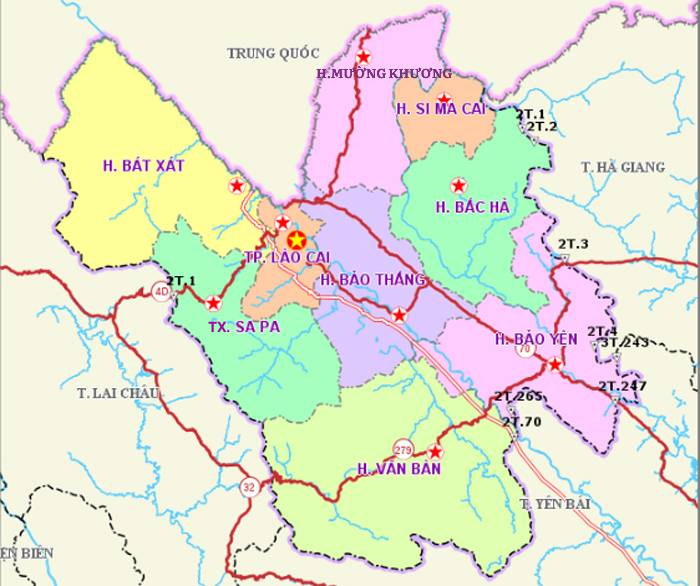
With the expansion of administrative boundaries after the merger, the total agricultural land area of Lao Cai province now reaches nearly 1,160,000 hectares, creating favorable conditions for organizing large-scale commodity production, investing in the comprehensive application of science and technology in production and processing, and building and sustainably developing agricultural value chains.
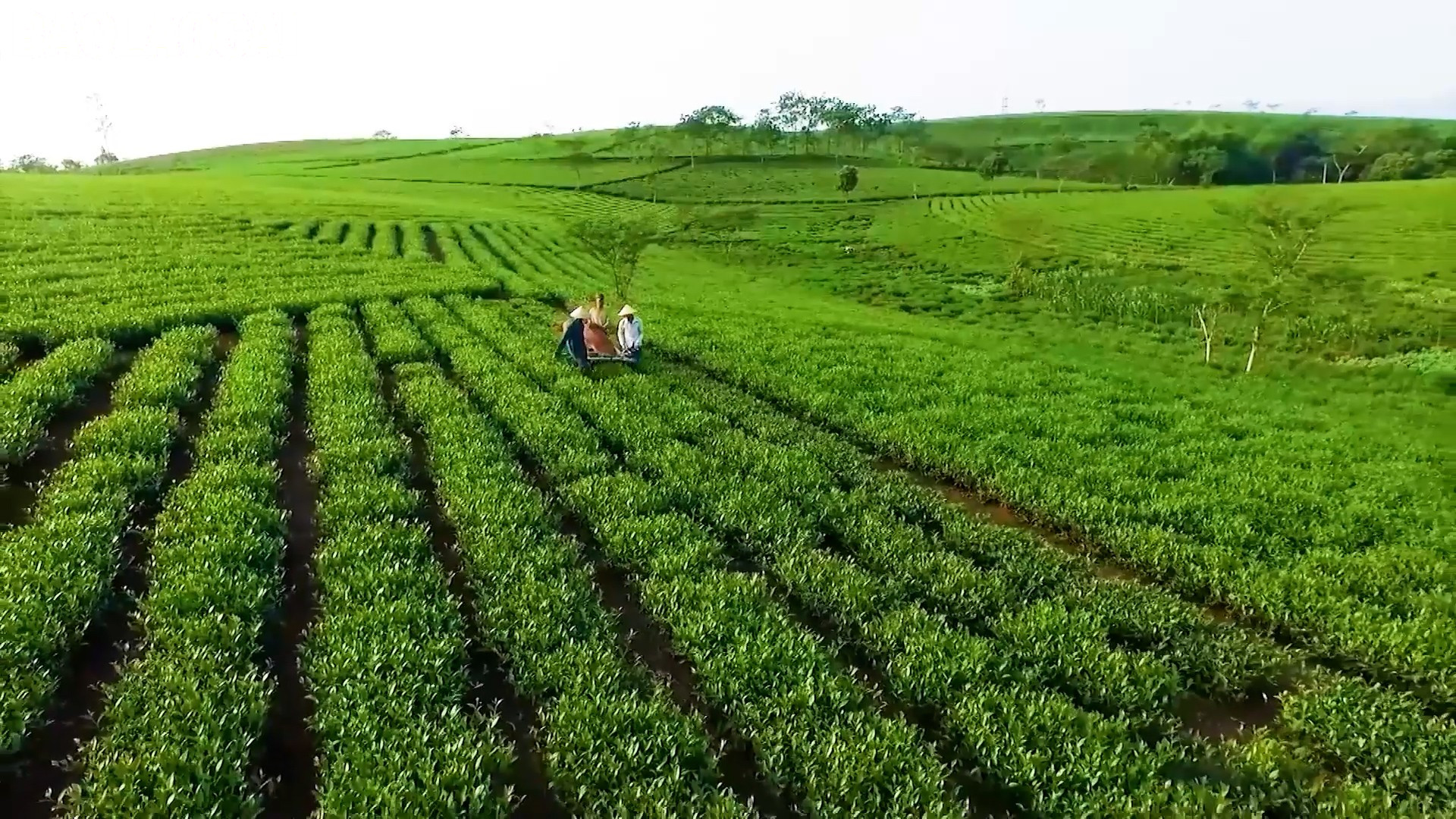
Lao Cai has developed many concentrated areas for commercial agricultural production.
Currently, many of Lao Cai's key cash crops are being developed into organic production areas, bringing high economic value.
Notably, the organic tea growing area, covering over 2,100 hectares, utilizes satellite GPS technology to monitor the cultivation region, adhering to stringent standards to meet the demands of export markets.
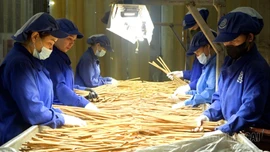
Similarly, after the merger, Lao Cai province became a super cinnamon growing region with over 146,000 hectares, accounting for 75% of the country's cinnamon area, including about 24,000 hectares of organic cinnamon, meeting the stringent standards of the international market.
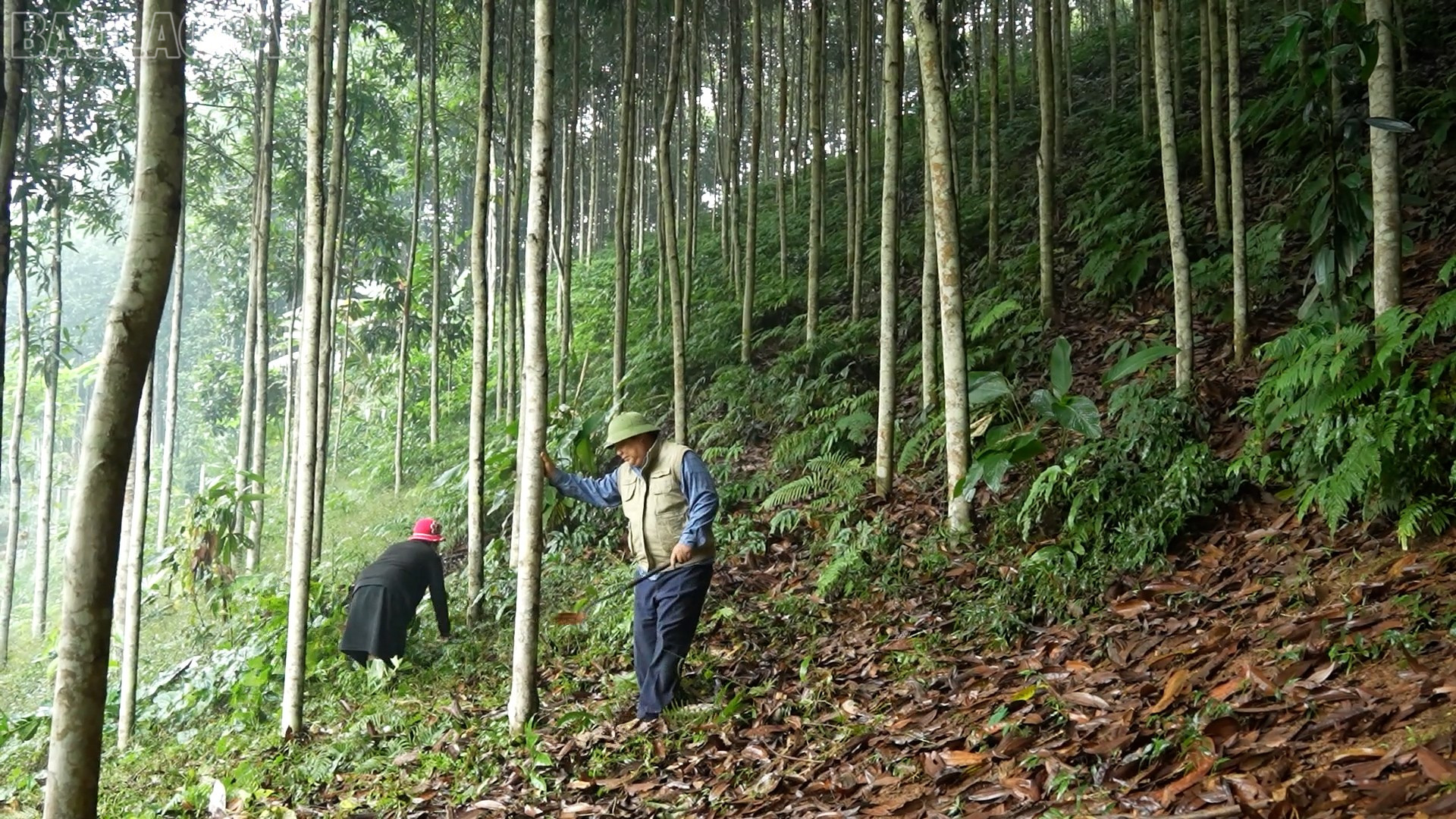
The entire province has approximately 24,000 hectares of organic cinnamon.
Mr. Tran Minh Sang, Director of the Department of Agriculture and Environment of Lao Cai province, said: The province strives to have over 50,000 hectares of organic cinnamon by 2030, making efforts to ensure that each cinnamon forest and region is identified on the global forest product map and its origin is traceable; at the same time, attracting more businesses to invest in on-site processing. This is the "passport" for the province's cinnamon industry to confidently enter the world and gain a firm foothold in demanding markets.
As the agricultural sector undergoes restructuring, high-tech agricultural production areas are also being expanded.
To date, the province has approximately 520 hectares of high-tech agricultural production in localities such as Lung Phinh, Bac Ha, Sa Pa, Den Sang, Y Ty, and Muong Hum. These facilities mainly utilize greenhouses, net houses, water-saving irrigation, and safe production processes.
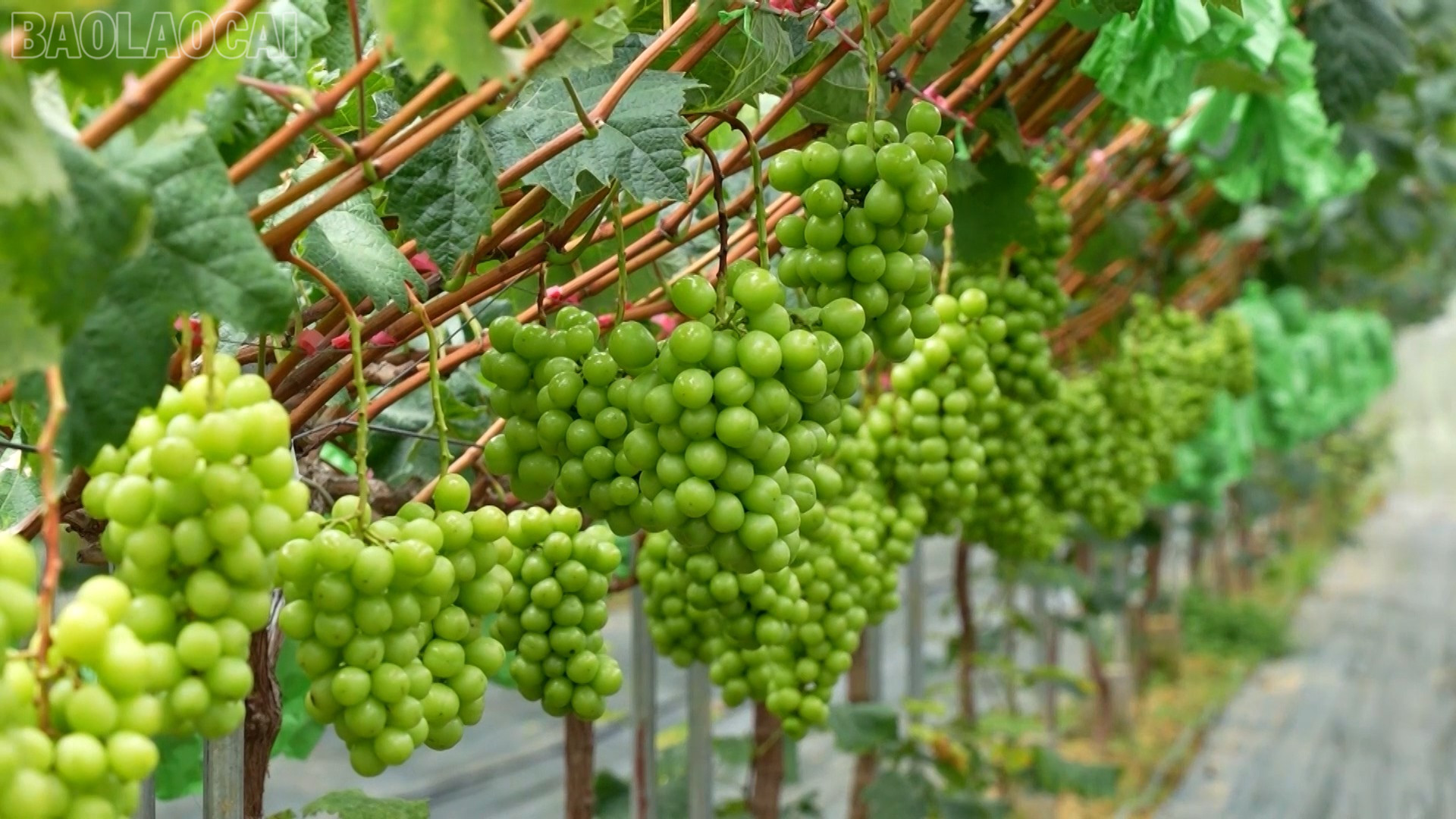
Milk grapes grown in the highlands of Y Ty - an advanced organic farming model.
For example, the 1,100-hectare banana plantation area in Trinh Tuong, Ban Lau, and Muong Khuong communes has been granted a planting area code, with a total annual production of over 33,000 tons, mostly for official export to China.
The Dai Minh pomelo growing area, covering 500 hectares, is applying QR codes, growing area codes, and geographical indications.
For example, the medicinal herb growing area in Sa Pa ward and Ta Phin commune, covering 50 hectares, has achieved GACP-WHO certification - a standard issued by the World Health Organization, ensuring clean production processes and clear traceability.
From fragmented production and dependence on traders, many farmers in the province have gradually become familiar with digital technology to reorganize production and expand their markets. From applying cultivation techniques and production management to promotion, sales, and payment, digital technology is gradually participating in the agricultural value chain, helping to reduce intermediaries, save costs, and improve economic efficiency.
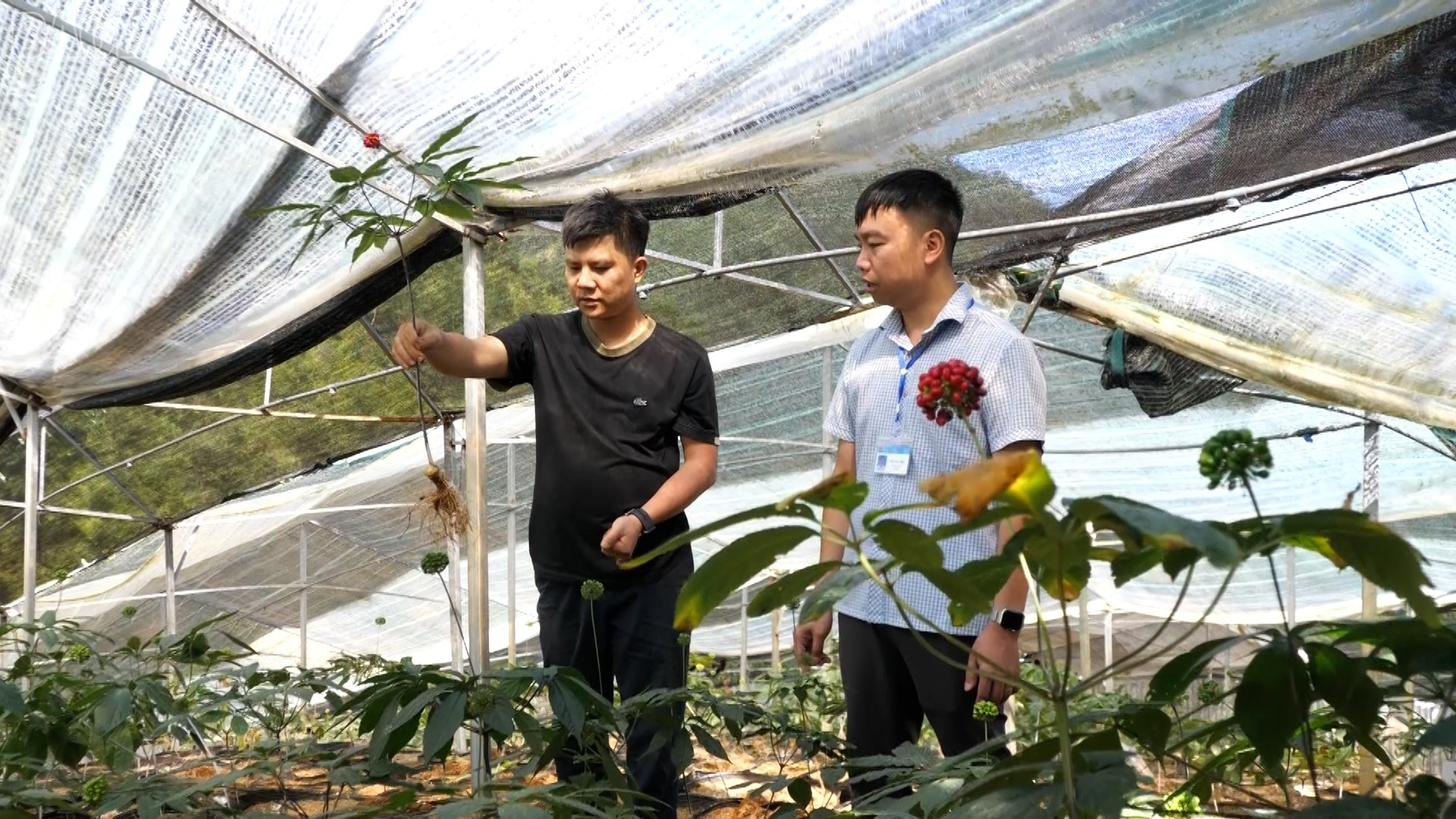
For the past six years, ginseng has taken root in the Mu Cang Chai region, opening up a new and promising direction for this still-challenged highland area.
.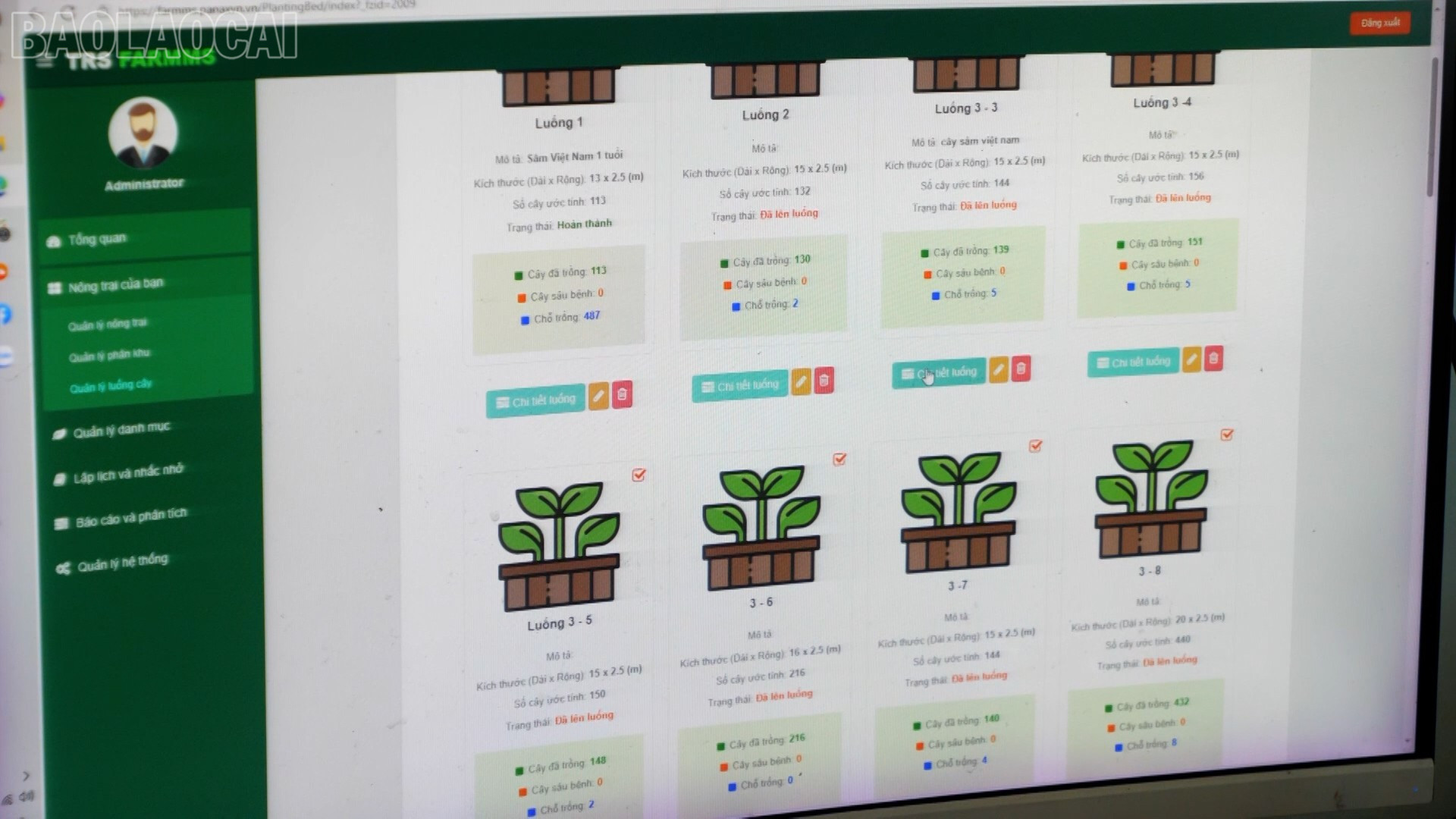
Each ginseng plant is carefully managed and assigned an identification code, as a testament to the quality and value of this precious species.
Agricultural cooperatives are also proactively innovating to keep pace with production demands. At Tan Thinh Agricultural Cooperative, investing in modern machinery such as heat dryers, automatic sorting machines, vacuum packaging technology, and QR codes for traceability has yielded impressive results.
Mr. Ngo Duy Hiep, Director of Tan Thinh Agricultural Cooperative, said: "Thanks to these innovations, the cooperative's macadamia nut production increased from 6 tons (in 2022) to 14 tons (in 2024), with profits reaching nearly 1 billion VND per year."
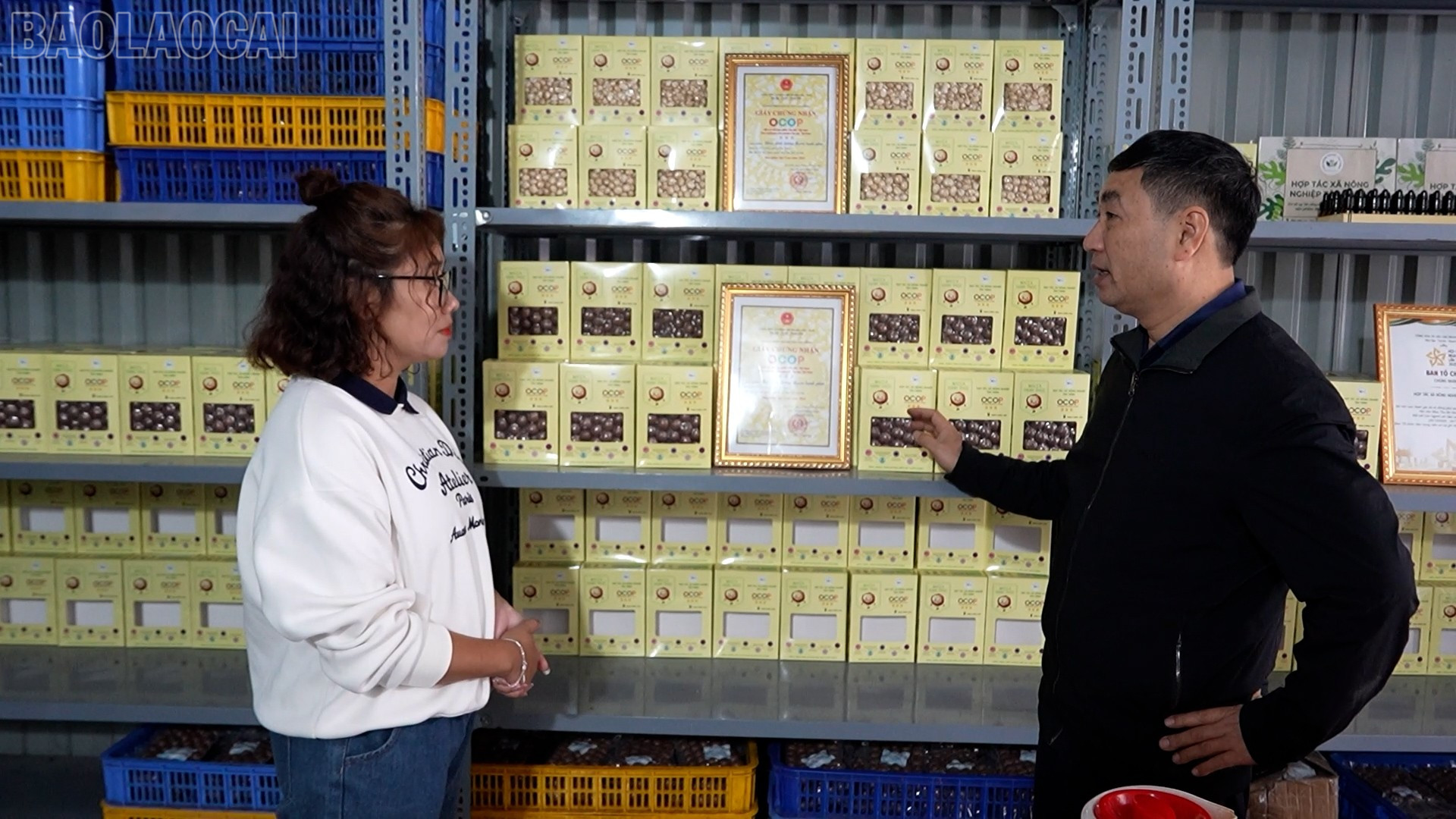
Tan Thinh Agricultural Cooperative proactively invests in machinery and uses QR codes to trace the origin of its products.
With science, technology, and digital transformation at its core, Lao Cai's agriculture can fundamentally address long-standing bottlenecks such as fragmentation, small-scale production, and the problem of bumper harvests leading to price drops. Lao Cai is gradually realizing its goal of building a green, clean, and sustainable agricultural sector, fully utilizing its natural potential and ecological advantages.
Currently, the province has over 110 businesses and cooperatives with more than 350 products whose information and origin are clearly traceable on the electronic agricultural product traceability system. Over 260 businesses, cooperatives, households, and individuals participate in the trade promotion support system, with more than 500 products uploaded to the system.
https://baolaocai.vn/khoa-hoc-mo-loi-cho-nong-nghiep-lao-cai-post893009.html