Towards multi-value agricultural extension
Agricultural extension work plays a particularly important role in supporting farmers to access and apply scientific and technological advancements to improve crop and livestock productivity. The staff of the Lao Cai Agricultural Extension and Service Center are not only "teachers in the field" but also become a solid support for farmers on the path to sustainable agricultural development.
Aiming for multi-value agricultural extension, the Lao Cai Agricultural Extension and Services Center has recently innovated the development and implementation of models towards agricultural economics linked to value chains. Last year, the unit implemented 16 out of 14 models and projects, exceeding the plan by more than 14%. These models basically adhere to the province's policies and orientations on developing key commodity production areas (such as tea, bananas, off-season pineapples, temperate fruit trees combined with tourism, mulberry cultivation, and climate change adaptation), especially with a fundamental shift from purely technical models to agricultural economic models. All models guide implementation according to VietGAP safety standards and regulations, organic farming, and intensive cultivation to increase productivity by approximately 10-15% compared to conventional production.
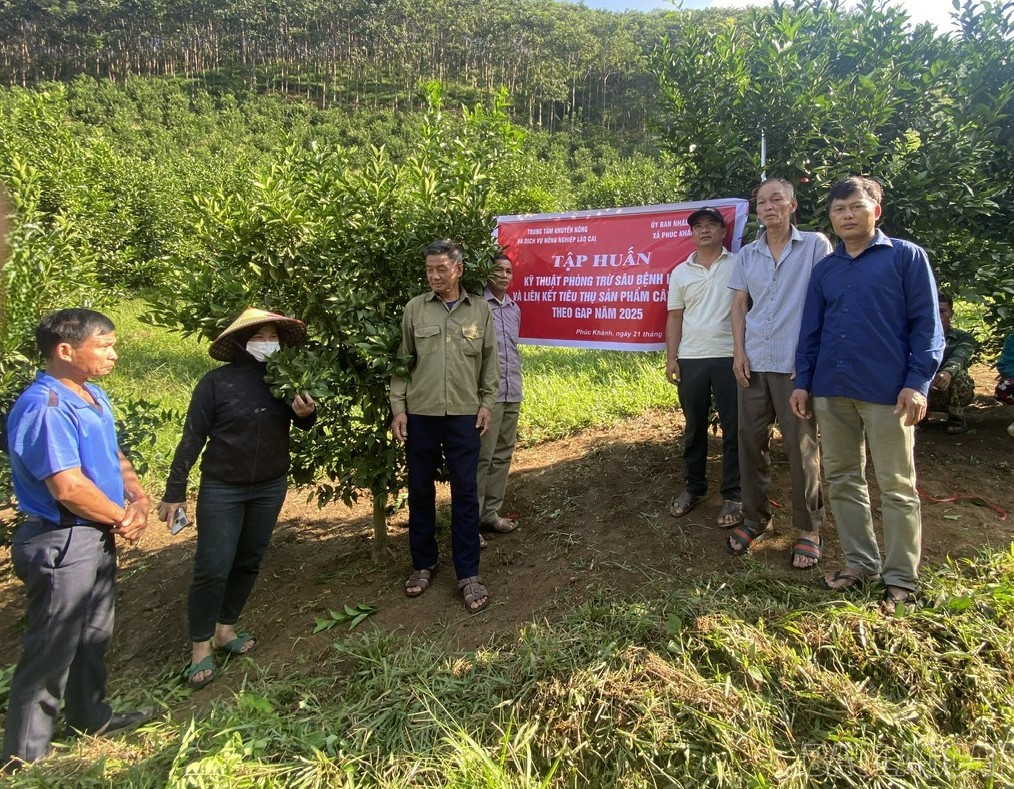
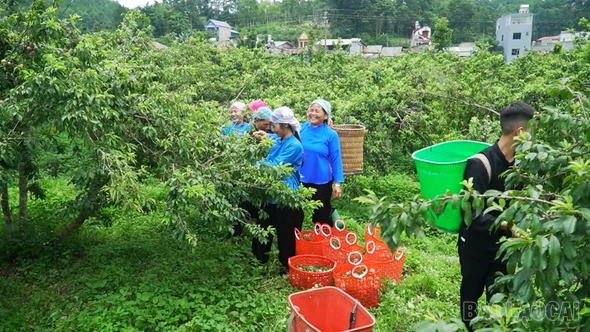
Local households participated in training on pest and disease control techniques and established linkages for the consumption of oranges according to GAP standards in Phuc Khanh commune.
The intensive orange cultivation model according to GAP standards in Phuc Khanh commune, covering 10 hectares with 10 participating households, is one such model. The average orange yield of the model reaches 35-40 tons/ha, 4-5 tons/ha higher than conventional production. The fruit uniformity is high, with the percentage of first-grade fruit reaching 90%, compared to only 50-60% with conventional methods. Furthermore, the development of intensive orange cultivation according to GAP standards has significant social implications, exploiting the potential strengths of the land and attracting local labor to participate in production.
Mr. Do Chi Tuan from Lang Dau village, Phuc Khanh commune, shared: "By participating in the model, we learned how to use fertilizers from the approved list. We also understand that proper intensive cultivation of orange trees according to GAP (using biological fertilizers and pesticides) helps reduce environmental pollution, increase orange yield, and protect the health of both farmers and consumers."
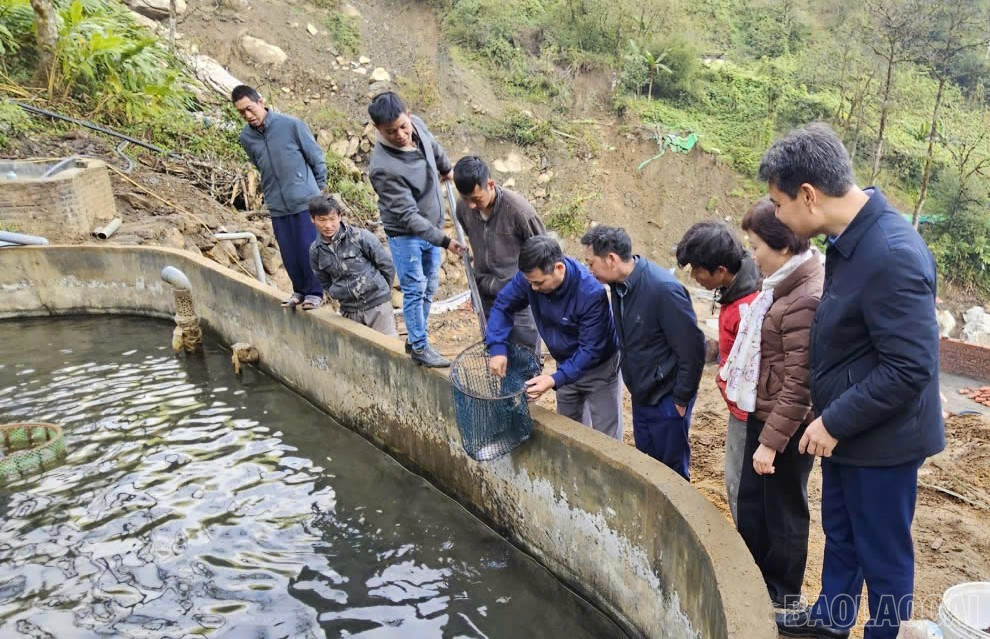
The project "Building a model for commercial sturgeon and salmon farming that meets VietGAP certification standards in the northern mountainous provinces, linked to a product consumption chain" is being implemented in Ngu Chi Son commune.
In addition, the Center also flexibly balances its resources annually to implement social welfare models in poor communes of the province, shifting the training format from a one-day model to training according to the growth stages of crops and livestock, ensuring that farmers receive knowledge more effectively; the training content is fundamentally reformed according to market trends regarding new techniques and economic accounting skills.
One notable example is the project "Building a model for commercially farming sturgeon and salmon with VietGAP certification in the northern mountainous provinces, linked to a product consumption chain," implemented in Ngu Chi Son commune – a particularly disadvantaged area – which has yielded clear results. Mr. Chao Lao Nhi from Can Ho A village said: "In previous years, we raised cold-water fish spontaneously, facing many risks and being dependent on weather fluctuations, diseases, and market changes. Participating in the project, I learned to apply VietGAP-certified salmon farming procedures, as well as how to link, advertise, and introduce our products on social media platforms." Currently, Mr. Nhi's salmon are growing and developing well, without disease outbreaks. After harvesting, the commercial salmon are sold through a linked consumption chain with Song Nhi Sa Pa Trading and Tourism Service Company Limited, thus eliminating concerns about product sales.
The agricultural extension development strategy until 2030, with a vision to 2050, identifies the development of agricultural extension based on an agricultural economic mindset linked to market demand, organizing agricultural production and business along the value chain, based on science and technology, innovation, and digital transformation to create breakthroughs in productivity, quality, food safety, and to meet the requirements of ecological agriculture, modern rural development, civilized farmers, environmental protection, adaptation to climate change, and improvement and enhancement of the material and spiritual lives of farmers. Therefore, in 2025, the Center organized 68 training courses for 2,620 trainees, including farmers, cooperative members, and grassroots officials, on production techniques, pest management, safe production, organic production, and product consumption linkages; and coordinated with units in the province to organize 11 training courses on the application of digital transformation in agricultural production, etc.
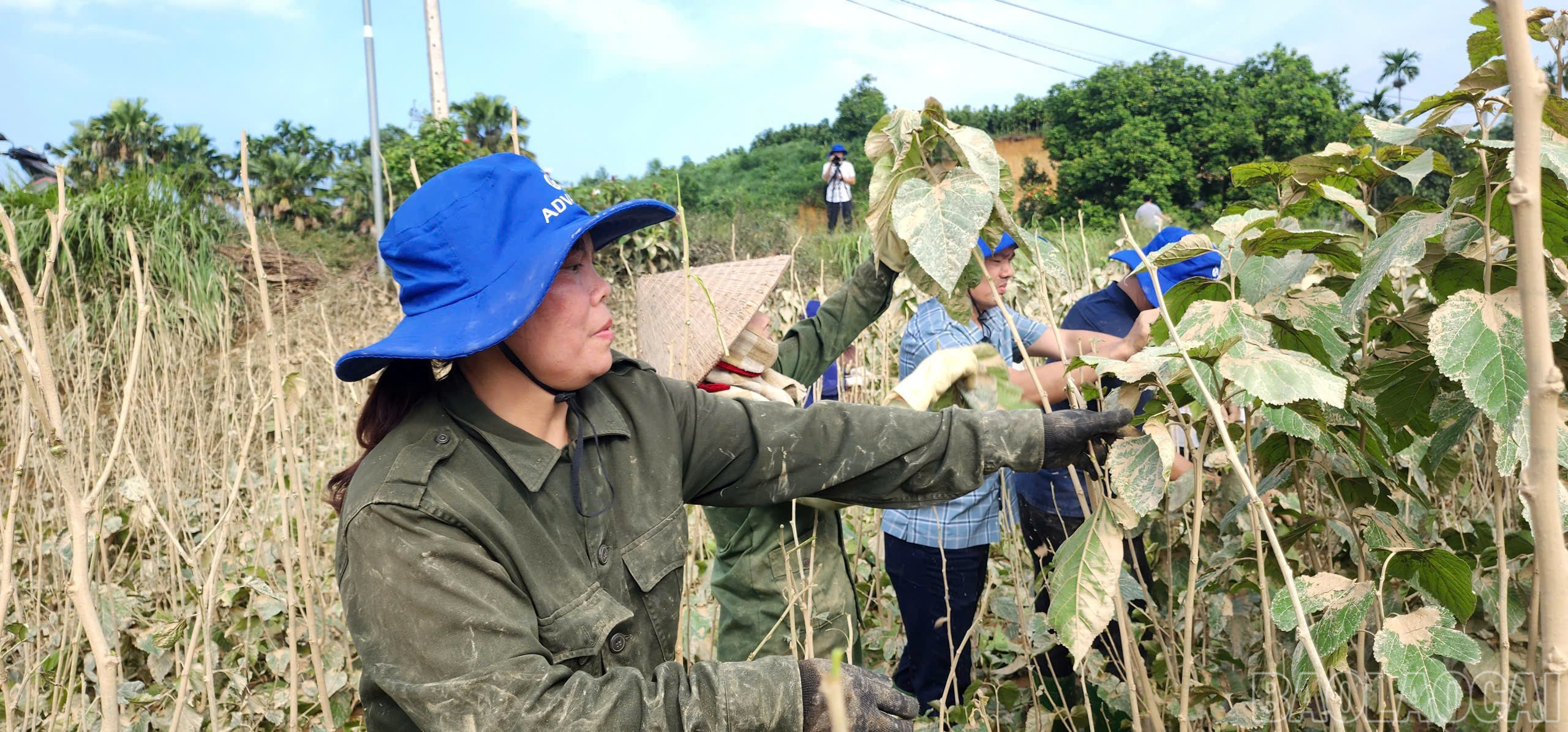
Agricultural extension officers are instructing people on how to care for mulberry trees after flooding.
In this new phase, agricultural extension workers aim to be not only "technological communicators" but also to lead farmers in building new production models that adapt to the demands of deep integration, high competition, and increasingly stringent market standards.
According to Ms. Nguyen Thi Ha, Director of the Lao Cai Agricultural Extension and Services Center, the Center will innovate agricultural extension models and projects by transforming purely technical models into multi-value-based, innovative agricultural economic models, aiming for green growth agriculture, circular, organic, ecological agriculture, agriculture linked to tourism, low-emission farming, and adaptive agriculture. In the future, the unit will gradually digitize and build an agricultural extension data warehouse to serve training and vocational education; and connect and market local OCOP products.
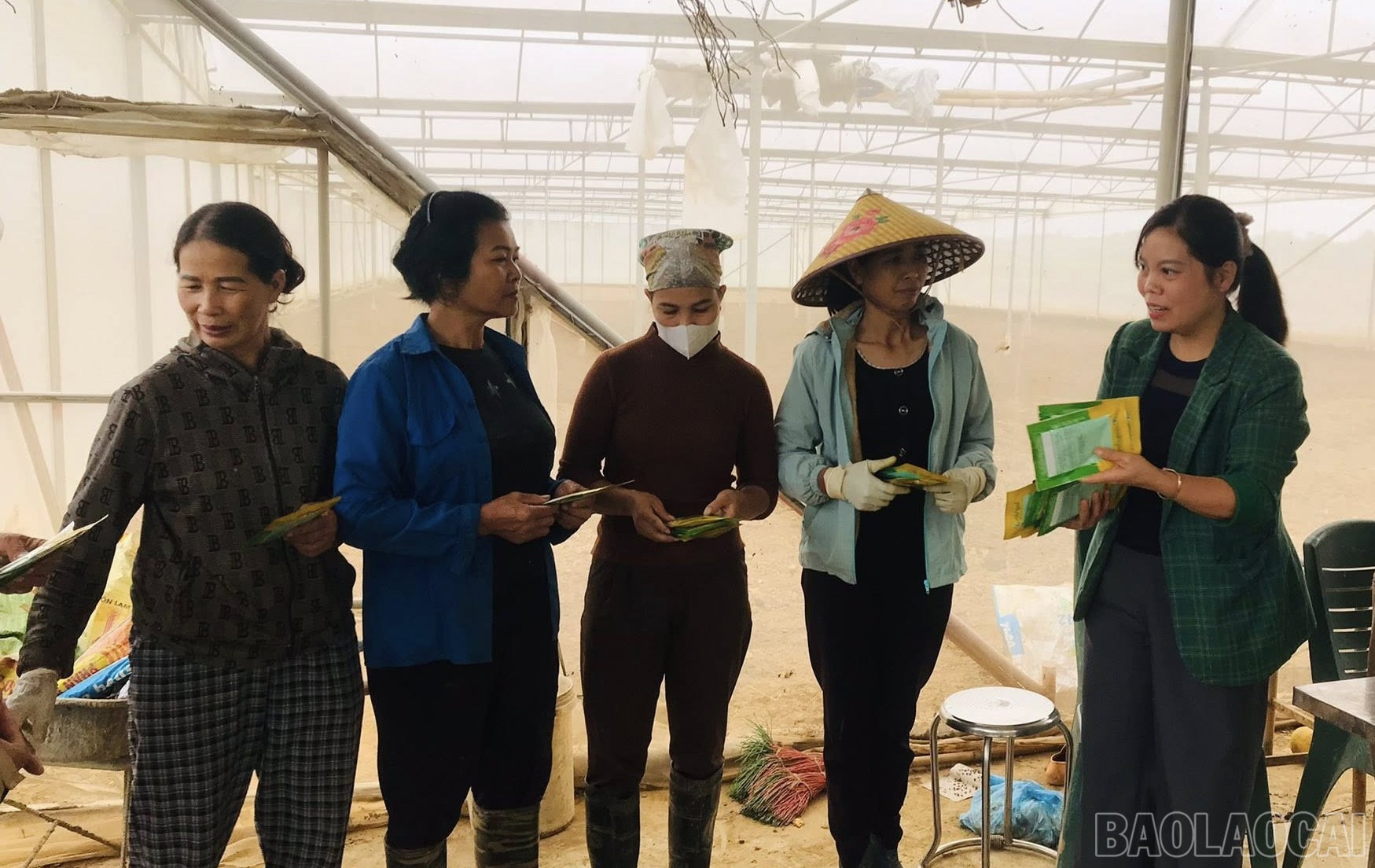
Agricultural extension officers guide people on techniques for planting and caring for vegetable crops.
The demand for agricultural extension services among farmers is enormous, therefore, improving the agricultural extension system according to the two-tiered local government model, focusing on "being close to the people, serving the people directly" and "connecting with the grassroots, connecting with the fields," will further affirm the role of the agricultural sector as an "extended arm" reaching every commune, village, and farming household.
https://baolaocai.vn/huong-den-khuyen-nong-da-gia-tri-post892406.html