Kho gia gia Dry Festival – The beauty of Ha Nhi ethnic culture
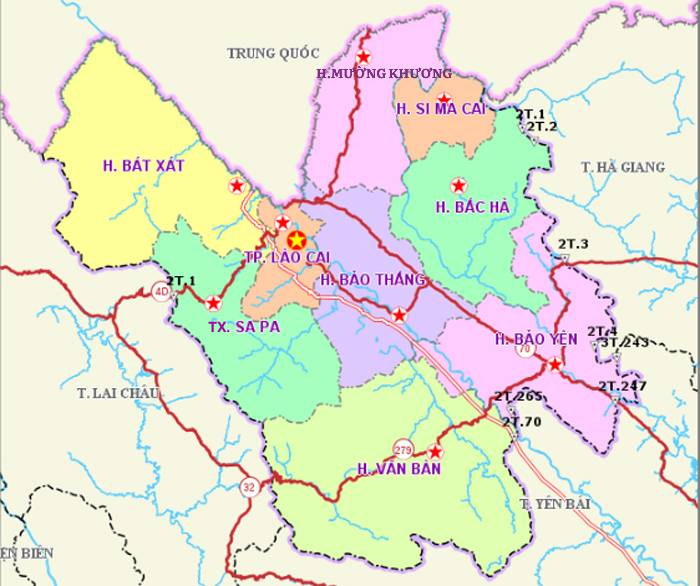
The Kho gia gia Dry Festival is the largest and oldest season of the Black Ha Nhi people in Bat Xat district, Lao Cai province. The festival is held in the 6th lunar month every year to pray for a bountiful harvest, prosperous people, and a happy and prosperous life."Kho gia gia" in Ha Nhi language means "abundant". According to custom, the festival is held from the Dragon Day (Dragon Day) to the Monkey Day (Monkey Day) of the 6th lunar month every year with the wish that the gods of land, forest, water, and love will protect healthy people, bless a prosperous and happy life, develop livestock, and have a bountiful harvest.

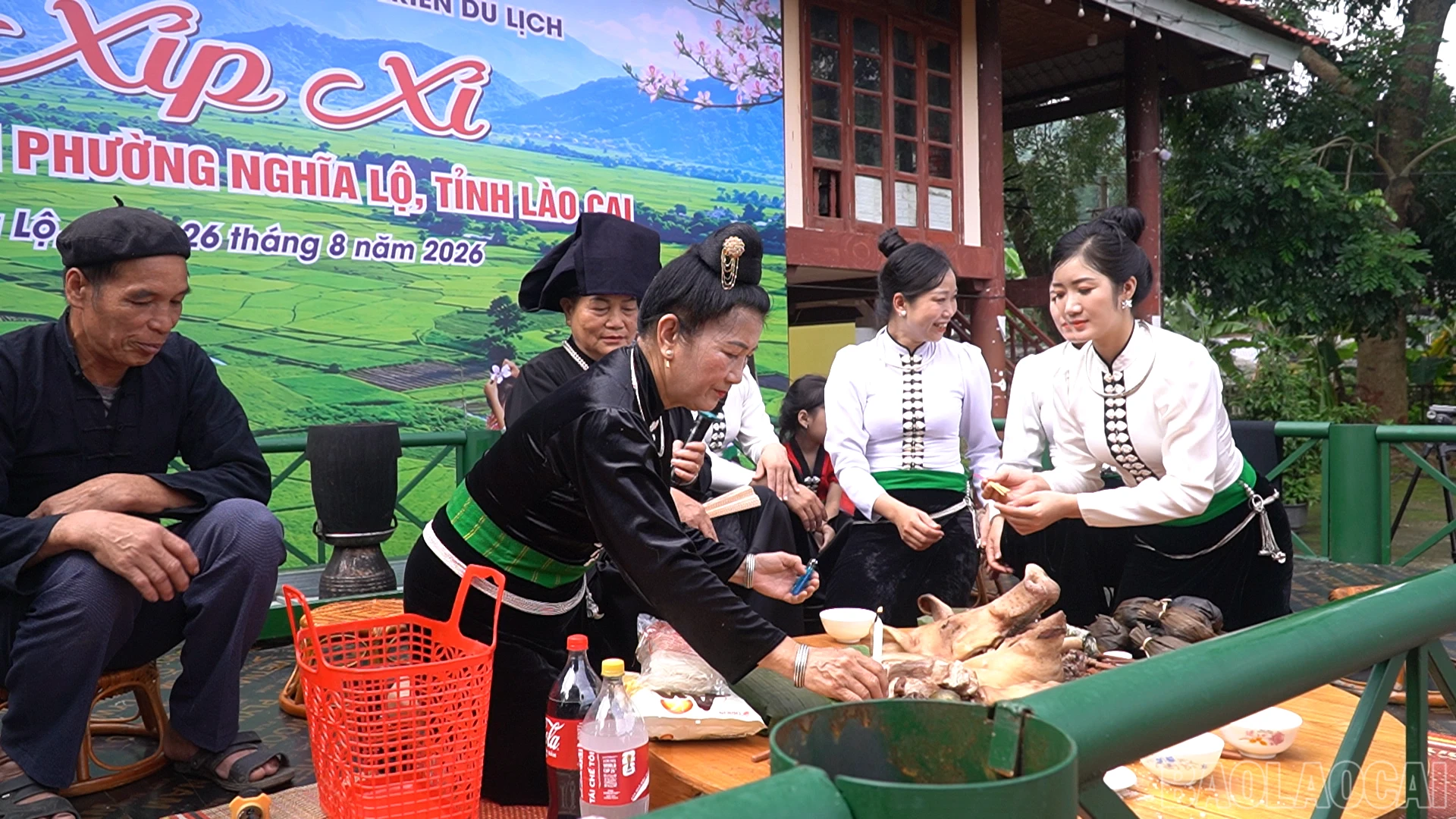
The priest makes offerings to the gods.
The harvesting festival of the Ha Nhi ethnic people consists of unique ceremony and festival with folk games imbued with the culture of the highland ethnic people. The venue of the festival is a vacant land lot in the only worshiping forest, where all the old, young, girls and boys can come and have fun during the festival. Right from the early morning on the first day of the festival, people carry out the work of gathering grass and bamboo to roof the house, where the festival's activities take place. When the festival has been gathered, the Ha Nhi men together repair and re-roof the roof with the meaning that each year, new ones will bring good things to the village.
The second day of the festival is the buffalo slaughtering ceremony. According to the Ha Nhi people's viewpoint, the buffalo slaughtered on this day was carefully selected 1 month before the festival. The selected buffalo must be a newly grown male, healthy and well cared for until the ceremony day. When the buffalo is slaughtered, all the meat will be divided equally among the whole village. Each family participating in the ceremony will set up a tray of offerings including buffalo meat, wine and other products made by the family such as: Pork, chicken, eggs, peanuts, soybeans, squash, cucumbers,.... brought from houses to forests to contribute to the village, expressing deep gratitude and honour to the gods who have protected the lives of the villagers.

Distribution of buffalo meat to households in the village.
On the third day of the festival, early in the morning, Ha Nhi men will organize to collect wood and rope in the forest to do 2 important games: swing and string. Trees and swings must be carefully selected and strong. In the evening, the shaman and the representatives of the families in the village prepare the ceremony tray and bring it to the shrine to make offerings to the gods. The ceremony location is the ferris wheel and rope swing. The purpose of this ritual is to pray for favorable weather, good crops, and a prosperous life for the villagers. At the same time, it is also to express gratitude to the gods and pray to the gods to protect all those who come to the festival and participate in the games to be safe. After the ceremony, the ethnic people here will abstain from cutting trees, cutting grass and chopping them for 3 days.
It can be said that the most fun part of the Kho gia gia festival is the festival, performances, and competitions of traditional ethnic sports such as stick pushing, swinging, sack jumping, tug of war... The festival is one of the biggest traditional Tet holidays in the year of Ha Nhi people. Families with children who get married or live far away all arrange to go home on Tet holidays and visit their parents on this occasion. In recent years, the festival is often attended by tourists from all over the world. The boys and girls of Ha Nhi not only come to participate in the festival but also come to make friends, find lovers, life partners for themselves.
The Kho gia gia festival was included in the list of National Intangible Cultural Heritage by the Ministry of Culture, Sports and Tourism on December 19, 2014, under the type of traditional festival. In recent years, the Kho gia gia festival has been organized by Bat Xat district on a large and formal scale, but still retains the unique identity of the nation and attracts a lot of attention from tourists.