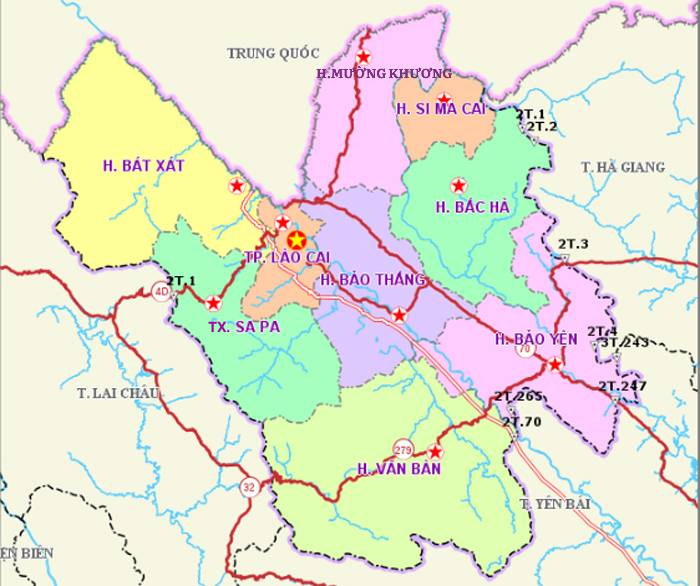
Bac Ha Market – A place for unique community cultural activities
Among the Sunday markets held in Lao Cai, the most prominent is the Bac Ha Market, which has been voted one of the top 10 most unique markets in Southeast Asia. More than just a place for trading goods, Bac Ha Market is a vibrant hub for social and cultural exchange among highland communities and ethnic minorities. It vividly reflects the traditional culture and daily life of the mountainous peoples. Thanks to this rich cultural atmosphere, Bac Ha Market increasingly attracts tourists, especially international visitors who come to explore and experience it firsthand.The original Bac Ha Market was built in Ta Chai commune before 1983, about one kilometer from the current market location. It was relatively small in scale, with stalls covered by thatched roofs. After 1984, the market was relocated to the center of Bac Ha town and became known as Bac Ha Market as we know it today. The market area is quite expansive, covering approximately 5,000 to 6,000 square meters. Not only is the central market bustling, but the surrounding streets are also filled with vendors and shoppers. The market features many kiosks and is divided into various sections, each suited to a different category of goods. Along both sides of the roads leading to the market center, local specialties are displayed in abundance, from corn cakes made by the Mong people, crispy rice cakes from the Giay ethnic group, to all kinds of vegetables, fruits, and working tools.

Various local products being sold at Bac Ha market.
A visit to the market is not complete without sampling the cuisine that carries the distinct flavors of each ethnic group. Bac Ha Market is home to a variety of unique dishes, many of which are traditional specialties of the Northwest region, rich in cultural identity. Among the highlights are “thang co”, “Bac Ha sour pho”, “corn rice cakes”, “sticky rice cakes”, and “black chung cakes”, and more. There are also local products perfect for bringing home as gifts, such as smoked buffalo and pork. The most vibrant and crowded area of the market is the food section, where the star attraction is Thang Co, a famous traditional dish of the Mong people. This hearty stew is made from horse meat, including the internal organs, skin, and flesh, slow-cooked with spices like cardamom, ginger, star anise, and cinnamon, and so on. To truly appreciate the rich, savory, and slightly chewy texture of Thang Co, one must arrive at the market by rooster’s crow, just in time for the stew to reach its peak boiling hot and the meat perfectly tender. Sipping Bac Ha corn wine or Ban Pho corn liquor, the crystal clear and aromatic as mountain spring water alongside a bowl of Thang Co completes the experience. The warmth of the alcohol will spread through the veins, driving away the chill of the highlands. Another must-try dish in Bac Ha is the sour pho, known for its unique balance of mild tartness and natural sweetness, offering a refreshing twist on the familiar noodle soup.
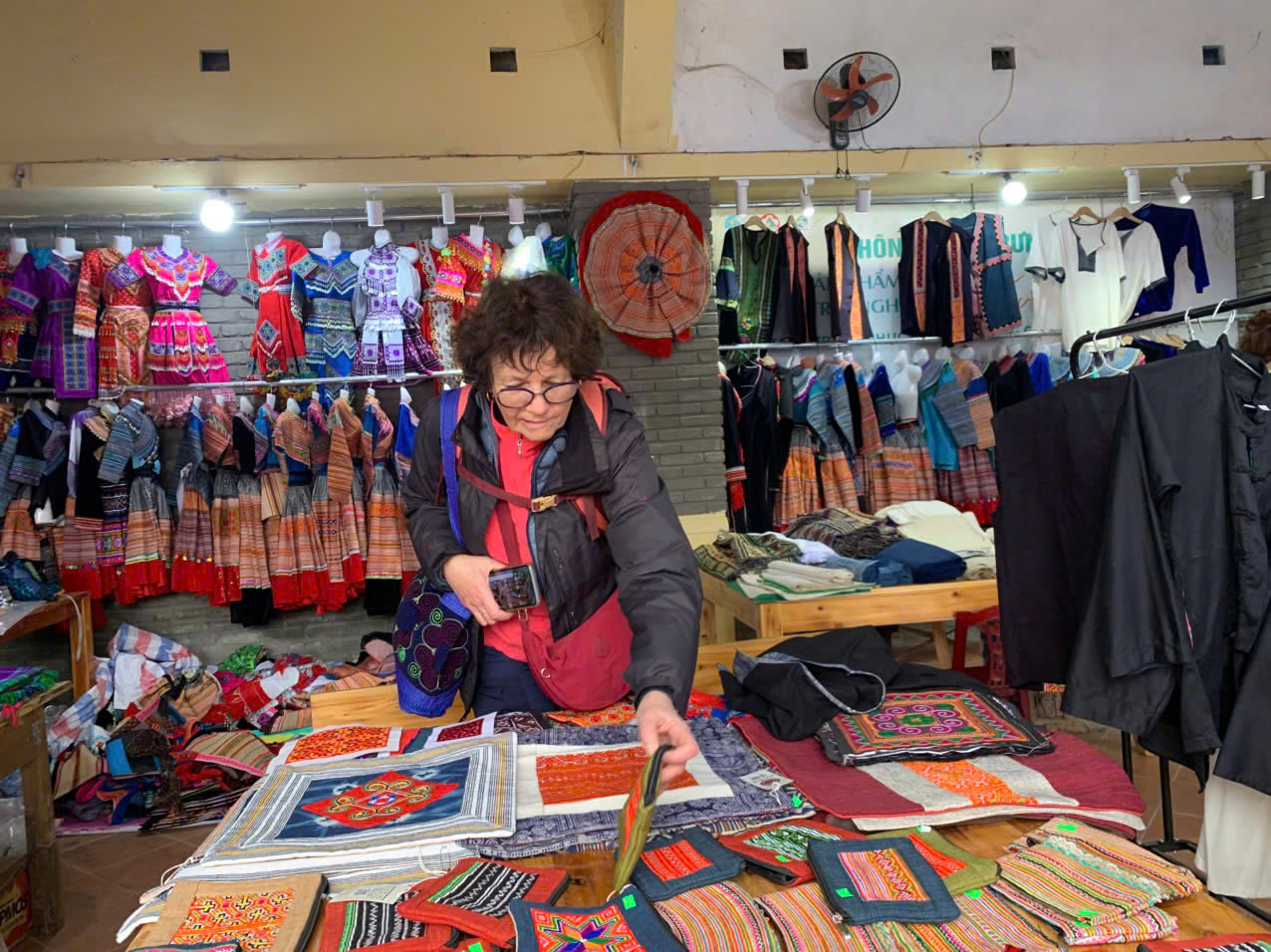
Foreign tourists visiting a brocade stall.
The brocade stalls are a feast for the eyes, offering a wide variety of designs. Each piece of brocade carries the intricate, refined patterns of the Mong people, meticulously embroidered with incredible patience and exceptional craftsmanship, all vividly displayed on the traditional dresses worn by Mong women. Mong clothing also serves as a marker to distinguish different subgroups. While the Black Mong are predominant in Sa Pa, Bac Ha is home to the Flower Mong, whose attire is adorned with colorful, sophisticated embroidery.

Bac Ha night market attracts a large number of domestic and foreign tourists.
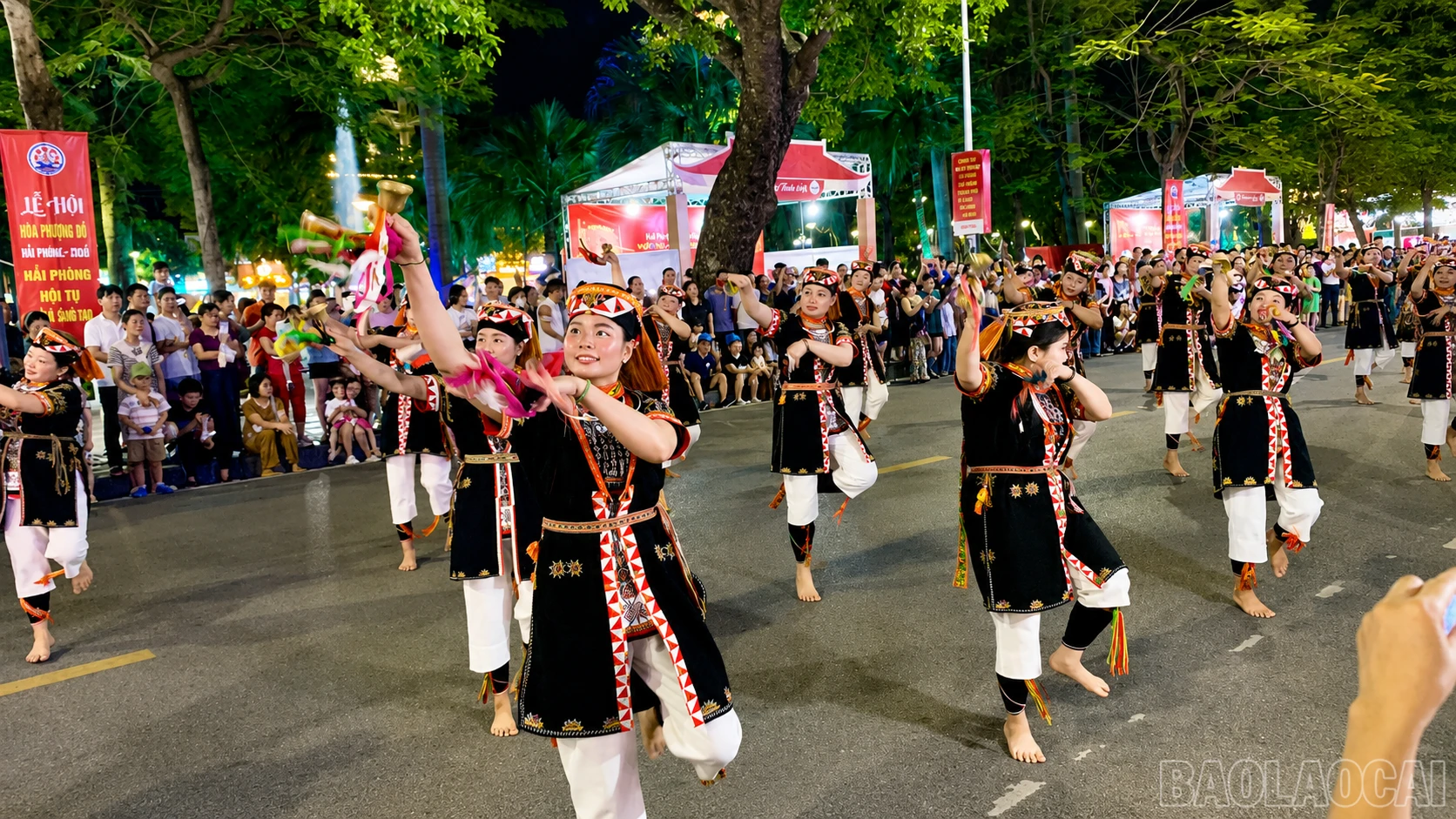
Every week, locals eagerly await Sunday to head to the market. It is not just a place to trade and shop, it is also a venue for socializing, cultural exchange, and even budding romance among young men and women. The soft, melodic sound of the jew’s harp and the passionate, lively notes of the khen (a traditional bamboo flute) in some quiet corner of the bustling market lend a dreamy, ethereal air to the scene. Specially on Saturday nights, visitors can enjoy the “Bac Ha Night Market”, where they are treated to traditional folk songs, ethnic dances, and performances like the Senh Tien stick dance by the Mong and Tay people. Travelers from all over the country, and particularly foreign tourists, find great joy in immersing themselves in and exploring the fascinating customs and way of life of the local people.
Bac Ha Market is an ideal stopover that any tourist would like to visit once. Visiting this unique market, visitors not only get to learn about the unique culture of the people of the Northwest highlands, but also get to choose for themselves local specialties and have an exciting experience. In the trend of commercializing highland markets, Bac Ha Market is one of the rare markets that still retains its own unique identity./.