Bustling construction of the road bridge across the Red River at the border of Ban Vuoc, Bat Xat (Vietnam) - Ba Sai (China)
Although the construction has just started, in recent days, the construction site of the road bridge project across the Red River border of Ban Vuoc, Bat Xat (Vietnam) - Ba Sai (China) has been quite busy because the contractor is speeding up construction directions to ensure the project is completed by September 2026, after 18 months of construction.The Bridge Project Management Board said that currently, every day at the construction site of the road bridge across the Red River border from Ban Vuoc, Bat Xat (Vietnam) to Ba Sai (China) on the Vietnamese side, there are about 50 workers and many modern machines and equipment working.
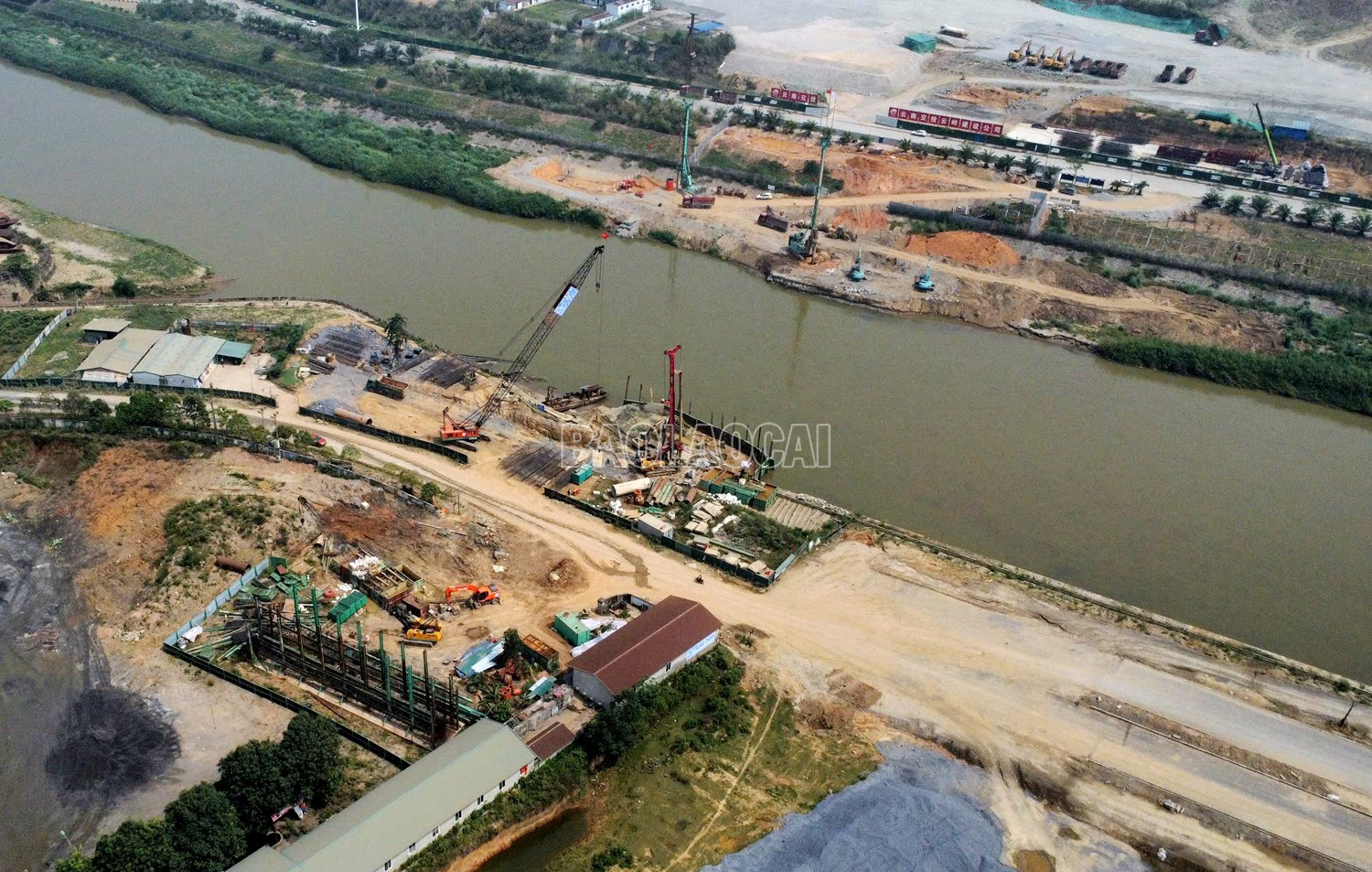
Panoramic view of the construction site of the road bridge across the Red River at the border of Ban Vuoc, Bat Xat (Vietnam) - Ba Sai (China).
Mr. Ho Xuan Hung, a member of the bridge construction team, Trung Chinh Construction and Trading Company Limited, shared: The weather in the last days of April started to get hot, but the workers were still working enthusiastically. The workers were arranged to work and construct reasonably in the early morning and late afternoon, and worked overtime in the evening to avoid the heat, so they were more efficient at work.
The construction site of the bridge on the Vietnamese side is about 700m downstream of the Red River from milestone 97(2). The construction scale of the main bridge across the Red River is Extradosed (low tower cable-stayed bridge), with prestressed reinforced concrete beams, constructed using the cantilever method combined with fan-shaped cable-stayed bridges, with tower pillars 20m high from the bridge deck. The bridge is 35.3m wide, including 4 lanes for motor vehicles, 2 lanes for non-motorized vehicles and 2 lanes for pedestrians. Of which, the Vietnamese side invested in building 1/2 of the main bridge, equal to 115m.
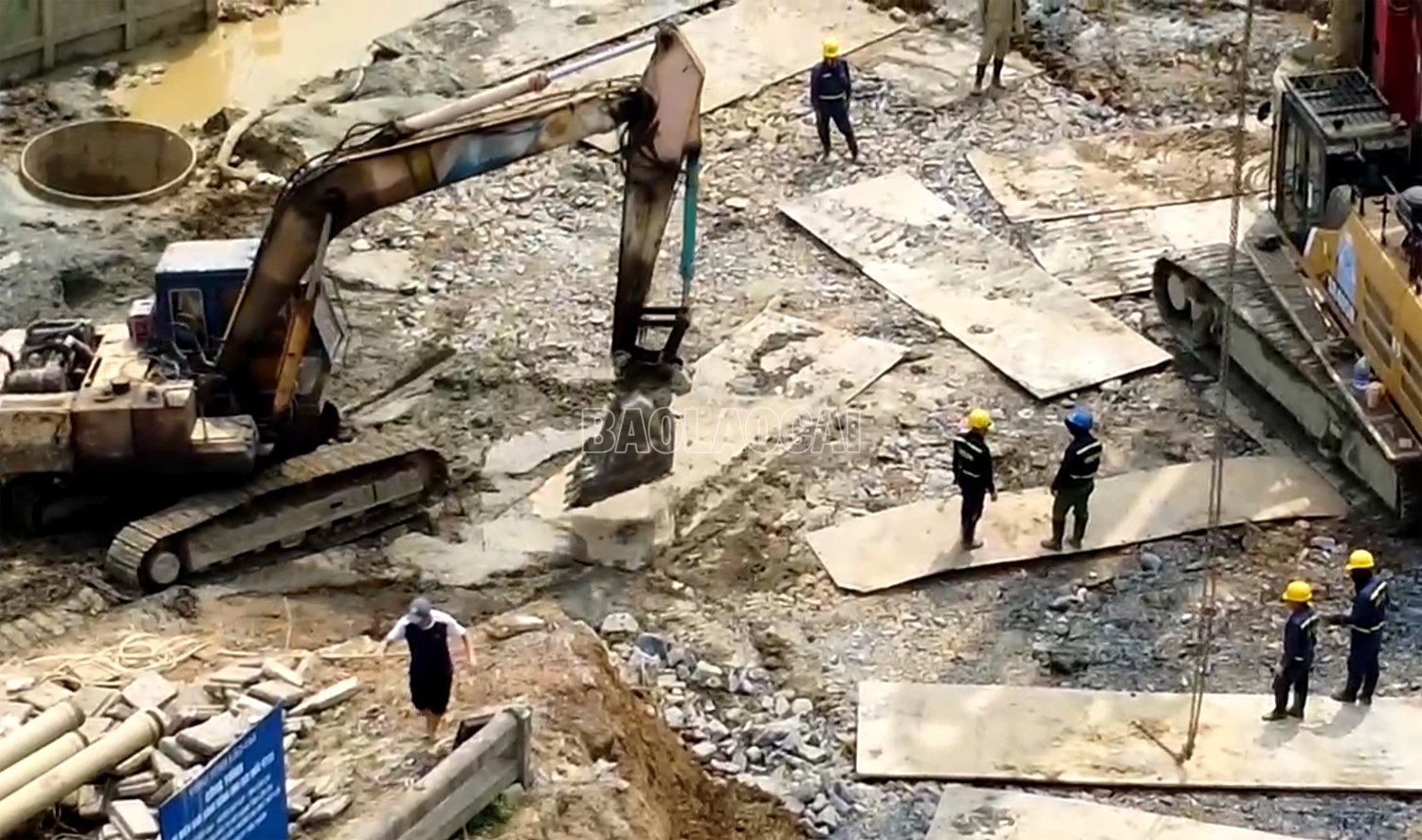
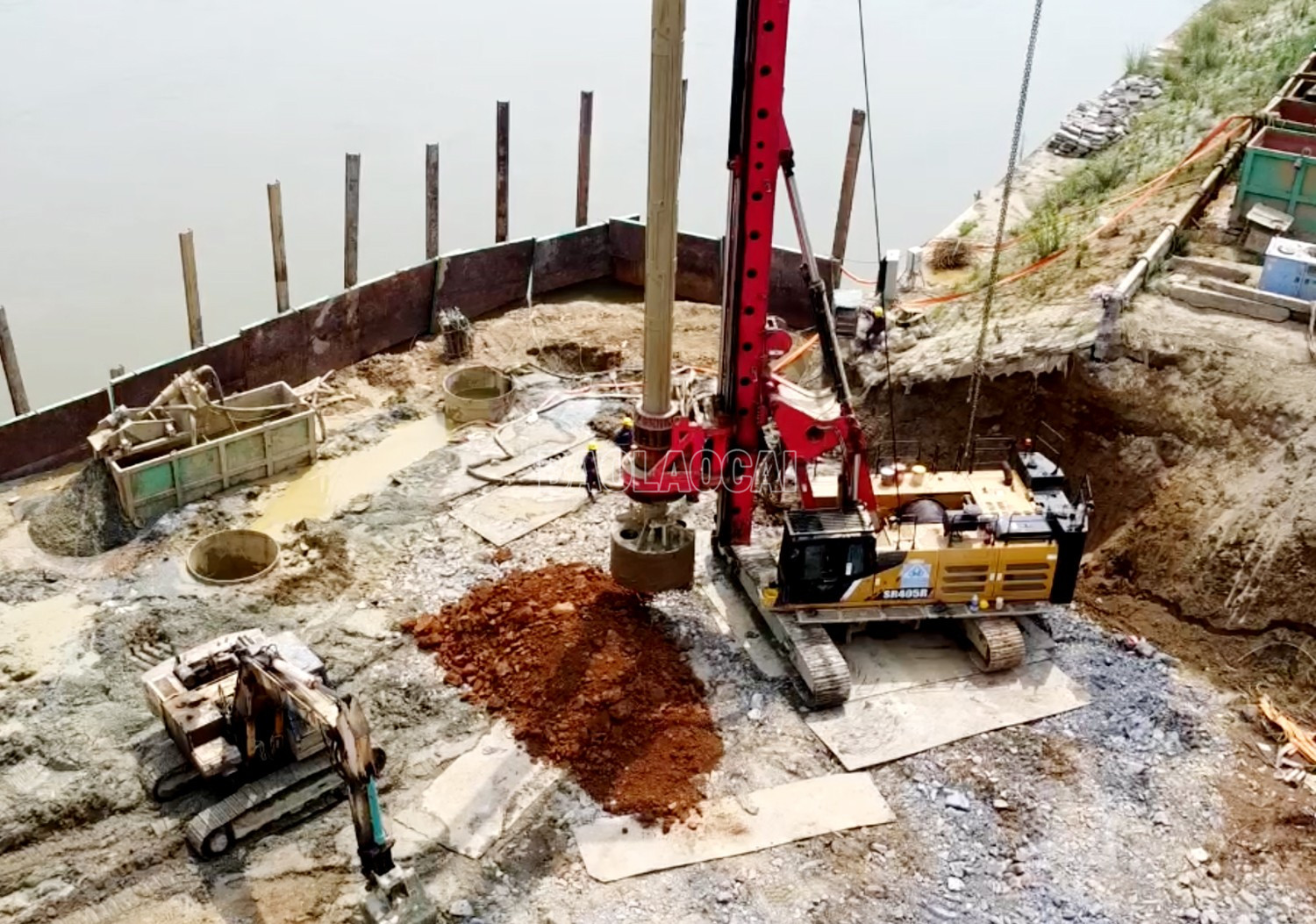
Bustling construction sites at the road bridge across the Red River border between Ban Vuoc, Bat Xat (Vietnam) and Ba Sai (China).
The bridgehead and approach road on the Vietnamese side are 40m long, made of prestressed reinforced concrete box girders cast on fixed scaffolding. The road connecting the bridgehead is 232.5m long, the roadbed width is 35m, the road surface width is 25m. The road surface structure is asphalt concrete. The construction cost is 282.5 billion VND.
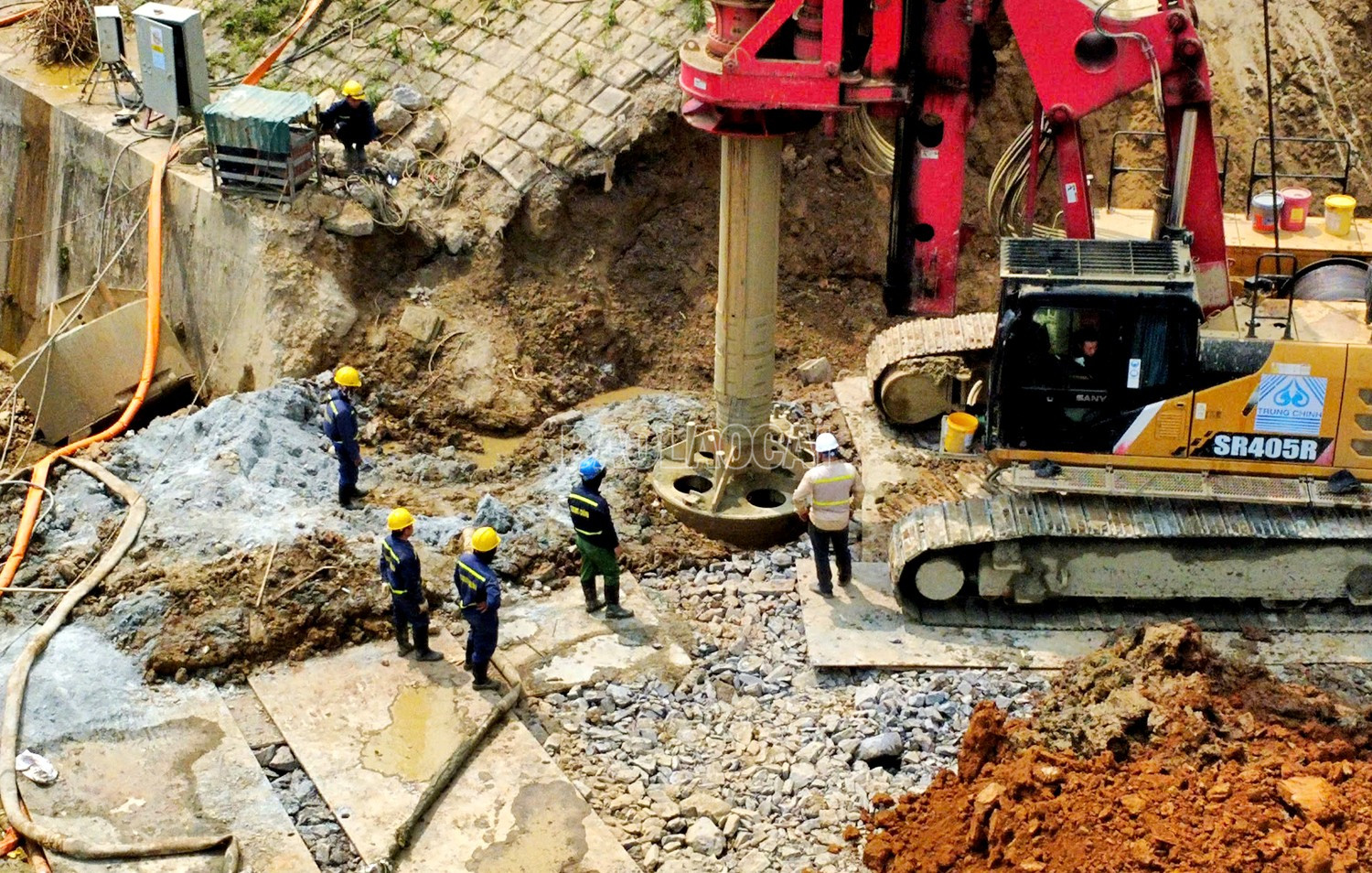
Construction unit drilling pile T8.
Mr. Phan Dang Tuan Dat, a technical officer of Trung Chinh Construction and Trading Company Limited, said that the contractor has completed the construction of bored piles, the bridge abutment, completed the T9 bored piles, and is currently drilling T8 piles under the river. The contractor always puts quality and progress first and mobilizes 3 shifts, 4 teams to work day and night to ensure this.
The Ban Vuoc border gate economic zone has been planned and built by Lao Cai province (Vietnam). On the opposite side of the border, Ba Sai area, Ha Khau district, Yunnan province (China) has also been planned and built many items to connect trade. Therefore, the construction of a road bridge across the Red River will create a basis for forming a connection between the economic cooperation zone across the border, promoting trade, supporting border trade and tourism between Vietnam and China. The project also contributes to connecting the Noi Bai - Lao Cai highway (Vietnam) with the Kunming - Ha Khau highway (China), meeting the transportation requirements, serving economic development between the two provinces of Lao Cai (Vietnam) - Yunnan (China) as well as the provinces in the Kunming - Lao Cai - Hanoi - Hai Phong economic corridor of Vietnam and China.

Completed bridge model.
https://baolaocai.vn/nhon-nhip-thi-cong-cau-duong-bo-qua-song-hong-bien-gioi-ban-vuoc-bat-xat-viet-nam-ba-sai-trung-quoc-post400609.html