When heritage enters schools
In highland schools in Lao Cai, Khen, Xoe, and Tinh lute, etc. are no longer strange echoes of festivals but have entered the rhythm of life in schools - resonating during flag salute hours, creeping into playgrounds, and spreading in libraries. The heritage becomes a daily breath; it is worn, played, embroidered, and told so that each class not only teaches letters but also keeps the rural soul.
In every classroom, brocade is not just a pattern, but a memory woven by needle stitches; Then tunes, Xoe tunes are not movements learned by rote but the continuing breath of generations. Clubs for khen dancing, brocade embroidery, folk songs, etc. become living spaces, where teachers, artisans, and the elders in the village sit together to transmit - not only techniques but also meanings, responsibilities, and pride. Lessons escape the limits of printed book pages, so that children can touch the fabric, open their ears to stories, and step into the flowing cultural life source.
The scarf dancing and khen dancing club of Che Cu Nha Ethnic Semi-boarding Primary & Secondary School, Mu Cang Chai commune has over 200 students participating in practice. Teacher Dao Thi Huong, who is not of Mong ethnic origin, stands in the middle of the schoolyard like a connecting bridge - transmitting to the children the love for culture. She invites artisans to come, so that the children not only practice the rhythm but understand the story hidden in each movement. "I teach them so that they realize the responsibility of preserving culture" - said Ms. Huong. In the place, teachers not only teach letters, they hand back origins.
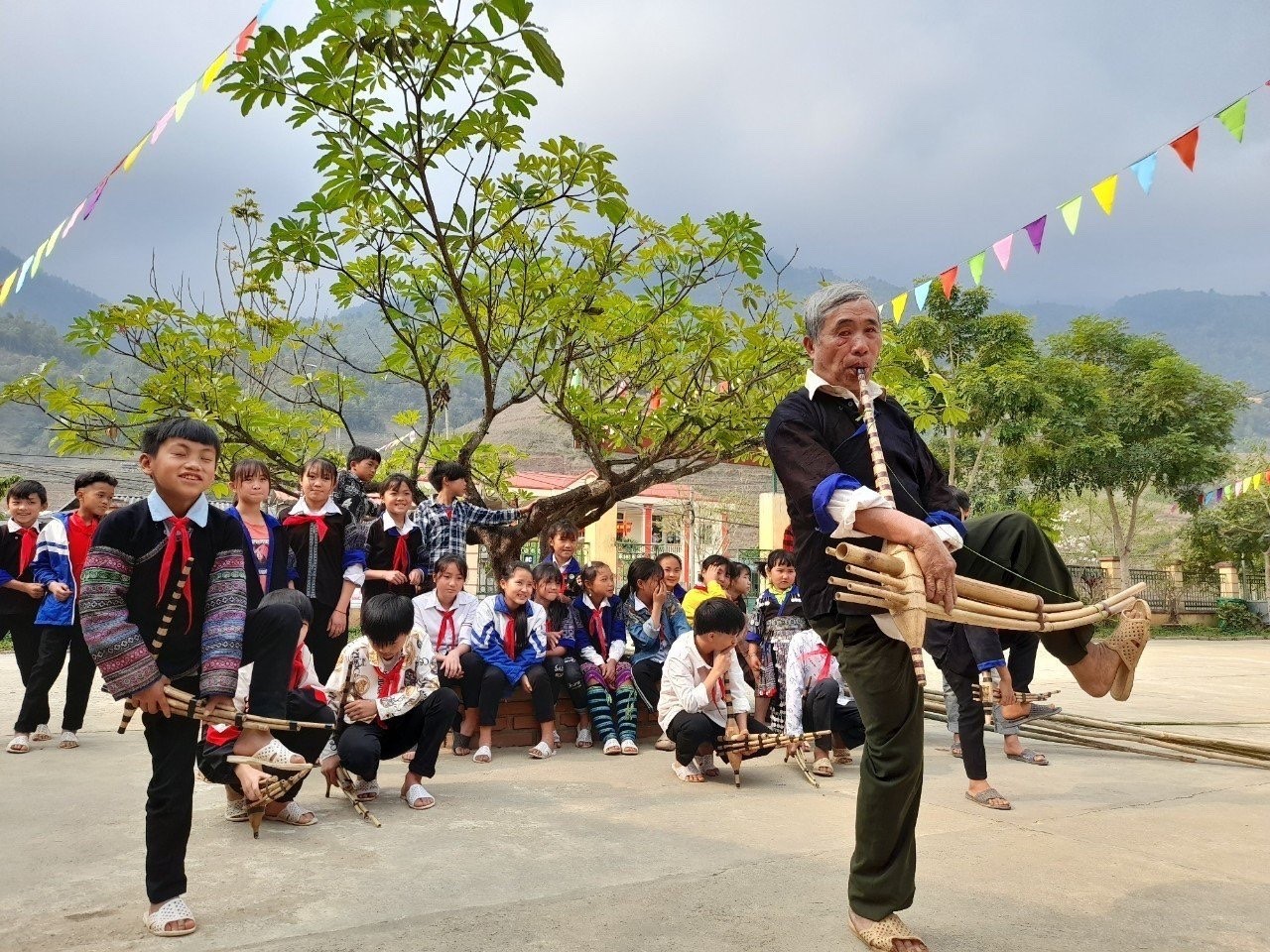
Artisan transmitting Khen dancing to students of Che Cu Nha Ethnic Semi-boarding Primary & Secondary School (Mu Cang Chai commune).
Not only in Mu Cang Chai commune, in Yen Binh commune, right inside Yen Binh Ethnic Boarding Secondary School, teachers have tied invisible strings which are regulations to wear ethnic costumes on special occasions, bringing folk songs and folk dances into extracurricular periods, turning the schoolyard into a small festival. Meanwhile, at Nam Lu Ethnic Semi-boarding Primary School, Muong Khuong commune, the Nung Din singing voice of People's Artisan Hoang Xin Hoa resounds according to the method "Sing a line, explain a line" - each sentence, each word is dissected and explained so that children understand the content, value, and philosophy hidden in the lyrics. In activities sessions, children wear brilliant costumes, feeling the origin, and sometimes, whisper to themselves: "This is ours".
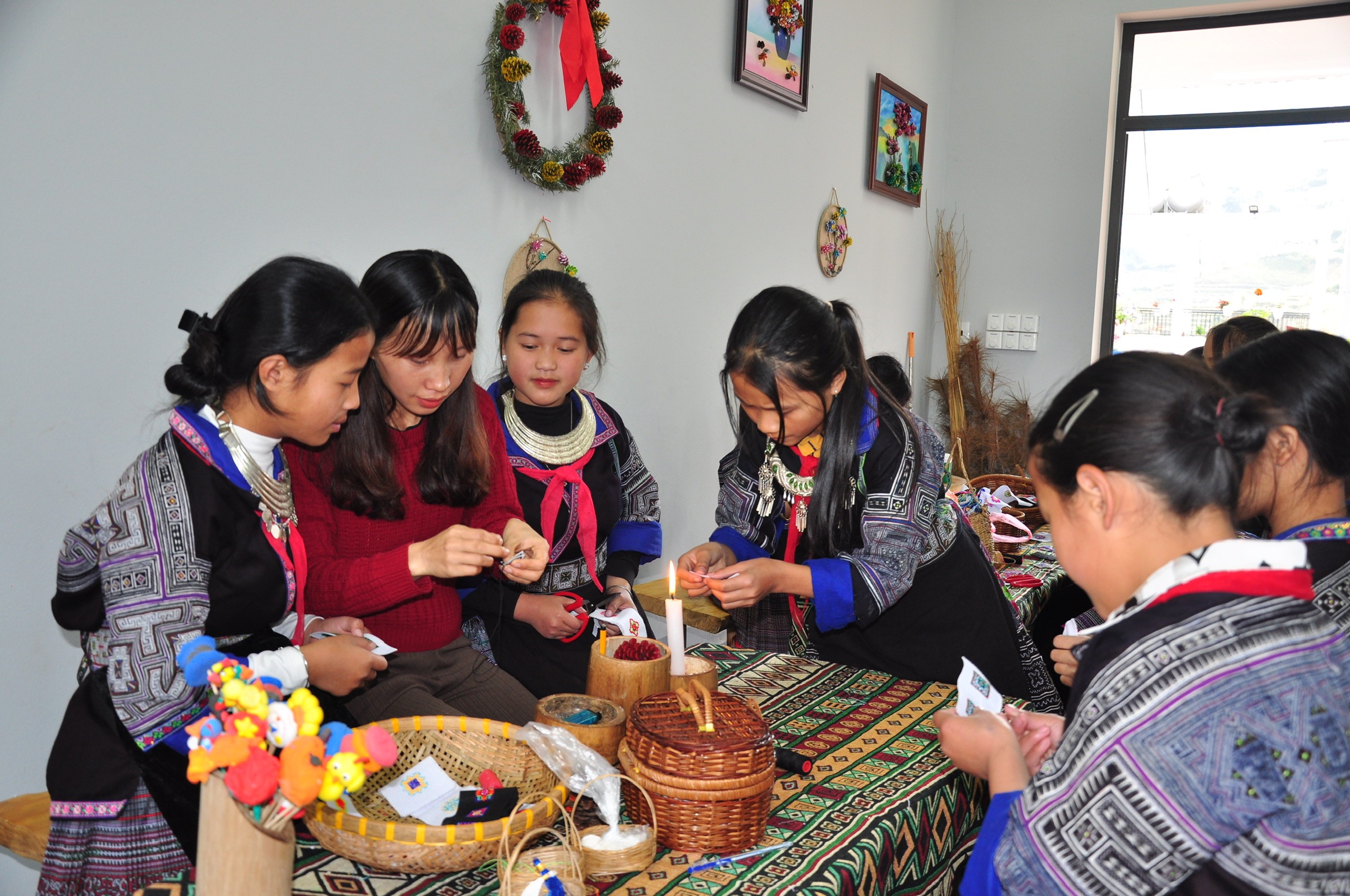
Brocade embroidery club of De Xu Phinh Ethnic Semi-boarding Primary & Secondary School (Pung Luong commune).
Every small activity implies a big lesson. When children participate in sewing, embroidering each brocade motif, understanding each pattern, knowing why an embroidery stitch carries a message from their mother and grandmother, they learn the patience, getting how to cherish manual labor, and seeing the connection between labor and identity. When they wear a traditional scarf, or play a piece of music, they practice confidence, knowing how to keep rituals, and feeling the value of preserving their ethnic cultural values.
In schools in the Muong Lo area, the Thai Xoe Club is maintained with members who love and skillfully perform 6 ancient Xoe dances. These members will be the core in Thai Xoe performances during mid-hour physical practice, or to welcome visitors coming to the school, or extracurricular activities, local holidays, etc. The maintenance of Thai Xoe in schools is an important factor helping Thai Xoe of the Muong Lo region of the province to be included in the list of intangible cultural heritage representative of humanity in 2021.
Bringing heritage into schools is not only maintaining or preserving but empowering to students. This let students become cultural ambassadors, knowing how to spread the tradition to relatives and friends, and to bring their identity to the community. When folk songs resound during flag salute, and Khen sounds and dances creep into children’s folk chant games, the heritage is silently transformed into soft skills, developing creative thinking, nurturing community responsibility. Children will grow up knowing how to respect the elderly, knowing how to preserve rituals and also ready to accept the new things, to integrate while still keeping their cultural identity.
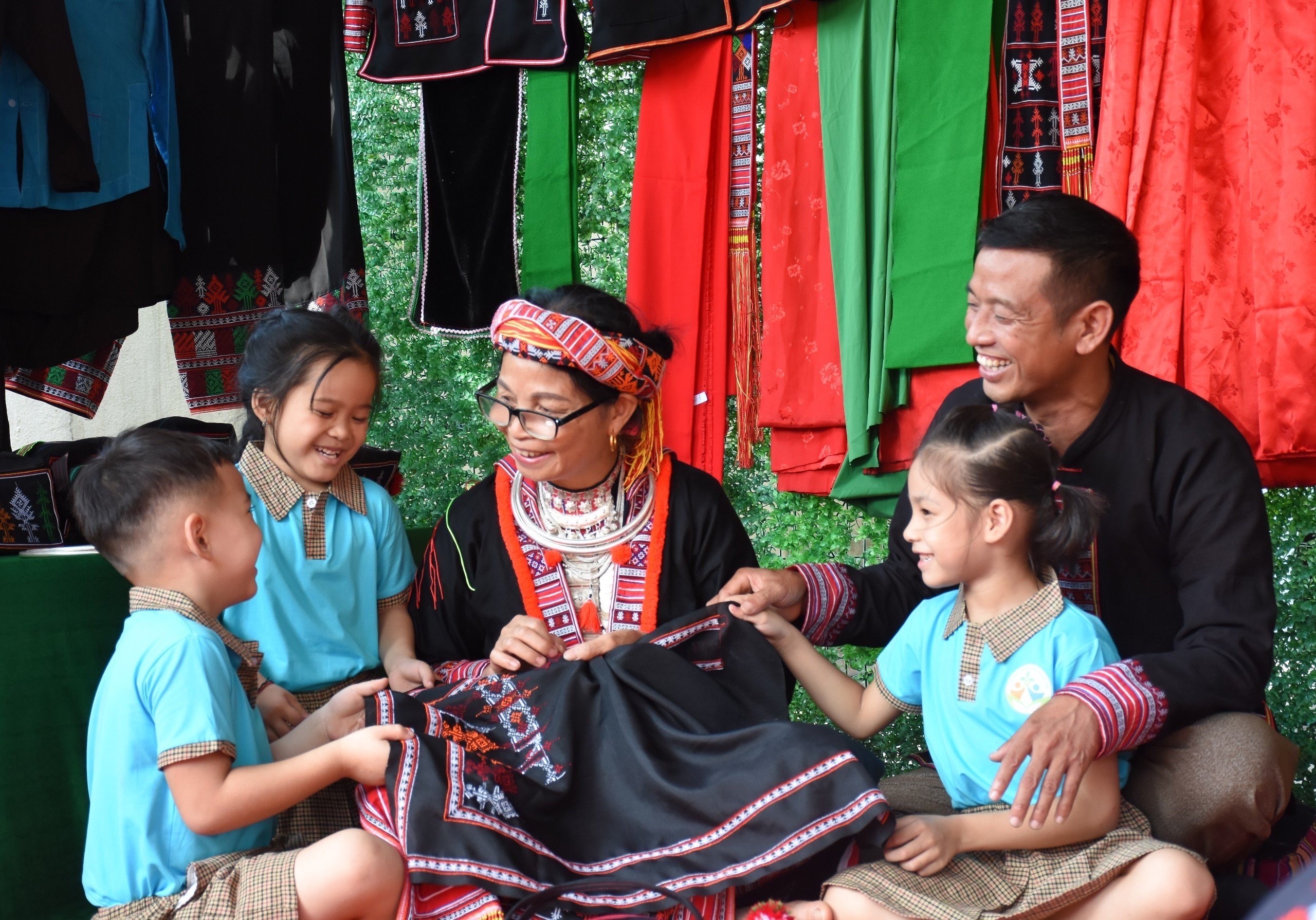
An artisan introducing brocade patterns to children of Phuc Loi Kindergarten (Phuc Loi commune).
In modern education, the goal is not only to transmit knowledge but also to form personality, and cultural heritage is the material to make those qualities. Traditional craft skills may not become the main profession for every child, but they open up livelihoods, developing community tourism and creative cultural products - where tradition brings economic and spiritual value.
That seeing children sing, carefully embroider each brocade pattern, and witnessing the khen sound rise, the village elder step into the class to tell old stories, etc. reminds us of the sentence "origin is where we return". In this case, the origin no longer stands waiting, but is invited into the classroom, cared for, and given the responsibility to continue. The education picture thus becomes full with modern knowledge meeting traditional identity.
For that path to be persistent, resources, and above all, the joining hands of the community are needed. When every flag salute is a colorful picture of traditional costumes, and the schoolyard is bustling with Khen sounds and deft embroidery hands, heritage will no longer be the past but become the breath of the future. As those young generations grow up, carrying within themselves both knowledge and identity, they will become preservers and spreaders of the cultural treasure - by the very lives they live, the songs they pass down, and by the embroidery stitches they hand to the next generation.
https://baolaocai.vn/khi-di-san-vao-truong-hoc-post883443.html