Lao Cai: Dramatic changes in ethnic minority and mountainous regions
At the beginning of the term, the poverty rate in the province (when it included Lao Cai and Yen Bai before the merger) was 21.24%, equivalent to 84,076 poor households. This figure represented a huge challenge because poverty was concentrated mainly in ethnic minority areas and particularly difficult mountainous communes.
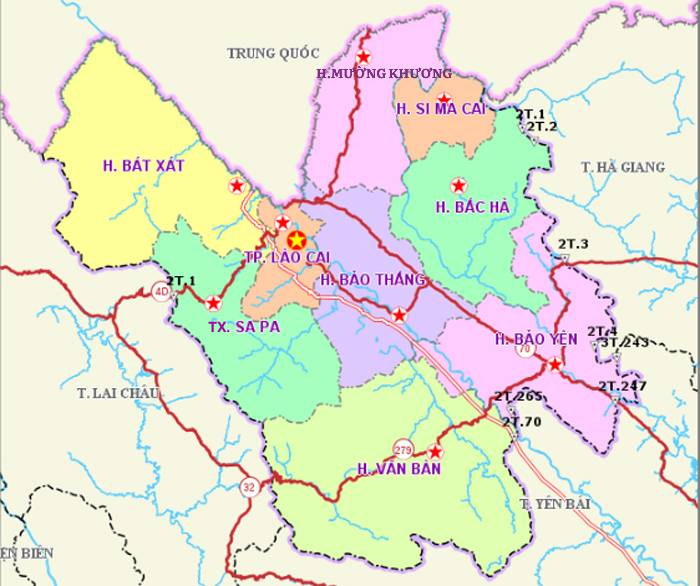
After the merger, Lao Cai province had a natural area of 13,256.92 km² and a population of nearly 1.8 million people, of which ethnic minorities accounted for nearly 60%.
Over the past five years (2021–2025), thanks to the synchronized implementation of national target programs and a series of resolutions and projects, Lao Cai has recorded impressive poverty reduction results, with a poverty reduction rate of nearly 4% per year, corresponding to nearly 62,000 households escaping poverty, exceeding the government's target (3.5% per year). In particular, the poverty rate among ethnic minority households decreased by an average of 6.99% per year, exceeding the national target of 6% per year.
At the beginning of 2021, Lao Cai had 84,076 poor households, equivalent to 21.24% of the population. However, by the end of 2024, that rate had dropped to only 8.18% – a poverty reduction rate considered "rare" in the northern mountainous region. It is projected that by the end of 2025, this number will further decrease to 5.5%.
These seemingly dry statistics reveal a profound meaning: nearly 62,000 households in the highlands have not only escaped poverty but are also gaining opportunities for development, improvement, and enhancement of their quality of life.
The story of Ms. Ly Thi Dau in Ta Van commune is an inspiring one for ethnic minority women. Previously, she earned her living by growing rice and selling seasonal brocade fabrics. Now, thanks to participating in community tourism, she can communicate in basic English and French, and her income has increased many times over. From a Hmong woman who only knew how to cultivate fields, she has become the owner of a homestay welcoming thousands of international guests annually.

Ms. Ly Thi Dau, a Hmong woman from Ta Van commune, stands beside her family's well-equipped homestay model – a vivid testament to the powerful transformation brought about by women from ethnic minority groups participating in community tourism.
She shared: "Before, I only dreamed of having enough to eat. Now I feel more confident, I can introduce Hmong culture in English to international tourists; my children are getting a good education; and our finances have improved."
New livelihoods, new mindsets, as people become the main actors in development. By July 2025, Lao Cai will have 604 OCOP products, of which 105 belong to ethnic minority groups. In many villages, Mong, Dao, Tay, and other ethnic minority women no longer just sell raw agricultural products but have become owners of OCOP brands – proactively producing, promoting, and selling products through e-commerce platforms and social media. Models such as medicinal herbs, community tourism, organic tea, and OCOP products have helped thousands of ethnic minority households confidently enter the market economy.
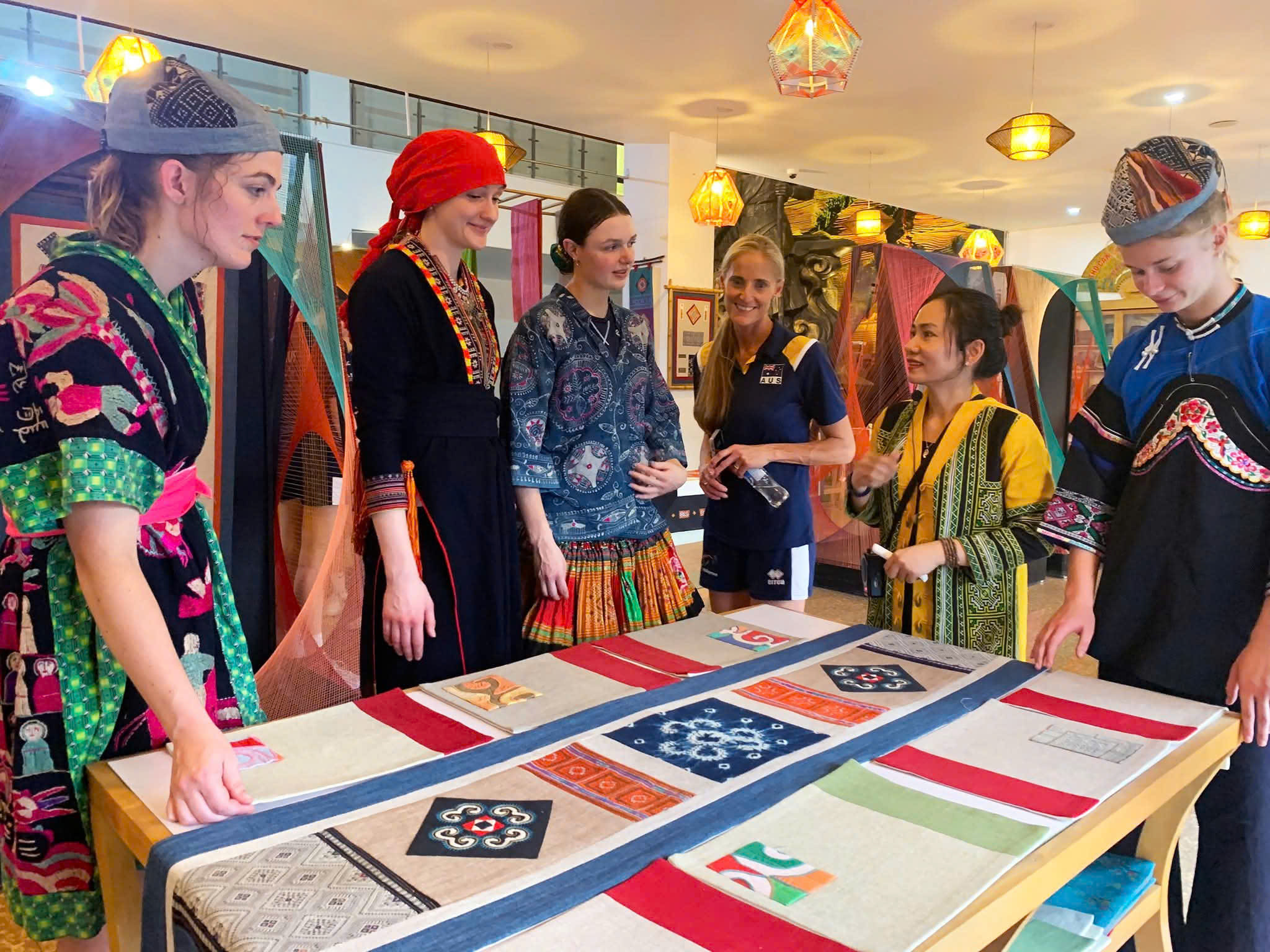
International tourists experience the traditional costumes and brocade products of the Mong ethnic group in Sa Pa – a testament to the positive changes that occur when cultural identity is preserved and promoted, linked to tourism development in ethnic minority and mountainous regions.
In the area of employment, a decisive factor for sustainable poverty alleviation, Lao Cai province provides vocational training to over 30,000 people and creates jobs for more than 30,000 laborers each year. The rate of trained laborers reaches 70%, of which 25.3% have degrees or certificates. These policies have created a solid "safety net," helping people not only escape poverty but also better withstand risks.
During the 2024-2025 school year, the provincial budget supported 8,200 ethnic minority boarding school students with a total funding of over 2.819 billion VND; nearly 1.25 million poor and near-poor students benefited from tuition fee exemptions and reductions, as well as support for learning expenses. Behind these figures are tens of thousands of children in mountainous areas who are able to attend school more regularly, drop out less frequently, and have access to knowledge and a brighter future.
In the healthcare sector, Lao Cai maintains a ratio of 12.8 doctors per 10,000 people and 41.1 hospital beds per 10,000 people. The expanded immunization program remains stable at over 95%. Notably, the health insurance coverage rate reaches 88.21% of the population, corresponding to more than 1.47 million people participating in health insurance, creating an important foundation for all citizens, especially vulnerable groups, to receive healthcare.
During the period 2021–2025, the province processed 78,525 applications from people with meritorious service, paid regular allowances to over 8,000 people, and supported the repair and construction of over 26,000 houses for poor and near-poor households, people with meritorious service, and households affected by natural disasters. Lao Cai currently supports 62,000 people receiving social welfare allowances, and 100% of poor and near-poor households have been issued health insurance cards.
During the 2021-2025 period, Lao Cai province allocated a total capital plan of over 2,449 billion VND for national target programs; the allocation rate reached 92.8% of the plan assigned by the Central Government. The province has completed 16 out of 24 targets, with many exceeding the plan, especially in the essential infrastructure group. Many inter-commune and inter-village roads have been paved, helping people shorten travel time from several hours to just a few tens of minutes. The electricity and water supply systems have been expanded; numerous schools and health stations have been built and renovated.
Building upon the foundation of the National Target Program for Socio-Economic Development of Ethnic Minority and Mountainous Regions for the period 2021-2030, Phase I: from 2021 to 2025, Lao Cai is aiming for the goal that by 2030, ethnic minority regions will achieve comprehensive, green, sustainable development with rich cultural identity, becoming dynamic areas that make increasingly significant contributions to the overall growth of the province.